
The doping scandal that rocked the Festina team in 1998 didn't just lead to arrests and legal battles—it had far-reaching consequences for the entire cycling world. French authorities cracked down, and that sent a chill through the peloton. Suddenly, the spotlight was too intense for some riders. So they started looking for new bases, places where the rules might be less strict and the pressure a little lighter. Girona, in northeastern Spain, emerged as an ideal option.
It wasn't long before big names like Lance Armstrong, Tyler Hamilton, and David Millar made the move. Their presence gave Girona a kind of credibility. Soon, others followed. The rolling hills, the perfect roads, the mild climate, and the rich Catalan cuisine all made it a dream location for training and recovery. What began as a small shift in geography turned into a full-scale transformation. Today, Girona isn’t just a place to train—it’s a destination in its own right, a place where cyclists, both professional and amateur, come to ride and feel the rhythm of the roads.
A town shaped by wheels and weather
Girona's rise as a cycling hotspot wasn't by chance. The city sits in a natural landscape that invites movement. Its hills are varied enough to challenge even the most seasoned cyclists, but not so steep that they're punishing. The weather is generally cooperative, with warm summers and crisp winters. And the food? It's second to none, especially for anyone looking to refuel after a long ride. But what really sealed the deal was Girona’s reputation for being a clean, ethical, and supportive environment for athletes. It was a contrast to the shadowy backroom dealings that had plagued the sport in the past.
As the city’s name grew, so did its appeal. It became a place where cyclists could escape the media, escape the politics, and just ride. The surrounding countryside offered endless routes for all levels, from beginners to elites. These days, Girona is considered one of the top road cycling spots on the planet. The region’s natural beauty and the thrill of the climb are enough to draw in riders from every corner of the globe. And this year, the Tour de France passed right through the area on its third stage, drawing even more attention to the town and its rolling hills.
A hotelier’s escape to the hills
For Gerard Greene, the man behind the iconic Yotel brand, Girona represented a fresh start. He purchased an old masia—an old fortified farmhouse—nestled in the hills outside of the city. The property sat in the heart of the La Garrotxa Volcanic Zone Natural Park, a region of quiet beauty and geological curiosity. He transformed it into a retreat called Off Grid, a place that’s equal parts hotel, getaway, and wellness hub. It’s not about over-the-top luxury, but it is about thoughtful design and a strong sense of place.
The retreat feels like a small village. The buildings are made of honey-colored stone and blend into the landscape. There’s an adult-sized pool that feels more like a natural spring than a man-made pool. It’s rustic, but in a way that feels intentional and charming. The atmosphere is unassuming, and the people there are friendly and welcoming. It’s the kind of place where you could easily imagine a noblewoman from centuries ago or a character from an Edwyn St Aubyn novel walking through. The vibe is calm, and the service is personal rather than polished. It’s the kind of place that makes you feel like a guest, not a client.
Two wheels and a steep climb
I came to Girona with a purpose. Not just to relax, but to ride. I hadn’t been on a bike in months, but I was ready to push myself. Off Grid had a carbon fiber bike waiting for me, sleek, black, and silent, like it was designed for a covert mission. It was light but not flimsy, and it immediately felt like the perfect tool for what I had in mind.
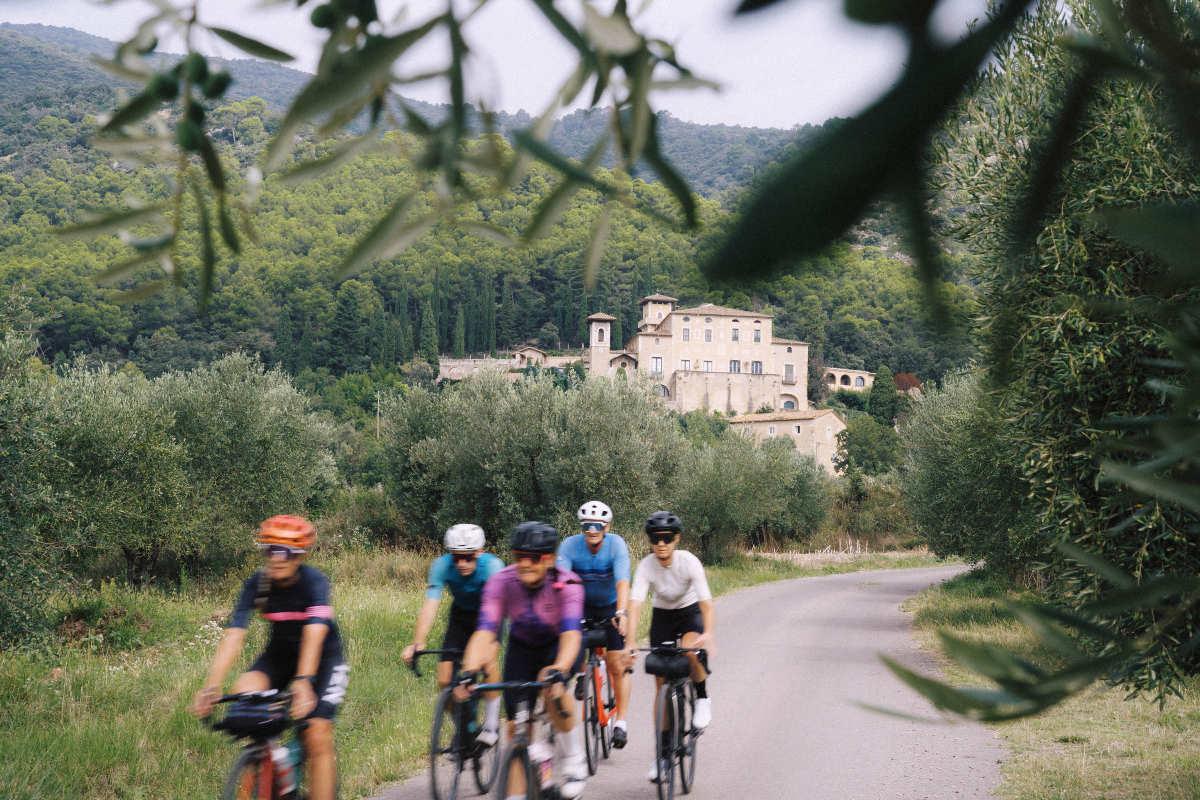
My guide for the day was Alejandro Gonzalez, a former sprinter who had raced in Mexico, Belgium, and Denmark before settling in Catalunya. He knew the region inside and out. Our ride started with a punishing 10-kilometer climb. It was steep, and it was relentless. My legs burned, my lungs gasped, but the climb was also beautiful. The roads wound through olive groves and past ancient stone walls, with each turn revealing more of Girona’s lush, green countryside.
Alejandro had stories to tell—about the sport, the fashion, the culture. He spoke about the importance of white shoes and socks in the peloton. I, however, was in a purple paisley shirt and black pants, which made me stand out. But that didn’t matter. The key was the road, the climb, and the view. I was here to ride, to push, to experience what drew so many cyclists to this place.
By the time we reached the village of Beget, I was spent. I needed food, and fast. The green hills and quiet roads had given me a sense of why Girona had become such a draw. It wasn’t just about the riding. It was about the connection to the land, to the history, and to the people who made it all possible. Girona was more than a city—it was a stage, a stage for champions, and for those who dare to dream.