
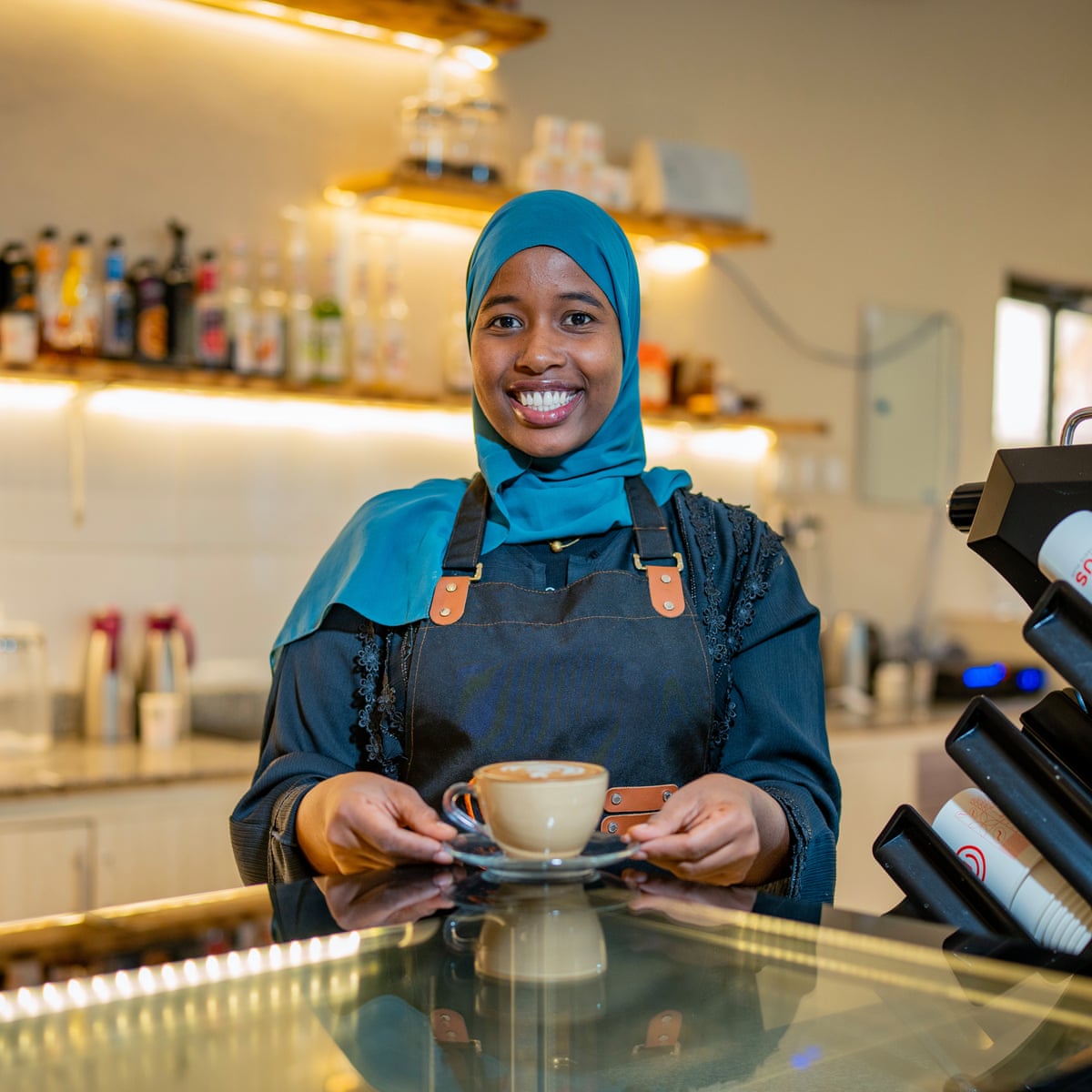
Each day at 6 AM, Saabiriin Hassan pulls on her apron and steps behind the counter at Cplus Cafe, located in the heart of Mogadishu. The scent of freshly ground coffee beans fills the air, but it's Hassan's warm, welcoming smile that truly defines the space. As one of the first women in the city to become a barista, she has broken barriers in a profession historically reserved for men. Her presence is a quiet rebellion against outdated norms in a nation where public work by women was once viewed with skepticism.
Hassan, now 23, didn’t simply step into this role by chance. She took a proactive approach after realizing no women in Mogadishu were serving coffee. Encouraged by her curiosity, she enrolled in a three-month training course. What started as a new skill soon became a passion. The process of grinding beans, steaming milk, and engaging with customers became second nature to her. As she perfected her technique, she discovered a sense of purpose and a platform to challenge perceptions about what women could do in the city.
A Shift in the Sip
In Somalia, camel-milk tea has long been a staple, deeply embedded in the culture and social fabric of the region. However, the rise of modern coffee shops in Mogadishu is subtly reshaping routines and expectations. These new spaces are not just about coffee; they’re hubs for young Somalis to connect, learn, and explore new opportunities. At the forefront of this change are women like Hassan, who are redefining the traditional roles they’re expected to play.
Hassan recalls the resistance she faced in her early days. “I was told this is a man’s job,” she says, reflecting on the comments from people in her community. Some even went so far as to suggest that she wouldn’t find a husband or be respected if she served men in public. Despite these challenges, she remained undeterred. Her determination helped her stay the course as she carved out a place in the male-dominated field.
Her persistence has borne fruit. Over the past few years, attitudes in Mogadishu have shifted, and more women have followed her path into the barista world. Alongside her success, the city has seen a surge in cafe culture. With improved security, Mogadishu has become a more attractive location for investment and development, resulting in the construction of new shopping centers, commercial hubs, and, of course, coffee shops.
Beyond the Cup
The coffee shop phenomenon in Mogadishu is more than a lifestyle choice; it’s a response to pressing economic conditions. With over 70% of Somalia’s population under the age of 35 and unemployment rates remaining high, the cafes provide crucial employment opportunities. For young people—especially women—they offer a platform to build practical skills, gain confidence, and contribute to the growing economy.
Yusra Abdifatahi, 21, is another woman who has found a new direction through coffee. Starting her career at Beydan in 2023, she has quickly risen to the role of branch manager. Her responsibilities now include overseeing daily operations, ensuring quality control, and maintaining customer satisfaction. In addition to managing the cafe, she also helps cover shifts when the main barista is unavailable. Her job not only supports her university education but also allows her to financially assist her family. “I now have clarity of what I want to do in life,” she says, confident in her path. “I believe I am on the right track to achieve my dream of having my own business.”
Beydan, a modern pan-African coffee company, began modestly as a home bakery in 2018 in Mogadishu. Today, it has grown to over 10 branches across Somalia, employing 136 people. Women account for more than 40% of Beydan’s workforce, showcasing the company’s commitment to gender inclusivity. The brand has played a vital role in transforming the landscape of the city. When it first opened a branch in the Taleh neighborhood in 2019, the area was largely empty. Now, it’s a bustling street lined with restaurants, designer boutiques, and other businesses. Locally known as Wadada Beydan or Beydan Road, the area is a symbol of new economic energy.
Najiib Abdullahi, the founder of Beydan, takes pride in the company’s role in rebuilding Mogadishu and attracting new investors. “Our vision is to expand across Africa,” he says, envisioning a future where Beydan’s presence extends beyond Somalia. “Soon, we hope to open new branches in Nairobi and beyond.” His ambitions highlight the potential for growth and development in a region that has historically faced instability.
Milk, Espresso, and a New Word
Despite the growing popularity of coffee in Mogadishu, many Somalis still prefer their traditional camel-milk tea. The drink, a sweet and spicy concoction, remains a cultural favorite. However, some customers have begun to blend the two, creating a unique hybrid that satisfies their taste for both flavors. A cappuccino infused with a shot of camel-milk tea is a common request, and this practice has given rise to a new term: “soo dakhar,” which means to add a shot of espresso. This blending of old and new reflects the evolving tastes and traditions in a rapidly changing society.
Hassan now balances her time between working at Cplus Cafe and teaching barista training courses in Mogadishu. The demand for these programs is rising as more young people—especially women—seek out opportunities to learn and grow. “That motivates me to continue doing this job and make a difference in the lives of Somali youth.” Through her efforts, she’s not just making coffee—she’s shaping the future of her city.