
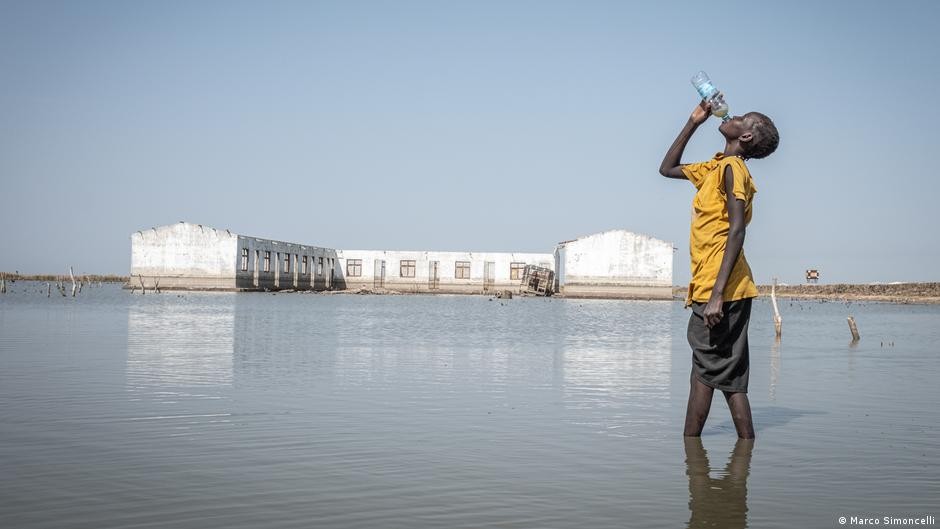
South Sudan faces a growing crisis as climate change impacts worsen in the country. Simon Gatkuoth, a man in his forties, shows the effects of this disaster firsthand. Standing at the edge of a waterlogged plain, he lifts a fish from a wheelbarrow. The fish’s skin gleams under the sunlight, but its scent is off. "When we cook them, the soup sometimes smells like penicillin," he explains. Despite the strange odor, Simon eats the fish. There is no other option for survival in the region.
A village overwhelmed by war and water
Bentiu, located in Unity State, has changed dramatically over the past decade. Originally a small village, it has now become a sprawling camp for displaced people. Since 2013, war and violence have forced nearly 140,000 individuals to seek refuge in the area. Today, the Protection of Civilians (POC) site is a permanent part of the landscape, operated by international organizations like the International Organization for Migration (IOM), UNHCR, and UNICEF. The site is marked by canoes ferrying freshly caught fish and makeshift barriers trying to hold back the rising water.
The region is used to seasonal flooding, which has long shaped life in Unity State. The Sudd, one of the world’s largest wetlands, has guided the lifestyles of local communities for generations. However, the 2021 flood was unlike anything before. Entire farms were submerged, and thousands of cattle were lost. The water has yet to recede, leaving many communities in a state of uncertainty.
Floods meet oil fields
Unity State is the largest oil-producing region in South Sudan, contributing over 90% of the country’s oil output. It is a critical source of revenue and accounts for nearly all of South Sudan’s exports. In 2021, the floodwaters engulfed 159 out of over 400 oil wells, affecting nearly 41% of the region’s oil extraction infrastructure. This disaster created a new environmental threat, as oil seeped into the rivers and lakes that local communities rely on for drinking water, cooking, and fishing.
The pollution from the oil fields poses a serious risk to both humans and wildlife. Marko Gatkuoth, a researcher with the Rift Valley Institute, highlights the dangers. "Many animals are dying because of this pollution," he says. "People are also suffering from symptoms they attribute to it." The contamination is visible, but the full extent of its impact remains unclear. Scientific studies are still needed to confirm these concerns.
South Sudan lacks the necessary infrastructure to manage such extreme flooding. There are no dams, no levees, and no comprehensive water management system in place. The combination of climate change, oil extraction, and inadequate flood control has created a slow-moving environmental disaster. The consequences for the region are severe and ongoing, with no clear resolution in sight.
A growing health and ecological risk
The impact of pollution in the region is being felt by the local population. Residents describe strange smells from the fish they catch and report feeling unwell after using contaminated water for cooking and drinking. There is no government monitoring system to track the health effects of the pollution. Scientists have yet to conduct completed studies that can confirm the link between the contamination and these symptoms.
The visible signs of the crisis are everywhere. Dead livestock are common, and fish caught in the area show discolored markings. Some rivers glow at dusk, an indicator of chemical contamination. The camp’s residents are resigned to their situation. "We cannot stop eating because there is no alternative," Simon Gatkuoth says. He places the fish back into the wheelbarrow, continuing the daily struggle to survive in a region caught between war, flood, and pollution.
The crisis in Bentiu and Unity State highlights the complex interplay of climate change, economic dependence on oil, and insufficient infrastructure. These challenges threaten not only the livelihoods of people in the region but also the long-term health of the environment. As the water continues to rise and the effects of pollution become more apparent, the need for comprehensive solutions becomes more urgent. For now, the people of South Sudan navigate this crisis with resilience, even as the future remains uncertain.
The article underscores the importance of understanding these issues and the need for immediate action to address them.