
New attempt to curb birthright citizenship
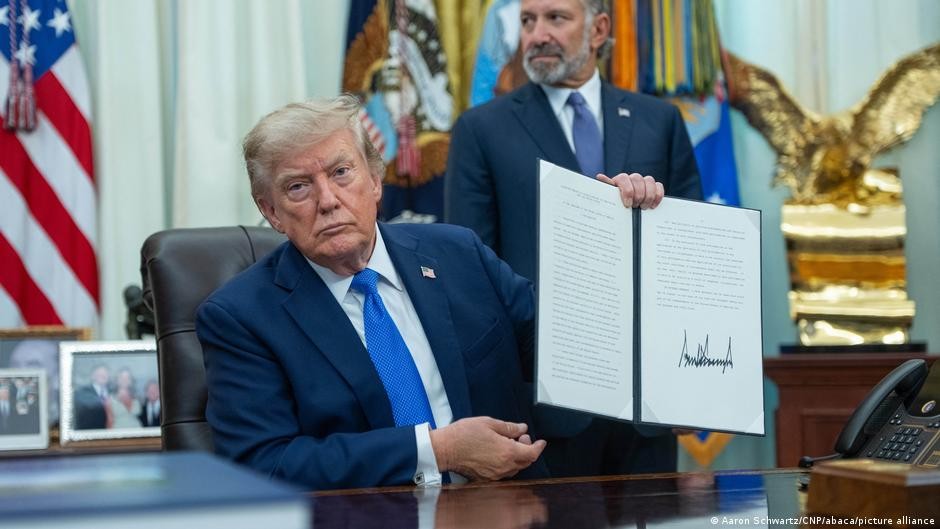
On August 7, 2026, President Donald Trump issued two executive orders to limit automatic citizenship at birth, ignoring a recent Supreme Court ruling against his earlier approach. The Supreme Court had rejected his first try two months ago in a 6-3 decision. Trump expressed strong dissatisfaction with the ruling, calling it 'very, very unfortunate' while announcing the new measures.
The first order is designed to strip U.S. citizenship from the children of individuals linked to 'foreign terrorist organizations'. It also targets those working on behalf of foreign governments. Stephen Miller, a senior Trump advisor, stated that the measure stops 'large numbers of people who wrongly (would) be getting birthright citizenship' from obtaining it.
Tackling 'birth tourism'
The second executive order addresses what Trump labeled as 'birth tourism'. This refers to travelers who visit the U.S. specifically to give birth and secure citizenship for their children. A 2020 federal rule already prohibits using temporary tourist or business visas for this purpose. Trump's new order aims to enforce the practice with stronger language. It also includes clearer intent.
The Center for Immigration Studies, an organization with close ties to the Trump administration, estimates that between 20,000 and 25,000 mothers came to the U.S. from 2016 to 2017 for this specific reason. According to the nonpartisan Migration Policy Institute, the highest census-based estimate 'puts birth tourism at 22,000 to 26,000 babies born annually on US soil, although government data show just 9,600 births to mothers with foreign addresses in 2024'. These numbers are not officially verified by the U.S. government, and there are no exact statistics confirming how widespread the behavior is. Authorities have cracked down on businesses that coach travelers on how to hide their pregnancies from immigration officials over the years, NPR's Juliana Kim reports. Estimates from the Centers for Disease Control and Prevention and the Center for Immigration Studies indicate that tourist births account for a small fraction of the 3.6 million U.S.-born babies each year. Immigration advocates argue that birth tourism is overstated, Kim says.
Legal uncertainty ahead
White House officials insist that the new executive orders operate independently from the Supreme Court's earlier ruling. They say the orders are not subject to the same constitutional concerns. Nevertheless, legal experts anticipate further challenges in the courts. Trump said he is 'ending it a different way' after the earlier loss at the Court. He described the Supreme Court's decision as 'very unfair'.
The 14th Amendment, part of the U.S. Constitution, grants citizenship to anyone born in the United States. Exceptions exist for children of foreign diplomats. They also apply to those born under the control of an occupying enemy force. Trump has publicly questioned what he considers a misapplication of the original intent behind the 14th Amendment. He suggests it was meant to protect the children of formerly enslaved people after the Civil War.
The administration continues to face strong opposition to its immigration policies, with advocates for immigrant rights warning of potential legal consequences and broader implications for American citizenship law.