
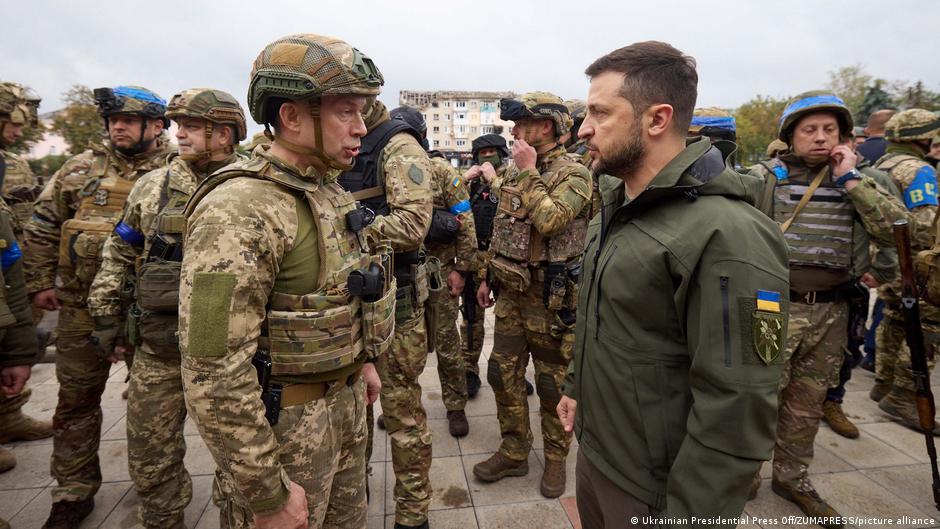
Ukraine’s President Volodymyr Zelenskyy has replaced Oleksandr Syrskyi as commander-in-chief of the country’s Armed Forces, responding to weeks of public unrest. On July 21, he announced the decision on Telegram, naming Mykhailo Drapatyi as the new head of Ukraine’s military. In his message, Zelenskyy acknowledged Syrskyi’s contributions and praised 'each of our warriors' for maintaining Ukraine’s front-line stability. However, he did not directly defend Syrskyi’s leadership, signaling a shift in the administration’s stance.
Fedorov’s sacking stoked unrest
The decision comes after the recent removal of Defense Minister Mykhailo Fedorov, a prominent reformist who clashed with Syrskyi over military strategy. Fedorov, 35, accused Syrskyi of resisting changes in Ukraine’s armed forces, particularly in modernizing operations and integrating new technology. Following his dismissal, Fedorov took to the public sphere to voice his grievances, which resonated with many Ukrainians. This led to widespread protests across the country, especially in Kyiv, with thousands of young people demanding Syrskyi’s removal and Fedorov’s return to his post.
Zelenskyy, who originally aligned with Syrskyi, eventually relented under mounting pressure. After a series of closed-door meetings with top military officials, he opted to address the public discontent by removing Syrskyi from his high-ranking position. This decision marked a significant shift in Ukraine’s leadership dynamics, as Zelenskyy attempted to restore public confidence and balance competing interests within the military establishment.
Syrskyi’s legacy and the tensions it stirred
Oleksandr Syrskyi, a 60-year-old general trained in Moscow during the Soviet era, played a vital role in Ukraine’s defense during key campaigns. He was instrumental in halting Russia’s initial advance toward Kyiv in 2022 and later led Ukraine’s bold 2024 incursion into Kursk, Russia. His leadership helped solidify Ukraine’s resilience on the battlefield, yet it also sparked friction with reform-minded officials like Fedorov.
Tensions arose over strategic differences, particularly in the use of drones and other cutting-edge technologies. Syrskyi’s approach, which relied heavily on traditional tactics, clashed with Fedorov’s vision for a more modern, agile military. As a result, Syrskyi faced criticism from reformists who believed his leadership had slowed Ukraine’s progress in adapting to the evolving war against Russia.
A fragile transition under public scrutiny
Fedorov, now a prominent figure in the opposition, has embraced Syrskyi’s departure as a sign of renewed hope. On social media, he described the change as 'a breath of fresh air and a new hope in the struggle of free people for freedom and justice.' While Syrskyi’s removal signals a move toward reform, the new commander, Drapatyi, lacks Syrskyi’s battlefield reputation and experience. His appointment reflects a potential pivot away from the old guard, but it also introduces uncertainty about how well he can manage Ukraine’s complex military and political situation.
The last week has been one of the most turbulent in Ukraine’s political history. Zelenskyy’s attempt to reshuffle his leadership team has led to some of the largest and most vocal demonstrations the country has seen since the full-scale Russian invasion in 2022. These developments highlight the fragility of Ukraine’s leadership and the high stakes of maintaining public support during a prolonged conflict.