
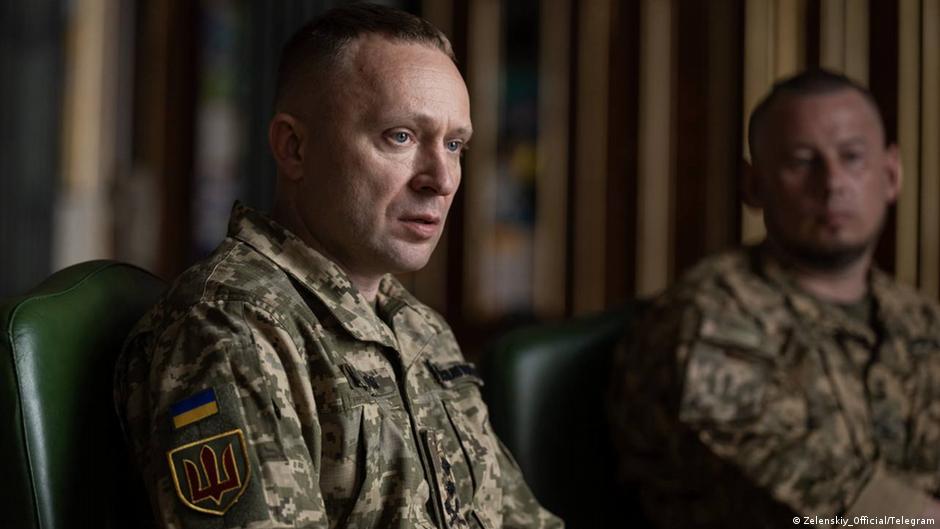
This decision marks the end of Oleksandr Syrskyi's tenure, which was cut short due to a recent cabinet reshuffle. Alongside Syrskyi's removal, Defense Minister Mykhailo Fedorov was also dismissed from his position, a decision that stirred significant public discontent and led to widespread protests across the country.
Zelenskyy has tasked Drapatyi with advancing military reforms and shaping a modern defense strategy. The leadership change follows an unexpected and contentious cabinet reshuffle. Although many ministers retained their positions under the new Prime Minister, Sergii Koretskyi, Fedorov's removal triggered mass demonstrations. Protesters not only demanded his reinstatement but also called for the dismissal of Syrskyi, highlighting the intense public reaction to the political realignment.
Fedorov's fall and Drapatyi's rise
The removal of Fedorov was attributed to a major strategic disagreement with Syrskyi regarding Ukraine's war strategy. This conflict culminated in Fedorov's sudden ousting, which fueled public outrage and prompted widespread protests. Drapatyi, a high-ranking general who publicly supported Fedorov, quickly emerged as the chosen replacement for the leadership role. His appointment signaled a significant shift in military and political dynamics.
Drapatyi voiced his support for Fedorov on Facebook, stating that the defense minister's appointment had represented a major push to modernize the military. He noted that the Defense Ministry had grown into a strong collaborator with the armed forces, improving communication and accelerating decision-making processes. Drapatyi also emphasized that despite facing resistance from entrenched systems, the military had made progress in addressing its challenges openly and honestly.
A battle-hardened commander with a controversial past
Mykhailo Drapatyi, who was born in 1982, is a decorated major general who has gained a reputation for his leadership in combat zones since 2014. He rose to prominence during the Donbas War, known for his steadfastness during the operations referred to at the time as an 'anti-terror operation.' With Russia's full-scale invasion in 2022, Drapatyi played a key role in coordinating the defense of Kryvyi Rih and in reclaiming critical areas in southern Ukraine.
In 2024, Drapatyi's standing as a crisis manager was further solidified when he successfully halted a Russian advance near Kharkiv. By 2026, he had climbed the ranks of the military, eventually becoming head of the ground forces and the Commander of the Joint Forces. His ascent reflects both his battlefield experience and his influence within Ukraine's military establishment.
A power struggle and political missteps
Drapatyi's leadership was tested in June 2025, when a Russian missile strike on a military training ground under his command resulted in the deaths of 12 soldiers and injuries to over 60 others. Citing a sense of personal responsibility, Drapatyi submitted his resignation. However, Zelenskyy refused to accept his departure and instead reassigned him to a new military position, a move that was seen by many as an attempt to retain his capabilities.
By autumn 2025, Drapatyi was assigned to defend the Kharkiv region, a task some analysts viewed as a calculated effort to reduce his influence and prevent him from becoming a power within the military. Media outlets speculated that this decision might have been orchestrated by Syrskyi, who reportedly saw Drapatyi as a potential rival and a threat to his own leadership.
Zelenskyy's recent personnel changes seem to have been driven in part by public pressure and shifting political tides. Experts are divided on how these changes will play out. Oleksandr Khara of the Ukrainian Center for Defense Strategies sees the protests as a form of democratic feedback in a time when elections are not possible. He argues that Zelenskyy's response to public and military sentiment helped redirect events toward a more democratic path. On the other hand, Oleksiy Melnyk of the Kyiv-based Razumkov Center offers a more critical view, suggesting that the president's actions have caused an unnecessary domestic political crisis, one that could damage his reputation and leadership.