
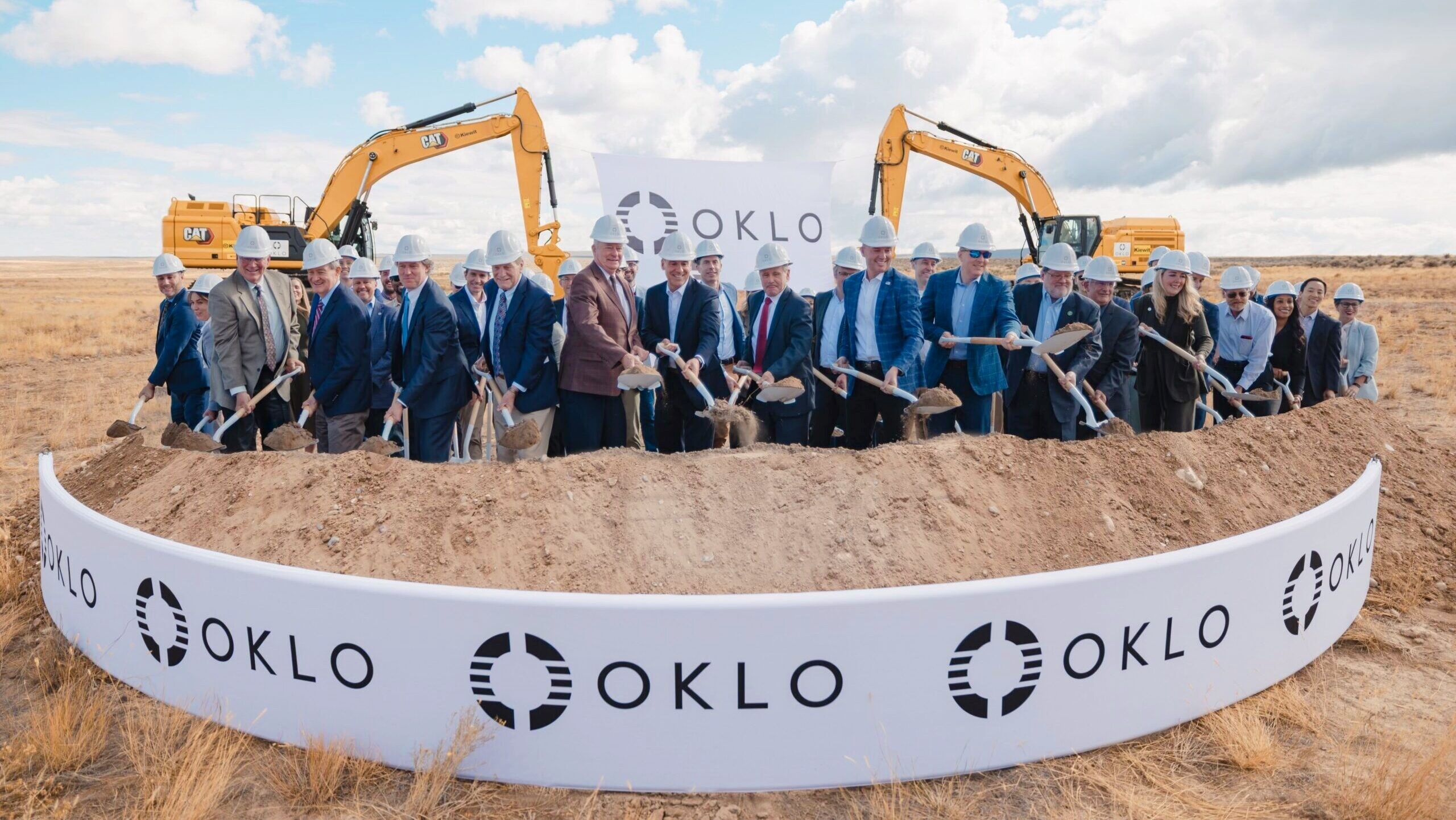
The Milestone in Caldwell County
Oklo, a nuclear startup backed by OpenAI’s Sam Altman, achieved a sustained chain reaction in its Groves Isotope Test Reactor located in rural Caldwell County, Texas. This marks the first time the company has successfully split atoms in one of its reactors.
The reactor was completed in under one year and represents a critical step toward commercialization for Oklo. Known as reaching criticality, this process is necessary for nuclear energy development but does not guarantee full-scale commercial success.
Regulatory Challenges Remain
Oklo faces ongoing regulatory challenges. Its application for a Nuclear Regulatory Commission license was rejected in 2022. The company has not yet resubmitted its application for its 75-megawatt power reactors. It has, however, received permission to operate a medical isotope reactor and is using that as a foundation for future projects.
While Oklo is preparing a site near the Idaho National Laboratory for a reactor, it currently lacks the permissions to begin construction. The Groves test reactor allows Oklo to practice its processes ahead of potential approvals. Construction on this test unit served as hands-on experience, giving the company insights into reactor design, fuel sourcing, and operations planning.
The Groves reactor's success places Oklo among the five companies in the Department of Energy’s Reactor Pilot Program to achieve criticality. Unlike the others, Oklo’s reactor was built on private land and included in-house operations. This distinction highlights the company’s ability to construct and manage a nuclear reactor from the ground up, a rare feat in the nuclear industry.
The project involved full-scale civil construction, commercially sourced fuel, and in-house operational development. Oklo procured low-enriched uranium from Framatome, a commercial vendor, for the test reactor. These steps helped refine the company’s supply chain and operational protocols, which will be essential for scaling up its medical isotope business and future power reactor projects.
Political and Economic Implications
Texas Governor Greg Abbott praised the project as a foundation for expanding medical isotope production and advancing nuclear innovation in the state. Abbott called the Groves reactor a step toward “reinforcing Texas’ leadership in nuclear innovation.” This public endorsement aligns with Abbott’s broader push to position Texas as a center for next-generation energy technologies.
The Republican governor, currently running for reelection, highlighted the potential economic and technological benefits of the project. He noted that the reactor would support the production of isotopes critical for medical therapies, which aligns with his vision of modernizing and diversifying Texas’ energy sector.
Oklo, known for its high profile and rapid growth, has positioned itself as a leader in next-generation nuclear energy. The company has plans to recycle nuclear waste, fabricate fuel, and develop medical isotopes, all while navigating a complex regulatory environment. Its recent progress, though modest, brings it closer to achieving its long-term goals and solidifying its role in the energy transition.
The broader context of the U.S. nuclear energy landscape remains challenging, with just two other startups—TerraPower and Kairos—actively building reactors in the country. Oklo’s ability to reach criticality quickly and without government facility support underscores its potential to shape the future of advanced nuclear technologies.
As Oklo continues to work on its next steps, the success of the Groves reactor demonstrates the company’s ability to innovate and adapt. With its eye on commercialization and a broader push for clean energy solutions, the startup remains at the forefront of the emerging nuclear renaissance in America.
Oklo’s Groves Isotope Test Reactor has successfully achieved criticality under the U.S. Department of Energy’s (DOE) Reactor Pilot Program, marking another milestone for advanced nuclear technology in the United States. The achievement was announced after testing at Oklo’s facility in Lockhart, Texas. It makes the Groves Isotope Test Reactor the fifth DOE-authorised advanced reactor to reach criticality this summer, highlighting the accelerating pace of next-generation reactor development. The successful demonstration will provide operational data to support the design of a future commercial reactor capable of producing critical isotopes for healthcare, advanced manufacturing, scientific research, space missions and national security applications.
Commenting on the landmark achievement, Jacob DeWitte, Oklo co-founder and CEO, said: “Reaching criticality in less than a year is an incredible milestone for our team. “Oklo developed Groves from a greenfield site on private land, completed full-scale civil excavation and construction, manufactured or commercially procured all components, including fuel, and developed its operating programs in-house. “Taken together, we believe these accomplishments establish a new benchmark for the Reactor Pilot Program and set the stage for the future of advanced nuclear deployment at scale.”
The test reactor is intended to validate technologies that will underpin a commercial-scale isotope production system. Medical isotopes play a vital role in cancer diagnosis and treatment, while other specialised isotopes are increasingly important for industrial processes, scientific research and emerging space technologies. By achieving criticality, Oklo has taken an important step towards demonstrating that advanced reactor technologies can be developed more rapidly through alternative regulatory pathways while maintaining federal oversight.
Oklo joins Antares Nuclear, Valar Atomics, Deployable Energy and Aalo Atomics as companies that have progressed from reactor design to operational demonstration through the DOE Reactor Pilot Program. The initiative provides technical support and authorisation for first-of-a-kind advanced reactor projects, enabling developers to test innovative reactor concepts more quickly than has traditionally been possible. According to the DOE, the new authorisation pathway is intended to demonstrate how regulatory reform can accelerate advanced nuclear innovation while supporting the wider deployment of next-generation reactors across the United States. With five advanced reactors reaching criticality this summer, the programme is being positioned as a key driver of renewed momentum in the US nuclear sector and future commercial deployment of advanced reactor technologies.
Assistant Secretary for Nuclear Energy Ted Garrish praised the achievement, saying: “Thanks to President Trump’s precedent-setting directive to create the Reactor Pilot Program, Oklo’s Groves Isotope Test Reactor is part of the revival of America’s nuclear energy industry. We applaud the work of the Oklo, DOE, and Idaho National Laboratory staff who helped achieve this milestone.”
DOE’s new authorization pathway models how regulatory reform can accelerate innovation and help usher in a golden age for the nuclear energy industry and advancement of President Trump’s Energy Dominance agenda.