
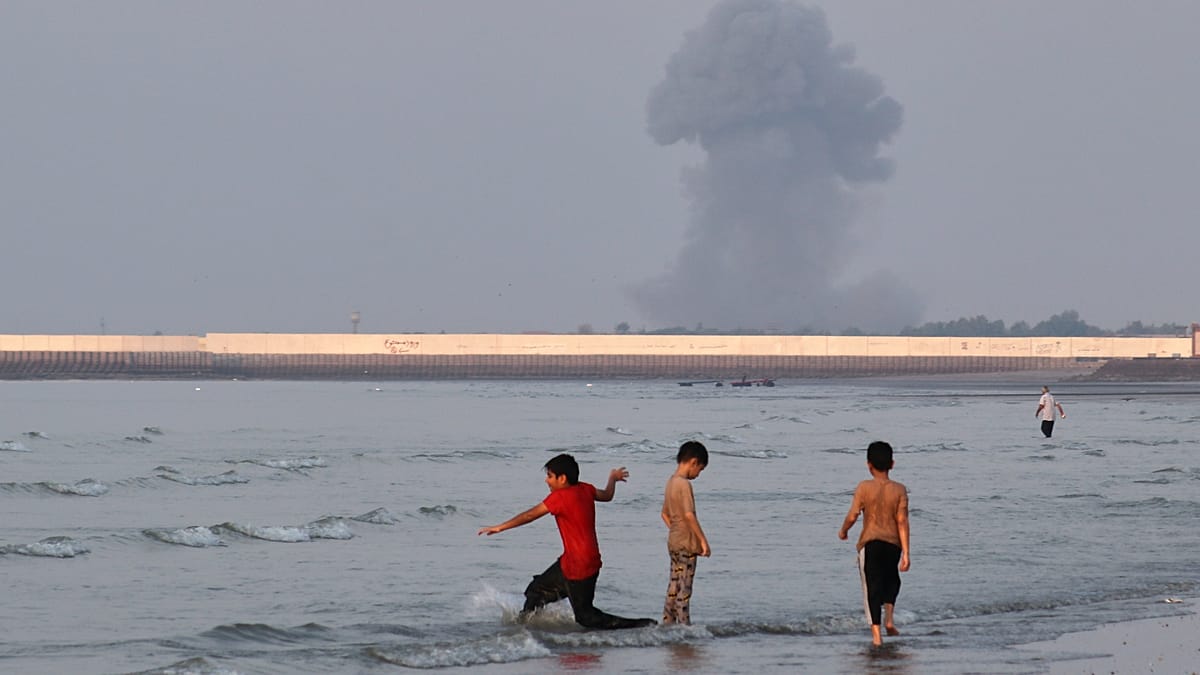
Gulf oil producers are investing billions in pipeline projects to route crude away from the Strait of Hormuz, where Iran’s control has created instability and kept the area’s main oil export route vulnerable. Prior to the conflict, the strait moved 15 million barrels of Gulf oil daily, handling about a fifth of global traded oil. Today, with the channel largely shut and prices high, at least seven pipeline projects are being built or planned to redirect supplies via the Red Sea, Suez Canal, and Gulf of Oman. Gulf officials, energy firms, and analysts confirm these efforts.
Since the war resumed this month, Brent crude has climbed to $93 a barrel, rising above the $72 level it hit after a brief June ceasefire. U.S. benchmark WTI has also increased to about $90 per barrel. Victoria Grabenwöger, a senior researcher at Kpler, warned that reliance on the Strait of Hormuz is no longer a smart long-term plan for the region.
Existing escape routes near capacity
Two existing alternatives are already at or near their maximum capacity. Saudi Arabia’s East-West pipeline, constructed during the 1980s Iran-Iraq war, transports oil from Abqaiq to Yanbu on the Red Sea, from where tankers proceed south or north to the Suez Canal. The UAE is increasing oil exports through Fujairah, its port on the Gulf of Oman, around 145 kilometers south of Hormuz. Before the war, the two routes had a combined spare capacity of 3.5 to 5.5 million barrels a day. Now, they operate nearly at full capacity, transporting about 6.5 million barrels per day.
Abu Dhabi’s state oil company is accelerating its $3 billion, 300-kilometer pipeline to Fujairah, which will boost deliveries by over 1.2 million barrels a day. The project is roughly half complete and is likely to finish in mid-2027, according to Kpler. The firm notes that the delay in the port expansion pushed the completion back but argues the schedule only became possible due to the blockade.
Red Sea route faces new threats
The Red Sea route is not without risks. This week, Yemen’s Houthi rebels attacked two Saudi tankers, Encelia and Layla, causing both to catch fire. The group has previously disrupted the Bab el-Mandeb Strait, a vital chokepoint handling 12% of global trade, and a 2019 Houthi drone strike led to the temporary closure of the East-West pipeline. These incidents highlight that even bypass routes come with dangers.
Iraq pushes hardest to get out of Hormuz trap
In no country is the push to avoid dependence on Hormuz more pressing than in Iraq, which relies on oil exports for about 90% of its national revenue. Prime Minister Ali al-Zaidi returned from Washington with 48 agreements signed with U.S. firms, including ExxonMobil, Shell, Halliburton, and Chevron. The deals, spanning energy, healthcare, and technology, are worth over $60 billion. A key part is a plan to rebuild the long-idle Kirkuk-Baniyas pipeline to the Mediterranean.
Iraqi state media reported that Chevron will oversee the pipeline’s reconstruction. The U.S. State Department labeled the Kirkuk-Baniyas route a 'critical energy corridor,' with an initial capacity of 2 million barrels a day. Tom Barrack, Washington’s ambassador to Turkey, said these agreements would render the Strait of Hormuz 'an afterthought.'