
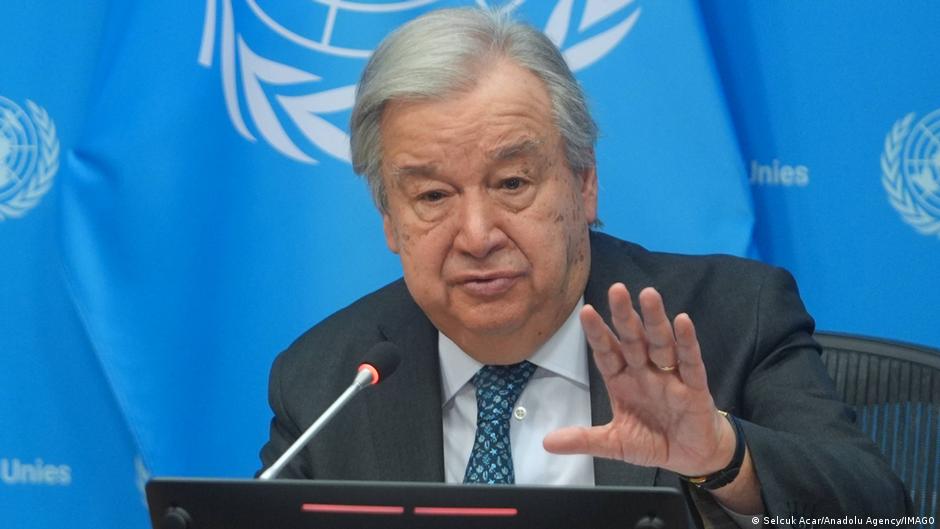
Antonio Guterres will step down on December 31, ending his second term, and his successor must navigate a world increasingly hostile to multilateralism. Six candidates have entered the race, each offering different visions for the future of an institution struggling to remain relevant, solvent, and capable.
The Secretary-General, a hybrid of diplomat and executive, oversees the Security Council and the UN’s sprawling bureaucracy. Yet the process for choosing the next occupant of the post remains as much a geopolitical poker game as it is a meritocratic contest, with the five permanent Security Council powers — China, France, Russia, the UK, and the US — wielding decisive influence through their recommendation.
Michelle Bachelet, the former president of Chile, is running on a simple but unmet promise: the first female Secretary-General. She has already held one UN crown, as High Commissioner for Human Rights from 2018 to 2022, a post that exposed her to the very conflicts she might face at the top — wars, refugee crises, and authoritarian crackdowns.
Bachelet, now 74, has acknowledged the difficulty of winning. “The world was not prepared for it,” she said in 2024. “Is it prepared now? I hope so.” She is not promising a revolution but is betting on experience and optics, hoping to offer the UN a symbol of progress it has long needed.
Rafael Mariano Grossi, the Argentine diplomat and director general of the IAEA, brings a different flavor of expertise. His career has been steeped in atomic science and policy — a field that could become more central to the UN’s survival as nuclear tensions escalate.
Grossi argues that his background is “clearly an advantage.” He supports the ongoing UN80 reform initiative but insists the organization doesn’t need a wholesale reset. Instead, he favors “mergers” of overlapping agencies to cut costs and streamline operations — a modest but potentially critical step for an institution that spends millions on redundant functions.
Maria Fernanda Espinosa, the Ecuadorian poet-turned-diplomat, sees the UN as near collapse. “We must reform, transform or die,” she told The Observer, framing her campaign around financial austerity and a new partnership with regional bodies to bridge divides between countries in conflict. She has held high UN posts, including as president of the General Assembly, and has worked in the Amazon with indigenous communities, emphasizing climate and sustainability.
Rebeca Grynspan, of Costa Rica, brings an economic and trade focus to the race. As UNCTAD head, she secured a fragile grain deal between Ukraine and Russia after the 2022 invasion, a move praised by many. She pushes for bolder bureaucratic action and a more diverse Security Council, with seats for Africa and Latin America.
Macky Sall, ex-president of Senegal and the only candidate from Africa, has the most recent political experience of the six. His term in office saw Senegal invest in infrastructure, but his second presidential term was marred by unrest and the imprisonment of opposition leader Ousmane Sonko. His candidacy is a bid to strengthen the UN’s African voice, though his domestic controversies could weigh against him.
All six will speak before the General Assembly on July 23, their words judged as much for content as for delivery. The final choice, however, will likely be made behind closed doors — not on a podium, but in a Security Council chamber where power is not shared, but dictated.