Egyptian Military Delegation Arrives in Mogadishu to Advance Defense Ties
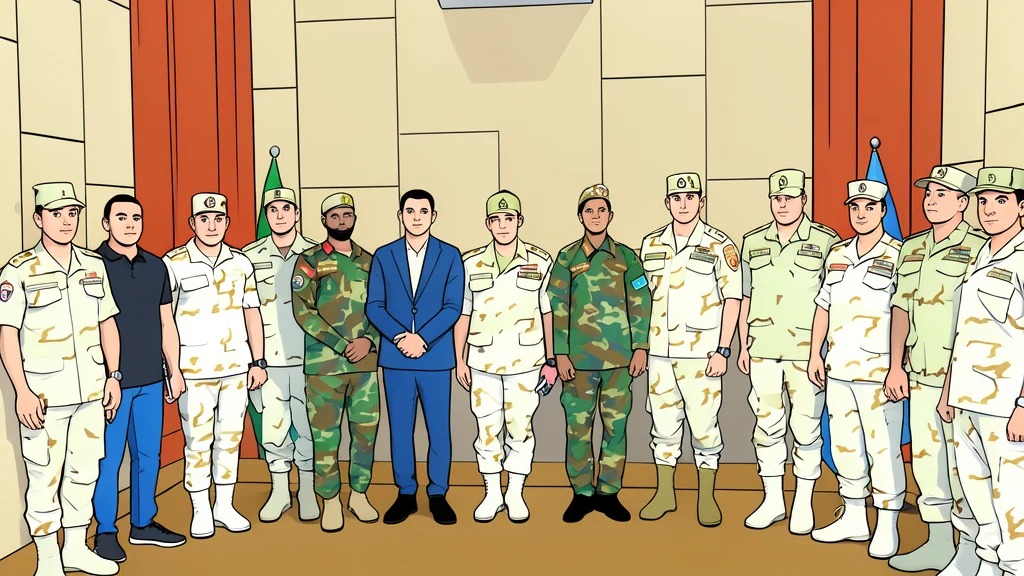
A senior Egyptian military delegation has arrived in Mogadishu to discuss the establishment of a training school and equipment support for the Somali National Army, signaling a significant deepening of bilateral defense cooperation.
A senior Egyptian military delegation arrived in Mogadishu on Tuesday, marking a tangible step in the ongoing effort to strengthen military cooperation between Cairo and the Somali government. According to reports from the GN auto geopolitics/africa: Somalia security desk, the visit centers on advancing previously agreed frameworks, specifically the creation of a military training facility within Somalia and the provision of equipment to bolster the capabilities of the Somali National Army.
The delegation held initial discussions with high-ranking Somali military officials, including Brigadier General Mohamed Mahmoud Garabey, who commands the Sustainment Command, and Brigadier General Ahmed Issa Ahmed, head of the Training and Doctrine Command. These meetings are intended to pave the way for further high-level talks with the Commander of the Somali Armed Forces, as both nations seek to translate diplomatic agreements into operational realities on the ground.
Operational Support and Training Frameworks
The current engagement is part of a broader pattern of high-level military interactions between the two countries. In June of this year, the Somali National Army Commander met with Egypt’s Defense Attaché to discuss capacity-building measures and cooperation within the framework of the African Union Security and Stability Operation in Somalia, known as AUSSOM. These discussions have been characterized by a focus on sustainable support rather than temporary assistance, aiming to build long-term institutional strength within Somali forces.
Tangible outcomes have already emerged from this partnership, including the contribution of weapons and equipment to the Somali National Army. This material support follows a defense agreement signed in August 2025 by President Hassan Sheikh Mohamud and Egyptian President Abdel Fattah El-Sisi, which both leaders described as a commitment to common defense against international terrorism. The emphasis on training and logistics suggests a strategic shift toward enhancing the professional standards and operational readiness of Somali units.
Egyptian Troops Join Regional Mission
The deepening ties are closely linked to Egypt’s participation in the AUSSOM mission. The African Union Peace and Security Council has officially endorsed Egypt as a troop-contributing country, with a contingent of 1,091 personnel assigned to the operation. According to Egyptian Foreign Minister Badr Abdelatty, these troops will be stationed in the Middle Shabelle region, an area that has remained volatile due to the presence of al-Shabaab militants.
The Egyptian Ministry of Defence has announced the successful completion of the first training program for these units, preparing them for counter-terrorism operations and peace support tasks. The deployment is designed to work in close coordination with the Somali National Army, focusing on strengthening local capacity and ensuring civilian protection. This integration of Egyptian forces into the regional security architecture highlights a collaborative approach to addressing the persistent security challenges in the Horn of Africa.
Strategic Dimensions in the Horn of Africa
Beyond immediate military cooperation, the relationship reflects broader strategic dynamics in the region. President El-Sisi has repeatedly reaffirmed Egypt’s steadfast support for Somalia’s sovereignty, unity, and territorial integrity. Both leaders have cautioned that actions by external actors to recognize Somaliland are contrary to international law, a stance that has been reinforced through diplomatic channels at the Arab League and African Union levels.
Egyptian officials have dismissed recent reports of external recognition of Somaliland as infringements upon Somalia’s internationally recognized boundaries. The partnership between the two nations extends beyond security, with pledges to strengthen cooperation in trade, investment, health, and sustainable development. This comprehensive approach underscores the significance of the current military discussions, which are viewed as a cornerstone of a wider strategic alliance aimed at stabilizing the region and protecting shared interests.