Border Agents Cut Open Water Tank to Free Trapped Migrants
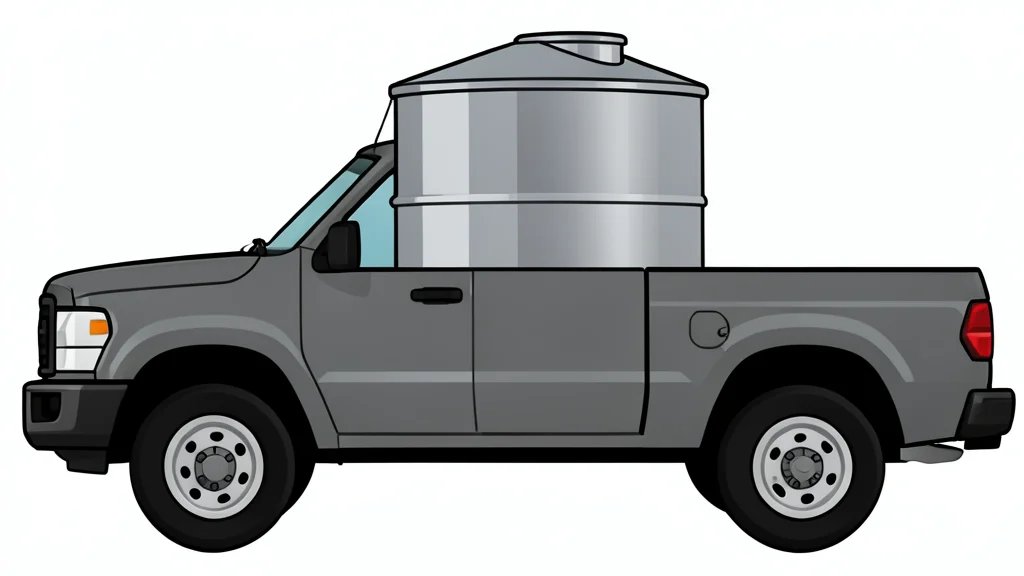
U.S. Border Patrol agents in Texas used power tools to extract four migrants from a sealed container in a pickup truck, marking the latest in a series of dangerous smuggling incidents along the southern border.
In Eagle Pass, Texas, U.S. Border Patrol agents discovered four individuals confined within a large, cylindrical water tank mounted in the bed of a pickup truck on September 14. According to the GN geopolitics/migration (en-US) desk, the incident occurred when officers from the Del Rio Sector inspected a 2007 Ford F-150 and found the migrants unable to free themselves. The group, comprising two Bolivian nationals, one Cuban, and one Colombian, was extracted using power tools after the sealed container presented no means of escape.
The driver, identified as a 19-year-old U.S. citizen, was handed over to Homeland Security Investigations and faces charges related to alien smuggling. CBP officials noted that the individuals declined medical attention upon rescue and were transported to the Uvalde South Station for standard processing. The method of transport highlights a troubling shift in smuggling tactics, where human beings are treated as cargo in conditions that pose immediate risks to life and health.
Escalating risks in smuggling methods
This rescue is part of a troubling trend noted by local authorities. In the past two and a half weeks, agents in the Del Rio Sector have rescued more than a dozen people from similar confined spaces. Just days earlier, on September 7, a canine unit located three migrants locked inside a stationary freight train car in Uvalde County. Another incident on August 30 saw eight people, including a child, found hiding in locked autorack freight cars near Knippa, Texas.
Senior officials have described these schemes as barbaric, emphasizing that smugglers prioritize profit over the safety of those they transport. The use of sealed containers and locked train cars creates environments where heat, lack of oxygen, and physical injury are significant threats. These events underscore the lethal nature of current smuggling routes and the increasing desperation of those attempting to cross the border under such hazardous conditions.
Strain on border response capabilities
The frequency of these rescues places a significant burden on Border Patrol resources. Agents must be equipped not only for standard apprehensions but also for complex extractions that often require specialized tools and immediate medical readiness. The shift from open-air concealment to sealed, mechanical enclosures demands a more technical and urgent response from law enforcement personnel stationed along the Texas-Mexico border.
As smuggling networks adapt their methods to evade detection, the risk to migrants continues to rise. Authorities are monitoring these patterns closely, recognizing that each incident represents a potential tragedy that was narrowly averted. The situation highlights the urgent need for continued vigilance and the development of strategies that address both the human cost and the operational challenges posed by these evolving smuggling techniques.
Watching for further incidents
Observers should watch for increased enforcement actions in the Eagle Pass and Uvalde sectors, as well as potential legislative or policy responses aimed at disrupting these specific smuggling networks. The recurrence of trapped individuals in freight and vehicle-based concealments suggests that these methods may become more prevalent. Continued reporting from the region will be essential to understanding the broader implications for border security and migrant safety.