South Korean President Lee Apologizes Amid Falling Support
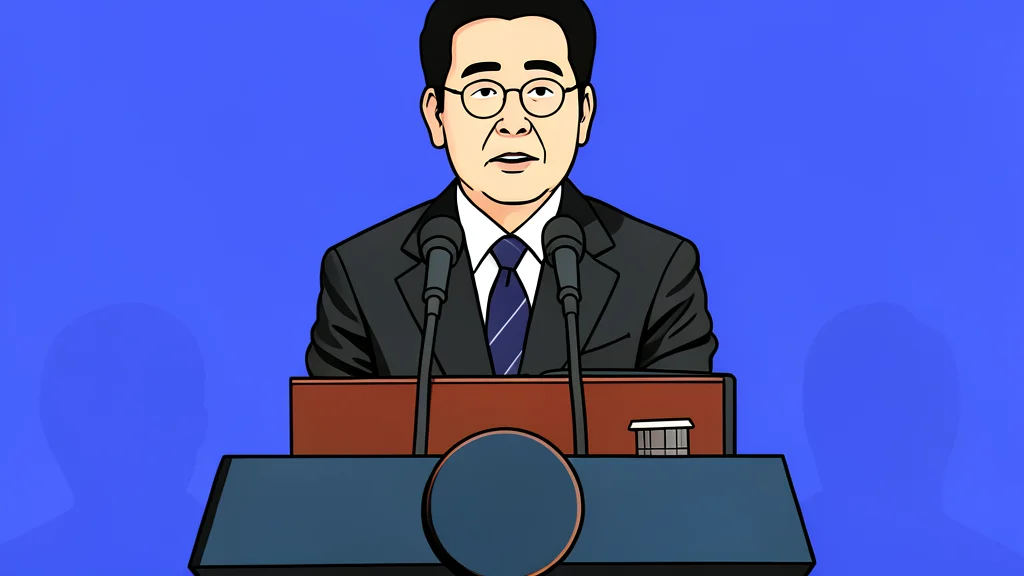
President Lee Jae Myung has publicly apologized for policy failures as his approval rating hits a record low, facing pressure from both domestic discontent and US trade demands.
South Korean President Lee Jae Myung has issued a formal apology to the public, acknowledging a recent surge in disappointment regarding his administration's handling of the economy. Speaking at a snap news conference on September 18, Lee pledged to adopt a more humble approach to governance as his approval rating plummeted to a record low of 37 percent. The move comes amid growing frustration over high property prices and a perceived disconnect between government policy and the daily struggles of ordinary citizens.
According to the GN auto geopolitics/asia-pacific: Korea Strait report, this domestic crisis is compounded by external pressure from Washington. The Trump administration has criticized Seoul for what it perceives as insufficient cooperation on trade deals and security matters, including the reopening of the Strait of Hormuz. Lee stated that he had been "taken aback" by the wave of concern but concluded that the people were right to be dissatisfied, admitting his eagerness to move forward had caused him to overlook broader public sentiment.
Domestic discontent shapes political trajectory
Despite the recent technological boom benefiting major chipmakers like Samsung and SK Hynix, many South Koreans report feeling little economic benefit in their daily lives. This disconnect has fueled a sharp decline in support for Lee’s agenda. Jeong Han-wool, director of the Korean People Research Institute, warns that if the president cannot reverse this trend, he risks entering an "early lame-duck status." In such a scenario, even with parliamentary control, his ability to enact significant policy changes would be severely hampered by constant criticism.
In an attempt to regain control, Lee recently ordered a sweeping cabinet reshuffle, replacing key ministers in finance, defense, and justice. His top policy advisor, Kim Yong-beom, also stepped down, emphasizing the need to focus on how growth transforms lives rather than just statistical percentages. However, these structural changes have not yet resulted in a measurable improvement in public approval ratings.
Strained ties with Washington persist
The administration is also grappling with the complexities of its alliance with the United States. Tensions have risen over Seoul's response to US demands regarding the Strait of Hormuz, a critical artery for South Korea’s oil imports. According to recent reports, the US has cancelled long-planned joint military drills, citing Seoul’s reluctance to assist in the region and delays in finalizing a $350 billion trade agreement. Lee’s team is now exploring ways to support efforts to reopen the strait to alleviate US concerns.
While the two nations are nearing an announcement on initial investment projects, Seoul has requested more time to fine-tune the deal. This diplomatic friction highlights the delicate balance Lee must maintain between satisfying US security expectations and addressing domestic opposition to military involvement in regional conflicts. The administration faces the challenge of smoothing ties with Washington without further alienating a domestic base that is increasingly wary of foreign entanglements.
Watching for upcoming diplomatic signals
The coming weeks will likely reveal whether Lee’s pledge of humility translates into tangible policy adjustments or diplomatic breakthroughs. Observers will be watching closely for any official statements regarding the Strait of Hormuz and the finalization of the US trade deal. Additionally, the impact of the cabinet reshuffle on economic indicators will be a key metric for assessing whether the administration can stabilize its standing before the next major political cycle.