Andersson Tasked with Forming Sweden's New Government
Following a shift in the parliamentary balance, the new Speaker of the Riksdag has granted the Social Democratic leader the initial mandate to explore a coalition, marking a pivotal moment in Sweden's political transition.
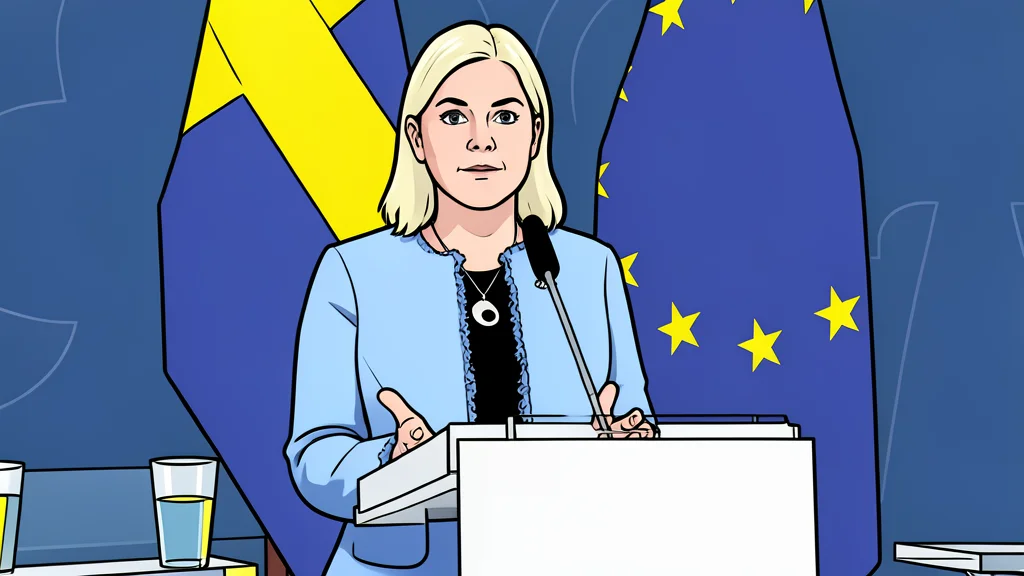
Magdalena Andersson has received the formal mandate to begin exploring the formation of a new Swedish government, a move that signals a significant shift in the country's political landscape. According to reports from GN geopolitics/politics (en-US), the task was assigned following the September 13 parliamentary election, which saw the left-wing opposition bloc secure a majority. This development ends the tenure of the current administration and initiates a critical period of coalition building.
The decision to task Andersson with this probing assignment came after Speaker Andreas Norlen held individual consultations with all party leaders. Norlen noted that there was a broad consensus among the political factions that the Social Democratic leader should be the first to attempt to secure sufficient support. This procedural step is standard in the Swedish system but carries particular weight given the recent change in the balance of power within the Riksdag.
A Shift in Parliamentary Power
The transition follows the resignation of Prime Minister Ulf Kristersson, who submitted his resignation to the Speaker on Thursday. Preliminary election results indicated that the center-left bloc had overtaken the center-right coalition, necessitating a change in leadership. Andersson accepted the responsibility with what she described as great humility, emphasizing a desire to lead the country with a new spirit of cooperation. Her acceptance marks the beginning of a complex negotiation process where policy alignment and political compromise will be paramount.
Prioritizing Broad Cooperation
Andersson has indicated that her approach will focus on seeking broad cooperation rather than a narrow partisan agenda. She stated that she intends to hold talks with six other party leaders to gauge the feasibility of a stable governing majority. This strategic choice suggests an intent to build a coalition that is robust enough to withstand legislative challenges, a priority given the fragmented nature of the current parliament. The emphasis on constructive dialogue aims to mitigate potential political instability during the transition period.
Timeline for New Leadership
The newly elected parliament is scheduled to convene on September 28, at which point a new Speaker will be elected. This individual will determine the specific deadline by which Andersson must report the outcome of her mandate. At the earliest, a prime ministerial candidate could be formally proposed to the full assembly on September 29. The next few weeks will therefore be crucial, as the success of these negotiations will determine whether Sweden enters a period of stable governance or faces further political uncertainty.