Europe Coordinates Arctic Strategy Amid Rising Geopolitical Tensions
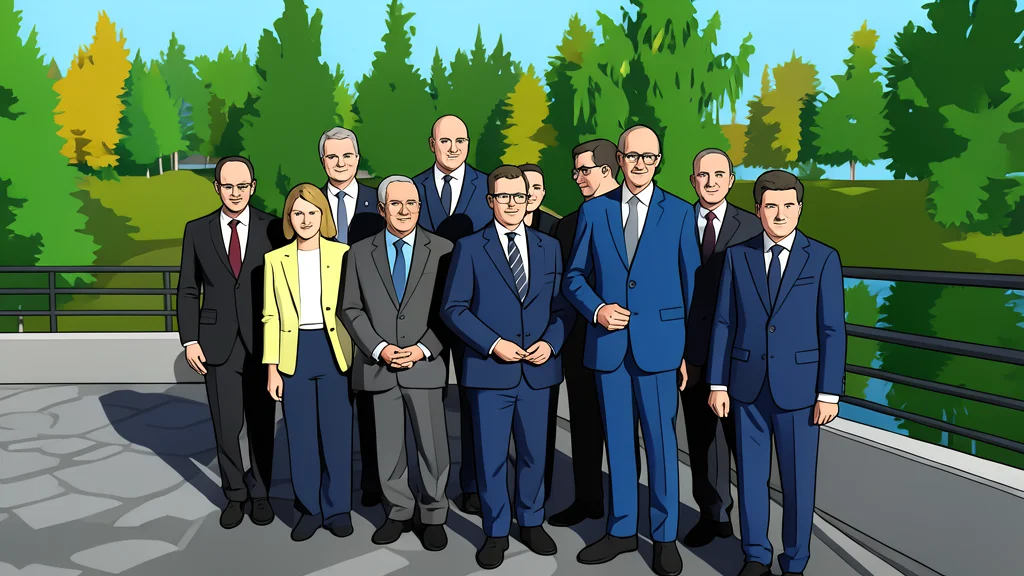
In Rovaniemi, European leaders are aligning on a unified approach to Arctic security and trade, seeking to balance economic opportunities with the complexities of Russia’s military presence and US ambitions in Greenland.
European leaders convened in Finland this week to address the escalating strategic competition in the Arctic, a region where melting ice is simultaneously unlocking new maritime corridors and exposing Europe to heightened security risks. The two-day summit in Rovaniemi brought together key figures, including German Chancellor Friedrich Merz and Danish Prime Minister Mette Frederiksen, to discuss how to manage the region’s growing importance to Europe’s prosperity and defense.
The gathering occurs against a backdrop of recent friction, specifically Norway’s seizure of a Russian vessel in the Svalbard archipelago at the request of Ukraine, a move that drew sharp condemnation from President Vladimir Putin. Finnish Prime Minister Petteri Orpo emphasized that the Arctic is no longer a peripheral concern but a central element of European security, urging his counterparts to move from discussion to concrete, coordinated action.
Climate change reshapes trade priorities
According to the Centre for European Policy Network, the strategic landscape is evolving rapidly due to accelerating climate change. The thinning of sea ice is making the Northeast Passage a viable alternative for global shipping, a development that has gained additional urgency amid disruptions in the Strait of Hormuz. This shift is not merely logistical; it intensifies competition for mineral resources and trade influence among European, Russian, and Chinese actors.
The summit is widely viewed as a preparatory step for the European Union’s upcoming revision of its Arctic policy. For the first time, security is expected to occupy a central role in this revamped strategy, reflecting a shift from a purely economic focus to one that integrates defense and geopolitical stability.
Greenland adds layer of complexity
The strategic significance of the Arctic is further complicated by tensions surrounding Greenland, the self-governing territory of EU member Denmark. US President Donald Trump has repeatedly expressed interest in bringing the resource-rich island under American control, a stance that has been firmly opposed by Greenland’s government. This diplomatic friction has forced European leaders to consider how to defend the territorial integrity of their member states while managing relations with Washington.
In response, European Commission President Ursula von der Leyen announced a package of 200 million euros in support for Greenland over the next two years. The funds are designated for climate adaptation, digital connectivity, and infrastructure development in sectors such as hydropower and fisheries, signaling a European commitment to the territory’s welfare and sovereignty.
Looking ahead to policy revision
As the summit concludes, the focus shifts to the implementation of these discussions into a cohesive EU strategy. The coming months will be critical in determining whether Europe can present a united front on Arctic governance, balancing its economic interests in new trade routes with the need to counteract geopolitical pressures from both Moscow and Washington.
Observers will watch closely for the specific security measures outlined in the autumn policy revision and how European nations coordinate their responses to incidents in the high north. The ability of Europe to act collectively will define its influence in a region that is becoming increasingly central to global power dynamics.