Poland Adjusts Border Traffic to Mitigate Security Risks
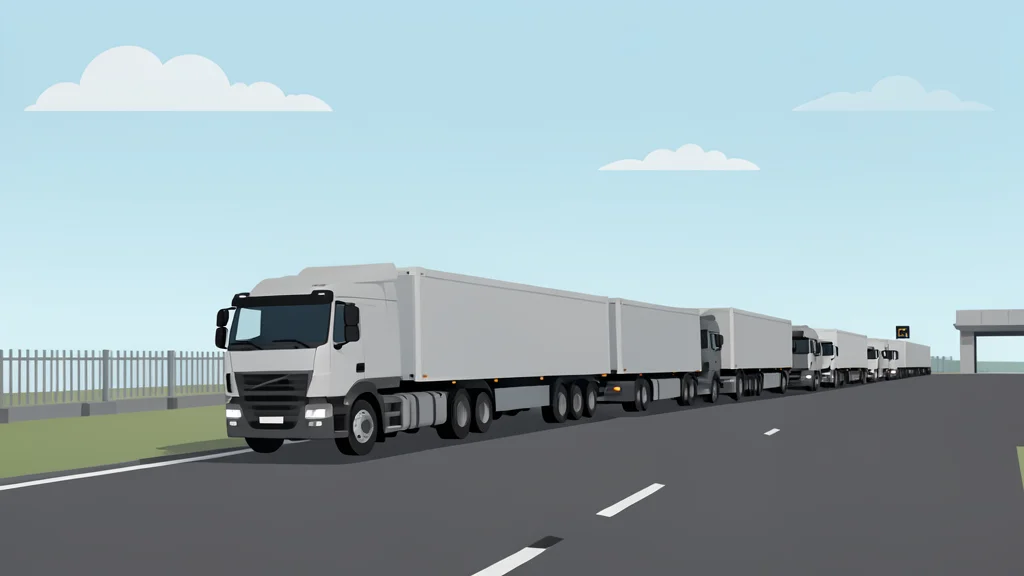
Warsaw is implementing new protocols at the Ukrainian border to prevent vehicle congestion that could be exploited as military targets.
Polish authorities are preparing to overhaul traffic management protocols at the border with Ukraine, a move driven by heightened security concerns following recent Russian incursions. According to reports from GN geopolitics/migration (en-US), the primary objective is to prevent large accumulations of vehicles, particularly fuel tankers, which are viewed as potentially vulnerable targets for aerial or missile strikes. This strategic shift underscores the growing intersection of logistical operations and national defense in the region.
The decision follows a recent incident involving a Russian attack on a locomotive belonging to Ukrzaliznytsia at the Yagodin station, a location situated close to the Polish border. In response, Prime Minister Donald Tusk convened a meeting at the Government Security Center to address the immediate threats to infrastructure and civilian safety. The government is now coordinating with customs, police, border guards, and military units to ensure that cross-border movement remains fluid and less susceptible to disruption or attack.
Strategic Shift in Border Logistics
The new approach prioritizes the continuous flow of goods over stationary queues, recognizing that static clusters of heavy vehicles present a significant tactical risk. Special emphasis is being placed on the handling of fuel transport, as the concentration of flammable materials near crossing points could have catastrophic consequences if struck. This operational change reflects a broader trend among European nations to integrate security considerations into daily border administration.
By involving multiple state agencies in the coordination process, Warsaw aims to create a unified response framework that minimizes bottlenecks. The involvement of military personnel in traffic management signals a recognition that the border zone is no longer a purely civil domain but an area requiring defense-level oversight. This integration seeks to reduce the window of vulnerability during which vehicles are exposed to potential threats.
Context of Recent Incursions
The urgency of these measures is contextualized by a series of recent events in the region, including the damage to a monument to the UPA and a suspected arson at a drone manufacturing plant in Poland. While these incidents have different natures, they collectively contribute to a climate of heightened vigilance. The government’s response indicates a proactive stance to secure critical infrastructure against both kinetic and non-kinetic threats.
Monitoring Future Implementation
As Poland moves to implement these changes, observers will be watching for the efficiency gains at key crossing points and any further security incidents in the vicinity. The success of this strategy will depend on the seamless cooperation between civilian and military authorities. The coming weeks will reveal whether these logistical adjustments effectively mitigate the risks identified by Warsaw’s leadership.