New US Law Grants President Broad Tariff Authority
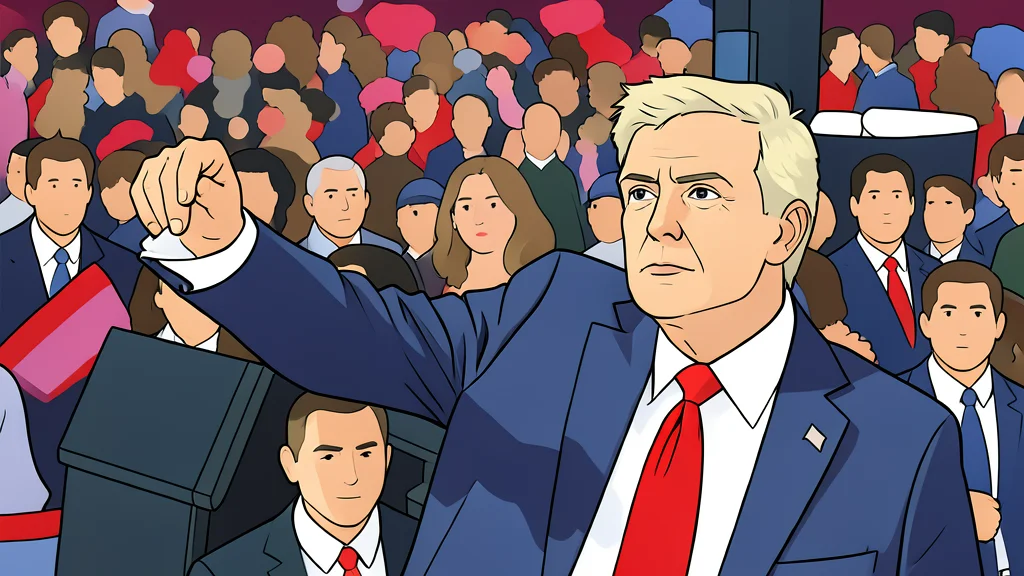
A newly signed bill empowers the US president to impose severe tariffs on nations buying Russian energy, raising concerns about global trade stability and executive overreach.
United States President Donald Trump signed a comprehensive sanctions bill into law on Friday, granting the executive branch unprecedented authority to impose tariffs that could persist long after his term ends. According to reports from GN geopolitics/trade (en-US), the legislation mandates duties of up to 100% on goods imported from the five largest buyers of Russian crude oil and natural gas. This move injects significant uncertainty into the global economy, particularly after nearly two years of escalating trade tensions.
While analysts suggest the immediate economic impact may be muted due to political considerations ahead of the November midterm elections, critics warn that the broad language of the bill creates a dangerous precedent. The law does not explicitly name target countries, leaving the determination of which nations qualify to the discretion of the White House. This ambiguity has drawn sharp criticism from legal experts and opposition lawmakers who fear the new powers may be used to target allies or trading partners beyond Russia’s immediate energy customers.
Discretionary Powers and Legal Ambiguity
The core of the controversy lies in the discretionary authority granted to the president. Laura Brank, a lawyer specializing in cross-border transactions, noted that the lack of specific criteria for calculating the top-five importer lists allows for wide interpretation. Unlike previous tariff actions that were struck down by the Supreme Court for exceeding statutory authority, this new legislation explicitly calls for these duties, making legal challenges more difficult. White House legislative director James Braid emphasized that this is the first time in nearly forty years that Congress has granted such new tariff powers to the executive branch.
Global Trade Implications and Reactions
The bill is designed to deprive Russia of revenue supporting its war in Ukraine by targeting its energy and defense sectors, as well as its shadow fleet of tankers. However, the potential ripple effects are widespread. Jeannette Chu of the National Foreign Trade Council indicated that various entities have differing assessments of which countries might be affected, with speculation ranging from China and India to Brazil, Japan, and European Union members. Moscow has responded by stating that further US sanctions would complicate efforts to reach a peace deal in Ukraine, while China has expressed opposition to what it describes as extraterritorial jurisdiction lacking a legal basis.
Strategic Leverage and Future Watchpoints
Congressional sources indicate that US officials pushed for rapid passage of the bill to provide additional leverage ahead of upcoming diplomatic meetings with Chinese President Xi Jinping. Despite assurances from the White House that the measure includes sufficient guardrails, Democratic lawmakers like Representative Don Beyer have expressed deep concern, arguing that the administration has a history of misapplying trade laws to pursue political agendas. The immediate next steps will involve monitoring how the administration defines the criteria for the top-five lists and whether it invokes the new powers against any specific nations in the coming weeks.