UN Review Urges Maintenance of Peacekeeping Readiness Amid Crisis
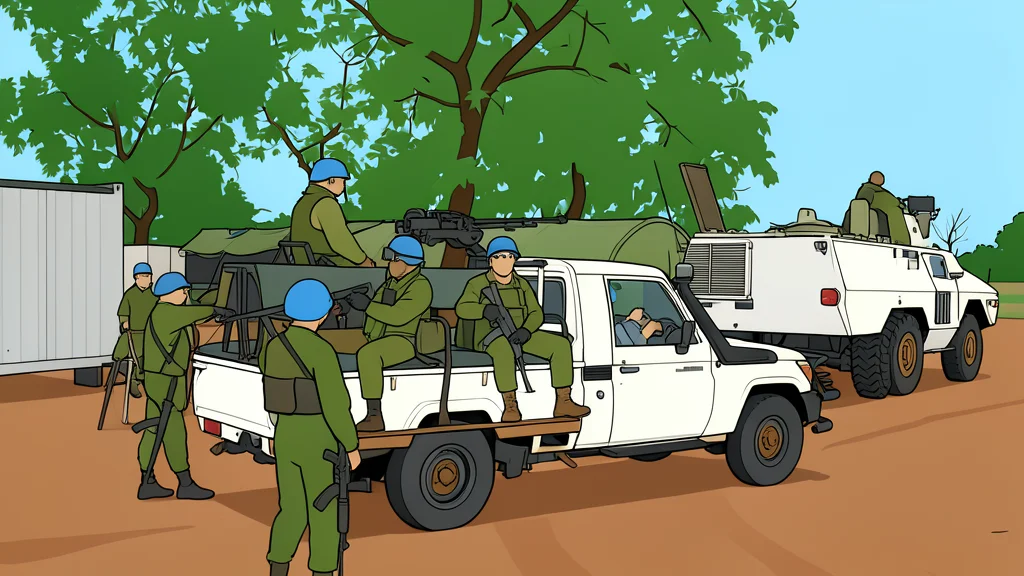
A new UN report warns that peacekeeping capabilities are at risk of atrophy despite rising global conflicts and fragmented Security Council action.
Key points
- A UN review warns that peacekeeping capabilities are at risk of atrophy due to lack of use and political fragmentation.
- The Security Council has not authorized a new UN-led peacekeeping mission since 2014 despite rising global conflicts.
- The report urges member states to maintain operational readiness to ensure the UN can respond effectively to future crises.
The United Nations has issued a stark assessment of its peacekeeping capabilities, arguing that the organization must maintain its operational readiness even as political will among member states wanes. According to a review circulated on August 20, the global security landscape is deteriorating, with large-scale conflicts in Europe and the Middle East and state fragility in regions like Sudan and Haiti creating an urgent demand for international intervention.
Despite this growing need, the Security Council has not authorized a new, wholly UN-led peacekeeping operation since 2014. The report, drafted after extensive consultation with governments and civil society, emphasizes that peace operations are fundamentally political. It warns that without concerted international support and consistent policy toward conflict parties, the UN’s ability to deploy effective missions will continue to erode.
Political Fragmentation Limits UN Action
The core challenge identified in the document is the inability of major powers to reach consensus. As noted in the analysis published by Just Security, the UN can only act when member states authorize, resource, and deploy it. However, deepening mistrust among major powers has made it increasingly difficult for the Security Council to act with unity and purpose.
This political paralysis creates a paradox: while the need for political solutions to conflicts is greater than ever, the mechanisms to achieve them are becoming less accessible. The review suggests that the UN must revitalize its peacemaking role to incentivize conflict parties to seek peace, rather than relying solely on military deployment after crises have already escalated.
Risk of Capability Atrophy
The report warns that the UN’s peace and security toolbox is rich but increasingly underused. Like a muscle that is not sufficiently flexed, the institution’s capabilities are at risk of atrophying. When missions are not deployed, expertise disperses, partnerships thin out, and planning cultures become reactive, leaving the organization ill-equipped for sudden crises.
This deterioration poses a significant risk to global security. If the necessary instruments are allowed to deteriorate, the international community may find itself unable to respond effectively when political conditions finally align. The report argues that maintaining a ready force is essential to ensure that the UN can deploy troops, police, and civilians anywhere in the world when required.
Maintaining Operational Readiness for Future Crises
The review draws on the legacy of former Secretary-General Kofi Annan, who compared peacekeeping to a fire brigade that could only acquire its fire engine after the fire had started. The current leadership seeks to break this cycle by emphasizing preparedness over reactive deployment.
By keeping its peacekeeping machinery ready, the UN aims to provide a legitimate and adaptable platform for containing violence and supporting political processes. This readiness is drawn from the contributions of more than 120 countries, creating a shared system of capability. The forward question now is whether member states will prioritize this maintenance, ensuring that the UN is not merely a bystander in the face of emerging humanitarian catastrophes.