Jakob Ingebrigtsen's 180km Weekly Grind Drives 2026 Golds
Norwegian distance runner relies on rigid consistency and daily double sessions to overcome injury and claim major titles.
Key points
- Jakob Ingebrigtsen won a European 5,000m gold, World Ultimate 5,000m title, and world road silver in 2026.
- The Norwegian runner covers 175 to 180 kilometers per week, training twice daily to maintain consistent load.
- He views rest days as a risk factor, arguing that sudden breaks from training increase the likelihood of injury.
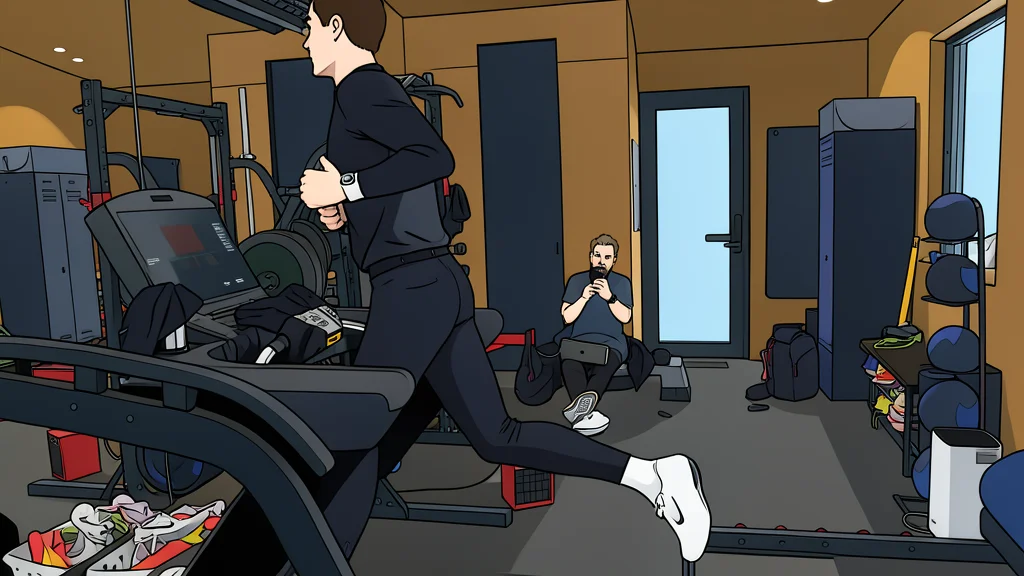
Snow blankets the Norwegian ground, but the rhythm inside the gym is unbroken. Jakob Ingebrigtsen stands on his treadmill, the belt humming beneath his feet as he explains the architecture of his success. It is a physical reality, not a metaphor. The air is cold outside, yet the heat of effort radiates from his form. This is where the year’s defining victories began to take shape, far from the roar of stadiums.
The 26-year-old has redefined expectations this year. A European 5,000m gold, the World Ultimate 5,000m title, and a world road silver medal now sit in his collection. These achievements arrived despite Achilles surgery in February and a flu that clung to him through the spring. Guardian Sport notes that his approach remains unchanged: meticulous, controlled, and relentlessly focused on the variables he can command.
Control defines the daily routine
Ingebrigtsen treats his life as a machine to be optimized. He runs 175 to 180 kilometers per week, a volume that demands total devotion. For him, the priority list is short: wake up, eat, train. Anything else is noise. He believes that if any aspect of his preparation falls outside his control, he has failed in his primary duty. This mindset strips away the ambiguity of ambition, leaving only the concrete act of moving forward.
Rest days are a concept he largely rejects. He argues that taking a break causes a loss of 20 to 25 kilometers of running, which paradoxically increases injury risk. The body, he explains, adapts to consistent load. When that load disappears, the muscles and joints lose their stability. Returning to full intensity after a break creates a dangerous asymmetry. It is in that gap, he warns, that something snaps.
Double sessions shape the peak
His training schedule is a study in repetition. Twice a day, he hits the track or the road. Saturdays bring hills, while Sundays offer a longer, steady 20-kilometer run. Drills, mobility work, and core exercises fill the gaps on Mondays and Wednesdays. Weights anchor the week on Fridays and Sundays. This structure remains constant week after week, unless injury intervenes. The goal is not to spike, but to sustain a high level of stress over time.
Tuesday and Thursday are reserved for threshold work, the precise zone where fatigue becomes sustainable. A morning session might feature five six-minute efforts with one-minute jogs in between. The afternoon could see 25 laps of a 400-meter track at 5km to 10km pace, with only 30 seconds for recovery. By spreading the volume across multiple sessions, he avoids the peaks and troughs that often derail other runners. The load is heavy, but it is evenly distributed.
Consistency outlasts seasonal weather
The treadmill serves as his anchor against the elements. In Norway, the weather is a constant variable that can disrupt outdoor training. The machine removes that uncertainty. He sets a specific speed and incline, and the conditions remain identical whether it is raining, cold, or windy. Even in the height of summer, he performs morning threshold sessions on the belt. The playlist shifts, with punk and rock bands providing the soundtrack, but the physical demand does not.
Even holidays bend to this discipline. On Christmas Day last year, he ran twice, covering 22 kilometers. He calls it an easy day, though he had to manage digestion carefully. The traditional Norwegian dinner is rich in fat, featuring pork ribs, sausages, and meat cakes. Ingebrigtsen adjusted his intake to accommodate the training. The message is clear: the routine does not pause for the calendar. It continues, unbroken and unyielding.