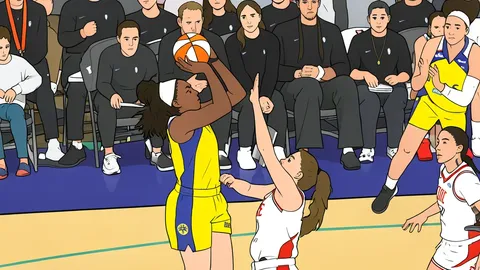
Bronze Captures Leslie's Historic WNBA Dunk in LA
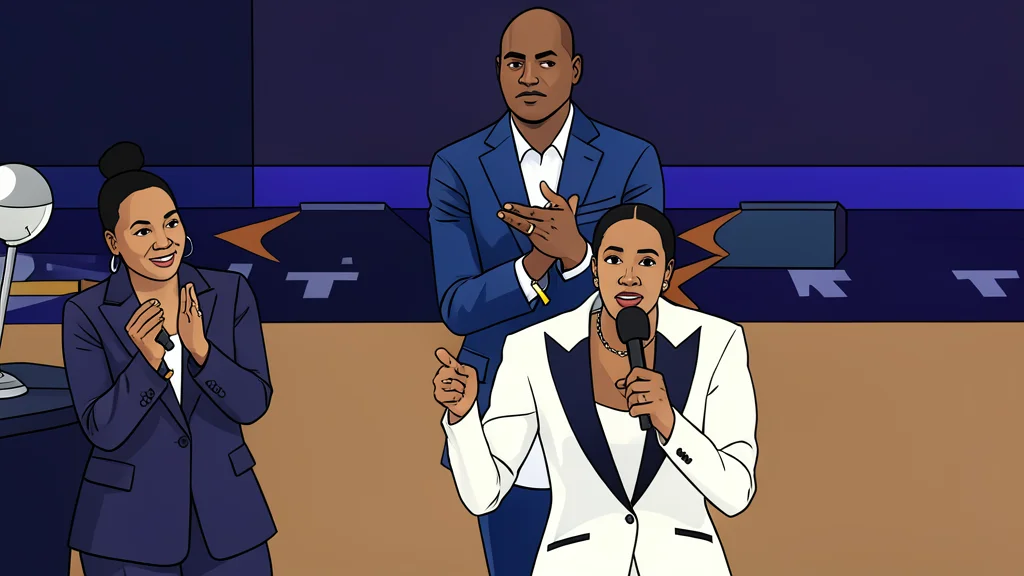
A 750-pound statue named 'The First Lady' now anchors the Crypto.com Arena, freezing the moment Lisa Leslie broke barriers in women's basketball.
Key points
- Lisa Leslie received an 11-foot bronze statue named 'The First Lady' at Crypto.com Arena, depicting her historic WNBA dunk.
- The statue weighs 750 pounds of bronze on a 2,600-pound granite base, honoring her 12-time All-Star status and Olympic golds.
- Leslie emphasized the importance of kindness and seeing others as human beings, a value that extends beyond her basketball achievements.
The air in Crypto.com Arena hums with a heavy, reverent silence, broken only by the rustle of silk and the soft thud of heels on polished hardwood. Friends and family gather in a tight circle, their eyes locked on the granite plinth that rises from the center of the floor. The atmosphere is thick with anticipation, a tangible weight that presses against the skin, waiting for the veil to fall and reveal the permanent mark of a career that rewrote the rules.
When the drape drops, the crowd exhales. Rising from the base is a figure of pure bronze, captured in the exact arc of a jump that defied gravity and gender norms. It is not just a statue; it is a monument to Lisa Leslie, the first player to dunk in the WNBA. The metal gleams under the arena lights, reflecting the faces of those who watched her make history, now freezing that fleeting moment in time for generations yet to come.
Bronze weight of a historic moment
The sculpture, titled "The First Lady," is a study in mass and motion. It stands eleven feet tall, perched on a four-and-a-half-foot granite base that anchors it firmly to the Los Angeles landscape. The bronze alone tips the scales at 750 pounds, a dense, physical testament to the strength required to execute the play. Leslie worked closely with the sculptors to ensure every detail was faithful to that day, down to the ribbons in her hair. She wanted young girls to see themselves reflected in the image, to find a mirror in the metal that said they, too, could reach the rim.
Magic Johnson, a legend in his own right, offered a blunt assessment of what such an honor demands. To earn a place in the statue court, one must dominate, make history, and win championships. Leslie checked every box, collecting twelve All-Star selections, three MVP awards, and four Olympic gold medals along the way. Her back-to-back WNBA titles in 2001 and 2002, capped by Finals MVP honors, cemented her status as a force that could not be ignored. The statue is the final, physical seal on a career defined by an unyielding commitment to excellence.
Ambition forged in Compton streets
The path to this bronze pedestal was paved with grit and adaptability. Growing up in Compton before moving around Los Angeles County, Leslie carried a dream that refused to be contained by position or expectation. Her former coach, Marianne Stanley, recalls a pivotal moment during Leslie’s sophomore year at USC. With no point guard available, Stanley challenged the center to step up. Leslie agreed without hesitation, playing the position for ten games and influencing her teammate to do the same. That teammate, Tammy Story, went on to become an All-Pac-10 first-team point guard. Leslie’s willingness to shede her identity for the team’s success was a defining trait of her career.
Kindness beyond the spotlight
Off the court, Leslie’s influence radiates through acts of quiet decency. Her husband, Michael Lockwood, shared a recent anecdote from Paris, where Leslie abandoned their plans to help an elderly man navigate the subway stairs. There were no cameras, no applause, no expectation of reward. She simply saw a human being who needed assistance and acted. This selflessness is the core of her message, a reminder that regardless of status, everyone is a person deserving of respect. As reported by Yahoo Sports, her legacy is now etched in metal, but its truest form is the kindness she extends to the world, a quiet power that stands taller than any trophy.