Caitlin Clark’s Sideline Ritual Amidst World Cup Noise
Amidst a storm of debate over ball distribution, a single moment of playful mimicry defined Caitlin Clark’s journey to gold in Germany.
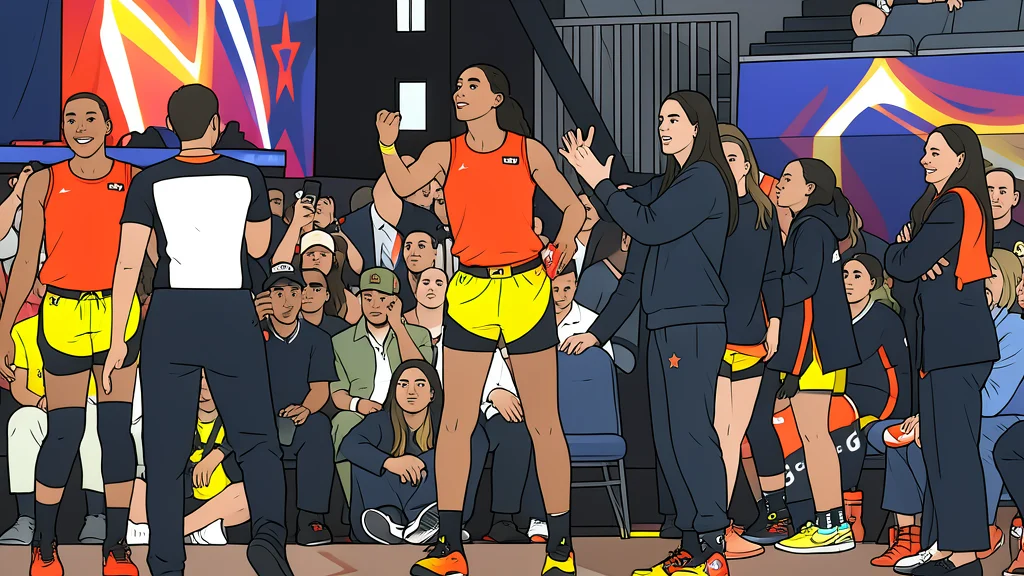
The hardwood gleams under the arena lights, a polished expanse reflecting the sharp contrast of Team USA uniforms. On the sideline, away from the center court chaos, Caitlin Clark lifts her arms in a fluid, rhythmic arc. Her hands trace the familiar trajectory of a perfect shot, fingers curling in the air as if gripping a leather ball that isn’t there. The motion is precise, muscular, and entirely imaginary. It is a private ritual performed in public, a ghost of a play unfolding in the empty space between the boundary line and the bench.
This was not a drill. It was a response. During the 2026 FIBA Women’s World Cup in Germany, the tournament buzzed with a specific, persistent undercurrent. Clips circulated widely, showing teammates bypassing open looks for Clark. The debate raged for weeks, dissecting every pass, every hesitation, and every missed connection. Fans argued over the offense’s geometry, questioning whether the star was truly integrated or merely a peripheral figure in the group stage. The noise was deafening, a digital roar that threatened to drown out the actual game.
A Playful Rebuke to the Rumors
Clark’s imaginary heave cut through the static. It was not an angry gesture, nor was it a cry for attention. It was a smirk made of muscle memory. By mimicking the shot, she acknowledged the absence of the ball without conceding defeat to the narrative. The clip, shared by Yahoo Sports and other outlets, traveled rapidly. It humanized the tension, turning a statistical dispute into a moment of levity. The video did not prove resentment; it proved presence. It showed a player maintaining her rhythm, her identity, even when the play did not flow through her hands.
Silence Broken by Statistical Dominance
The debate faded as the scoreboard climbed. In the gold medal game against France, the narrative shifted from speculation to execution. Clark entered from the bench, a calculated move that changed the tempo. She played thirteen minutes, a brief but potent window in which she scored twelve points on four-of-five shooting. Her three assists wove through the defense, unlocking lanes that had previously seemed closed. Team USA, trailing by fourteen points early, surged back to win 97-79. The final whistle ended the argument. Clark finished as the team leader in assists with 32, a testament to her influence that no amount of passing hesitation could diminish.
Champions in the Locker Room
The celebration in the locker room carried its own visual poetry. Clark, drenched in champagne, was captured spraying the liquid directly into her own eye. The image was chaotic, joyful, and undeniably human. It rounded out a tournament defined by viral moments, each one adding a layer to her story. The gold medal hung heavy on her neck, a tangible weight against the intangible clouds of online discourse. She had won the game, the medal, and ultimately, the narrative, not by fighting the noise, but by dancing around it with a ghost of a shot.