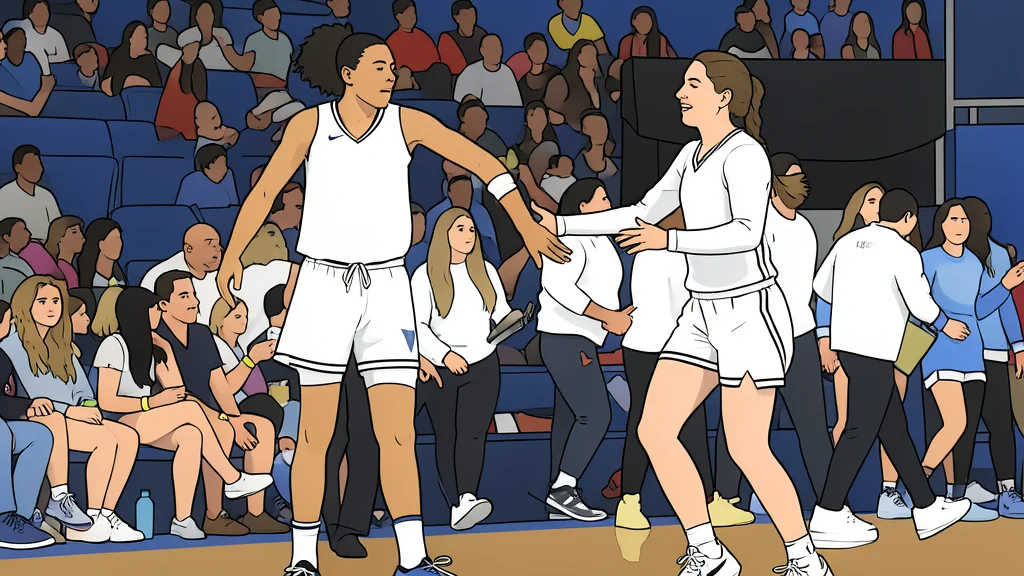
Clark, Bueckers, Reese Projected for 2028 Team USA
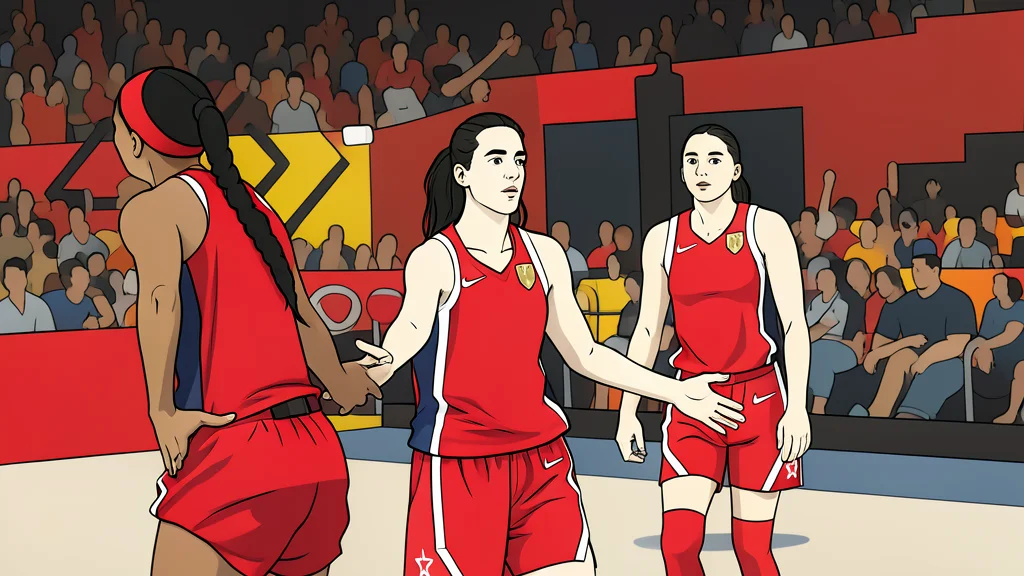
The projected 2028 roster blends the momentum of a fresh World Cup title with the unique pressure of competing on U.S. soil for the first time since 1996.
The Berlin arena hummed with the residual heat of a 97-79 victory, the floor still vibrating from the final buzzer. Five consecutive World Cup titles sat on the shelf, but the eyes of the American program turned forward, toward a home court in Los Angeles. The narrative shifted from past glory to future composition, a pivot that landed squarely on the shoulders of a new generation.
Yahoo Sports reported on the projection, highlighting a 12-player slate that balances veteran grit with explosive youth. Caitlin Clark, Paige Bueckers, and Angel Reese stand at the forefront, not as novices, but as the defining faces of a team ready to claim home soil. The projection, detailed by USA Today, sketches a roster where experience meets the raw electric energy of the WNBA’s latest class of stars.
Rising faces anchor the squad
Clark, Bueckers, and Reese are grouped with Aliyah Boston as the program’s rising core. These four players share a distinct lineage: each won the WNBA Rookie of the Year award in consecutive seasons. Their presence in Berlin was a debut, a first major 5-on-5 international test. Now, they are projected to return not as guests, but as central figures in the 2028 architecture.
The list extends to a stable of proven talents. A’ja Wilson, Breanna Stewart, Napheesa Collier, Chelsea Gray, and Jackie Young are viewed as locks, a potential starting five grounded in consistency. Rhyne Howard, Olivia Miles, and JuJu Watkins fill the remaining slots, creating a depth chart that blends scoring threats with defensive versatility. The projection suggests a team built on motion, where every player brings a specific, high-value skill to the collective engine.
Berlin momentum drives the cycle
The World Cup final in Berlin provided the latest proof of concept. Stewart led the charge, averaging 12.8 points and 7.3 rebounds, while Clark orchestrated the offense with 5.3 assists per game. In the decisive moment against France, Stewart dropped 22 points and 10 rebounds, earning tournament MVP honors. The team rallied from a 14-point deficit, a resilience that coach Kara Lawson hopes to carry into the next chapter.
Lawson, who won Olympic gold as a player in 2008, now guides the national team through this critical cycle. Her leadership is pivotal as the squad transitions from the Berlin triumph to the home Games. The stakes are higher, the scrutiny sharper, and the expectation unanimous: another gold medal on American soil.
Home soil raises the stakes
The 2028 Los Angeles Olympics mark a rare moment for the U.S. women’s team. It is their first major tournament on home ground since the 1996 Atlanta Games. That previous host event ignited a streak of eight consecutive Olympic gold medals. The history is a weight and a wing, a reminder of what is possible and what is expected.
While the core is set, the periphery remains fluid. Players like Kelsey Plum and Sonia Citron have already made their marks, with Citron replacing an injured Plum in Berlin. Others on the watch list, including Shakira Austin and Sabrina Ionescu, keep the competition intense. The projection is a snapshot, a starting point for a journey that will be defined by performance, health, and the relentless drive to win on home court.
Home-soil stakes elevate 2028 roster projections
The upcoming Los Angeles Games carry a distinct weight for the American program, marking the first major international tournament held on home soil since the 1996 Atlanta Olympics. That previous home event kicked off a historic streak of eight consecutive gold medals, a legacy that adds an extra layer of expectation to the current roster building process.
This heightened significance coincides with the team’s recent surge in Berlin, where the United States secured its fifth consecutive World Cup title. The combination of that recent international success and the opportunity to defend the home court creates a powerful narrative for the players projected to lead the charge in 2028.