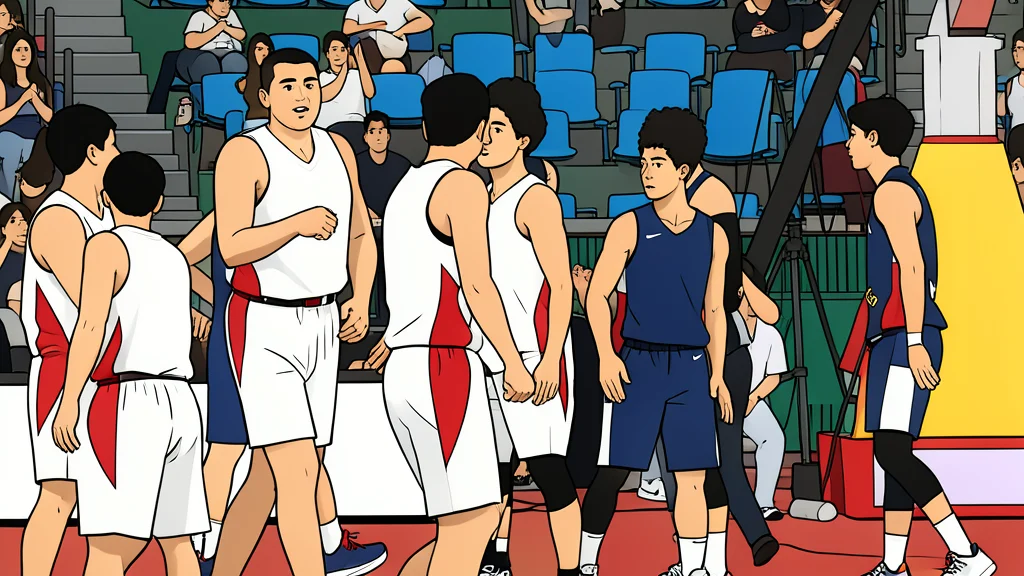
Seoul's Semifinal Showdown: Fire Meets Iran in Aichi

Under the harsh glare of Nagoya arena lights, South Korea dismantled Jordan with surgical precision, setting the stage for a historic clash with Iran.
The hardwood gleams under the high beams of the Nagoya Aichi International Arena, a polished stage where the air hums with electric tension. For South Korea, the path to the semifinals was paved by a ruthless display of collective fire, a performance that silenced any doubts about their depth. They did not just win; they dominated, leaving Jordan’s defense in the dust as the score gap widened into a chasm.
Now, the target is fixed. Iran, the perennial rival, stands as the final gatekeeper to the gold. This is not merely a game; it is a reckoning. South Korea seeks to break a twelve-year drought, aiming for a fifth Asian Games title that has eluded them since the triumphs in Incheon. The stakes are high, the history is heavy, and the court is waiting.
A Quarterfinal Masterclass
Against Jordan, the South Korean machine operated with terrifying efficiency. Lee Hyun-jung led the charge, sinking six three-pointers to rack up 28 points, her shots arcing through the air with deadly accuracy. The team’s rhythm was unbroken, with Yoo Gi-sang adding 16 points and Lee Jung-hyun orchestrating the offense with six assists. The stat line told the story of a team in total sync: 44 rebounds to Jordan’s 29, and 36 assists to 18.
The lead ballooned to 51-27 at halftime, a comfortable cushion that allowed the bench to breathe. Even players returning from injury or roster changes, like Choi Jun-yong and Yeo Jun-seok, found their footing. Every one of the twelve players contributed, a testament to the system built by head coach Nikolajs Mazurs. The absence of key figures earlier in the tournament had threatened to fracture the team, but in this arena, the structure held firm.
Shadows of Past Defeats
Iran knows this team well. The two nations have clashed in recent Asian Games, with results swinging between gold and bronze. In 2014, South Korea edged out Iran for the title, but the 2018 semifinals ended in a painful defeat. More recently, in Hangzhou, South Korea fell short in the placement rounds, finishing seventh. That memory lingers, a ghost in the machinery of their current campaign.
Iran, ranked 28th in the world, advanced with a gritty 79-74 victory over Bahrain. They are a physical, resilient opponent that thrives under pressure. For South Korea, ranked 57th, the challenge is to impose their pace and precision. It is a battle of styles: the fluid, high-tempo attack of the Koreans against the structured, defensive toughness of the Iranians. The outcome will determine whether the dream of a fifth gold medal survives the night.
Women's Team Seeks Gold
While the men prepare for their semifinal, the women’s team faces its own uphill climb. Under head coach Park Soo-ho, the squad begins the group stage against Malaysia, Mongolia, and Taiwan. The absence of star players Park Ji-su and Park Ji-hyun due to injury and scheduling creates a significant void in their lineup.
Yet, the spirit remains undimmed. These eleven players are united by a singular goal: claiming the first Asian Games gold for the women’s team in twelve years. Having recently defeated Nigeria 99-81 at the World Cup, they know they possess the talent to compete with the best. The road is harder, the roster thinner, but the ambition burns just as bright as the lights above the court.