The 2006 Upset: When Russia Stopped the U.S. Gold Streak

A rare stumble in a dynasty's history, remembered through the lens of a single, crushing semifinal loss in Brazil.
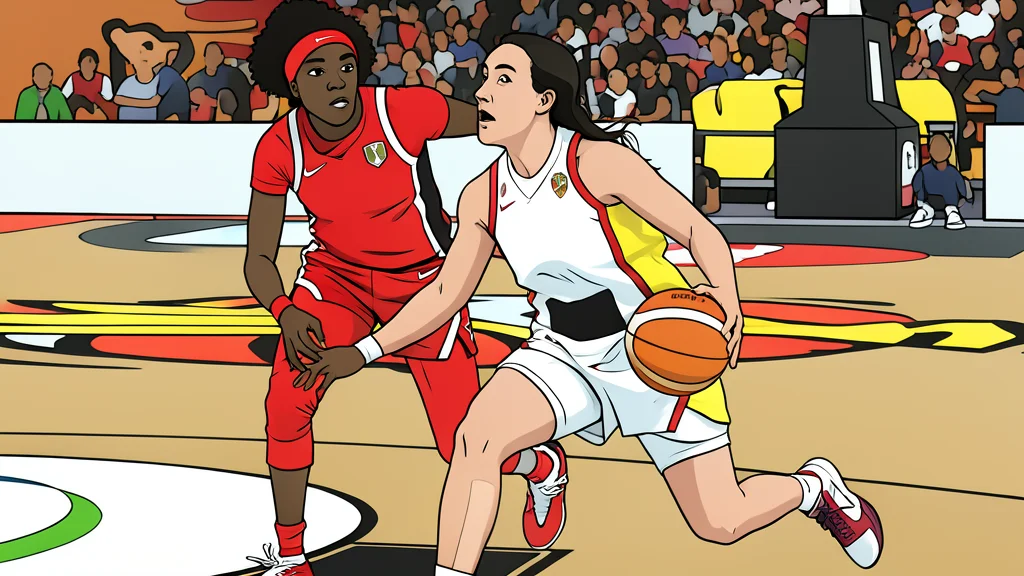
The air in the 2006 arena was thick with expectation, a tangible weight pressing down on the shoulders of a team accustomed to the summit. The United States had built a monument of dominance, their hands heavy with more gold than any other nation in the competition’s ledger. Yet, on this particular night, the script was torn up. The Americans, a roster glowing with the promise of future legends, found themselves locked in a battle that defied the statistical inevitability of their talent.
It was not a clean sweep. It was a bruise. The final score, 75-68, hung in the digital glow of the scoreboard, a stark testament to a night where the underdogs did not just compete, but conquered. Russia, a team largely assembled from the domestic league, stripped the Americans of their crown, leaving them to settle for the bitter taste of bronze. It remains the last time the U.S. women’s team failed to stand atop the podium.
A Roster of Future Legends
The squad that traveled to Brazil in 2006 was a constellation of starlight. Diana Taurasi, Sue Bird, and Tamika Catchings formed the core, their presence a gravitational pull that drew fans and rivals alike. Candace Parker, then a rising force from Tennessee, added a raw, electric energy to the mix. Together, they represented eight current or future Hall of Famers, a depth of talent that historically guaranteed victory. The narrative was simple: the Americans would march through the field, collecting opponents like trophies, and claim their place on the highest step.
The tournament began with a flourish, the U.S. team dismantling China and Nigeria with a combined margin of eighty points. They even held their own against Russia in the group stage, winning by ten. The semifinal rematch seemed like a formality, a final hurdle before the gold medal ceremony. But the confidence that usually fueled their run had become a blind spot, a assumption that their status was more important than their execution.
Russia’s Unexpected Firepower
Russia did not play with caution; they played with a ferocity that shocked the arena. From the opening tip, they seized control, carving out two ten-point leads in the first quarter. The advantage swelled to twenty points after a third-quarter scoring burst, a surge that left the Americans scrambling. The Russians’ shooting from beyond the arc was electric, a relentless barrage that turned the tide and silenced the crowd that had expected a rout.
The U.S. fightback was valiant but insufficient. Taurasi and Parker combined for thirty-four points, their individual brilliance a beacon in the dark. Yet, their efforts were cosmetic, unable to bridge the gap that Russia had widened. Head coach Anne Donovan later acknowledged the disparity, noting that Russia had shot better than they had all tournament. The Americans made runs deep into the fourth quarter, but the lead was too vast, the momentum too firmly in the hands of the Eastern Europeans.
A Legacy Defined by Gold
The 2006 loss stands as a singular anomaly in a history defined by supremacy. The United States has claimed eleven Women’s World Cup titles, a number that dwarfs their closest competitor. In nineteen trips to the tournament, they have finished on the podium in all but five. The last time they failed to medal was in 1975, a distant memory that underscores the sheer scale of their dominance since.
As reported by Yahoo Sports, the 2006 upset is a reminder that even the most dominant forces can be derailed. The bronze medal secured in the third-place game was a consolation, but it did not erase the sting of the semifinal defeat. For the Americans, the night in Brazil remains a cautionary tale, a moment where the weight of expectation met the reality of a well-executed challenge.