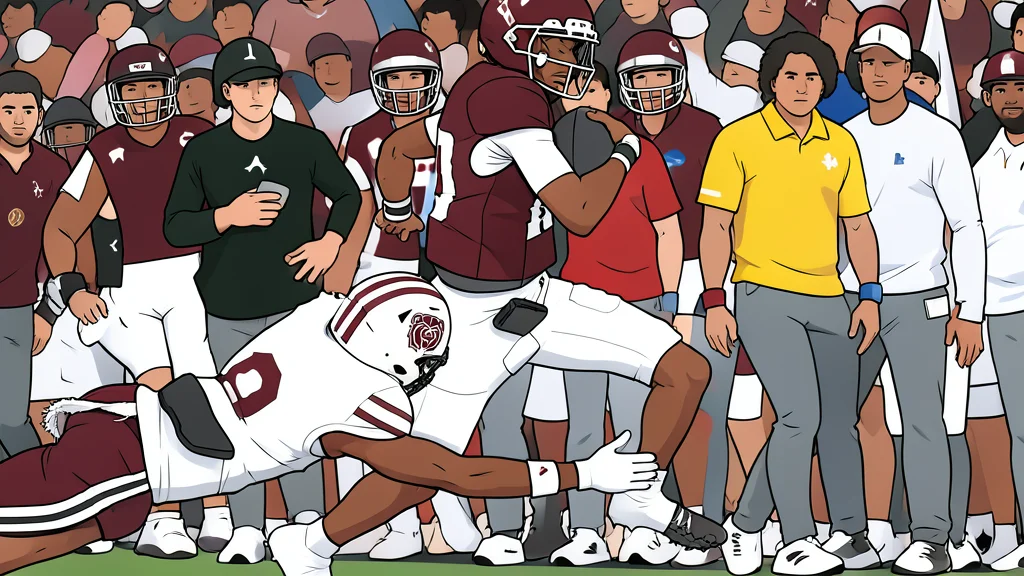
Arch Manning’s Laughter at AI Violence Sparks Outrage

In a quiet media room, the sound of laughter rang out at the sight of a fabricated image: a coach striking a reporter. That single moment has ignited a firestorm of criticism against Texas Longhorns quarterback Arch Manning.
The air in the press room hung thick with casual amusement. Arch Manning, the 22-year-old signal-caller for the Texas Longhorns, leaned back and laughed. He was reacting to an artificial intelligence-generated video that depicted head coach Steve Sarkisian slapping ESPN reporter Holly Rowe. The image was fake, a digital fabrication, but the reaction was real. Manning called the clip hilarious. That word, tossed lightly into the conversation, has since become the focal point of a intense public backlash, turning a media session into a crisis of character for the star quarterback.
This controversy is a shadow cast over a significant athletic achievement. On September 12, Manning led the Longhorns to a 24-23 comeback victory over Ohio State. He completed 23 of 37 passes for 196 yards and a touchdown, steering his team through a tense final stretch. Yet, the narrative has shifted away from the gridiron. The focus has narrowed to the aftermath of Sarkisian’s abrupt departure from a postgame interview, and how Manning chose to engage with the digital remixes of that moment.
The Spark of Digital Distortion
The original incident occurred on the field’s perimeter. After the win over Ohio State, Sarkisian ended an interview with Holly Rowe abruptly. The clip captured Rowe’s visible distress, a raw human reaction to being cut off. This footage spread rapidly across social platforms. As it gained traction, the internet’s tendency to mutate content took hold. AI tools were used to create new, violent variations of the scene. These were not subtle edits; they depicted physical aggression that never happened. They were distortions, yet they carried the weight of the original tension.
Laughter in the Media Room
During a subsequent media commitment, the topic resurfaced. Manning mentioned seeing these AI edits. He asked his peers if they had seen the one of Sarkisian slapping Rowe. He labeled it hilarious. The room laughed. This collective chuckle, captured in the audio, became the evidence. It was not just one person’s joke; it was a shared moment of levity in a professional setting. For many observers, this reaction signaled a disturbing lack of empathy. The casual tone suggested that the idea of a coach assaulting a journalist was a punchline, not a violation.
A Fracture in Public Trust
The response from the sports community was swift and severe. According to Yahoo Sports, fans and fellow journalists expressed deep concern. One reporter questioned why anyone would find such a scenario funny. Another noted that the adults in the room laughing alongside the young quarterback was more alarming than the student-athlete’s comment. The criticism focused on the normalization of violence against women in the media. Fans demanded accountability from the Texas football program. They argued that the responsibility to correct the narrative fell on the team and Manning, not the university’s communications office. The incident has now inextricably linked Manning’s name to this controversy, overshadowing his on-field performance and casting a long shadow over his public image.