Missouri Coach Eli Drinkwitz Rejects Civil War Rhetoric After Border War Victory
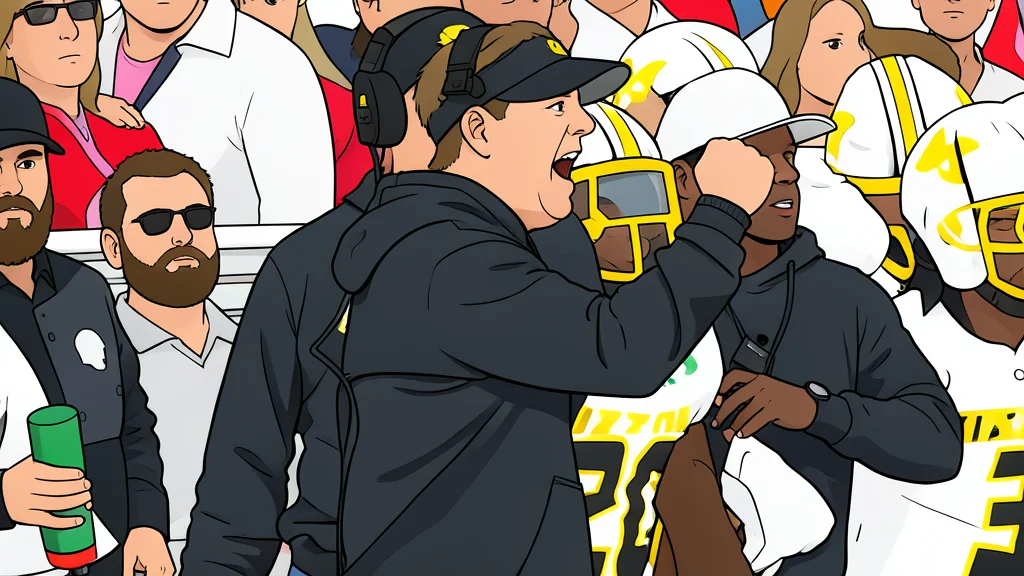
Under the glare of stadium lights, the rivalry’s shadowy past collided with the present on a muddy field.
The air in Lawrence was thick with more than just autumn chill; it carried the weight of history. Days before kickoff, Kansas unleashed a video that did not merely hype the rivalry but excavated it, dragging the ghosts of Bleeding Kansas into the modern stadium. The Jayhawks painted a narrative of good versus evil, invoking the violent clashes of the nineteenth century to frame the upcoming contest. It was a bold, controversial move that ignited social media and split fans across the state line. The digital noise swelled, millions of views accumulating like clouds before a storm, setting the stage for a game that promised to be far more than a clash of uniforms.
Then the whistle blew, and the field became the only truth that mattered. Missouri’s Tigers moved with precision and power, cutting through the Jayhawks’ defense with a relentless, physical force. By the final minute, the score was 38-21, a decisive blow that silenced the stadium and settled the debate in the most visceral way possible. The Tigers had not just won the game; they had answered the provocation. As the players celebrated, the tension that had built over days of digital posturing finally broke, leaving only the mud, the sweat, and the reality of the result. The controversy had a winner, and it was decided on the grass.
Disappointment in the Digital Narrative
Postgame, Eli Drinkwitz did not offer the usual gracious concession. Instead, he delivered a sharp critique of Kansas’ social media team, expressing deep disappointment with the way the rivalry was characterized. According to Yahoo Sports, the Missouri head coach felt the video crossed a line, turning a football game into a moral judgment. He described the effort as bizarre, arguing that every region carries complicated histories, but elevating those conflicts to an icon for a sports event was misguided. The coach wanted unity, not division, and he saw the Jayhawks’ attempt to stir the past as a failure of taste rather than a display of passion.
Drinkwitz’s frustration went beyond mere disagreement; it was personal. He admitted to feeling embarrassed for his opponents, a sentiment that fueled his team’s performance on the field. The coach made it clear that the intention behind the win was not just to score points but to send a message. The Tigers had been incensed by the rhetoric, and their response was to dominate. By overwhelming Kansas, Drinkwitz sought to prove that the game should remain a game, stripped of the deeper, more divisive connotations that the Jayhawks had tried to attach to it. The victory was a rebuttal, a physical argument against a digital one.
A Future Defined by Football
When reporters asked if he hoped the rivalry would continue, Drinkwitz’s answer was ambivalent. He did not care if the series went on, provided it remained a football game. If Kansas wanted to play a great rivalry on the border, that was fine. But if they insisted on making it deeper, more political, or more historical, then the point was lost. The coach was willing to let the past stay in the past, refusing to let it dictate the present. His stance was clear: the field is the only place where the rivalry should live, and anything else is noise.
Leaving Kansas Bleeding
The final words from the Missouri coach were a direct echo of the historical term that had sparked the controversy. He told reporters that if the rivalry was to be made deeper than a football game, then they had left Kansas bleeding again. It was a deliberate, pointed remark that closed the chapter on the weekend’s drama. The Tigers had done what was needed, settling the score and the sentiment simultaneously. As the lights dimmed and the crowds dispersed, the field returned to silence, the mud drying under the cold night air, a quiet testament to the fact that in the end, the game speaks louder than any video.