Ohio State Struggles with Short-Yardage Precision in 59-3 Win

Despite the lopsided 59-3 victory over Kent State, the Buckeyes' recurring failure to convert on critical fourth-down and short-yardage opportunities remains a significant concern heading into conference play.
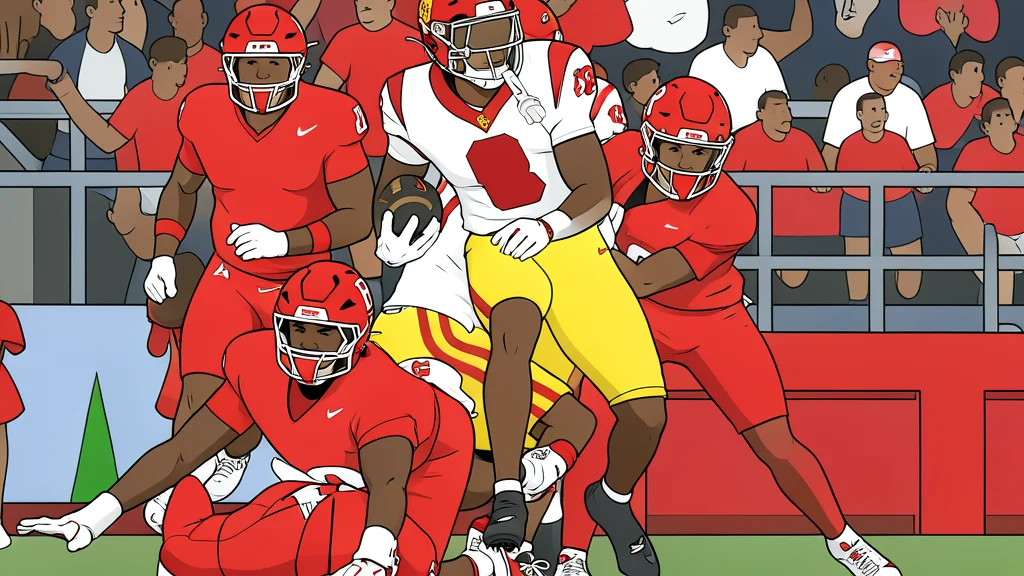
The grass at the Ohio Stadium was a vibrant, unbroken green under the September sun as the Buckeyes dismantled Kent State, 59-3. It was a final dress rehearsal before the Big Ten gauntlet, a game where the scoreboard told a story of overwhelming force. The Buckeyes outgained the Golden Flashes 527 yards to 134, a physical chasm that defined the afternoon. Yet beneath the thunderous roar of the crowd, a quieter tension hummed through the offensive line on fourth down.
Julian Sayin moved with the fluid grace of a dancer, completing 18 of 22 passes for 241 yards and two touchdowns without a single turnover. His arm found Brandon Inniss in the deep grass, and his legs, though rarely used, kept the pocket upright. The defense, meanwhile, was a concrete wall, allowing fewer than 100 yards in the first half. They held the line, stifling the opposition until Kent State scraped together a late field goal to escape the shutout.
Fourth Down Friction in the Red Zone
The offense earned three leaves for its effort, a grade that reflected a mix of explosive talent and frustrating mechanical errors. With the ball at the Kent State 8-yard line, the Buckeyes had a golden opportunity to strike. On third-and-five, Sayin attempted a loop pass to freshman Brock Boyd, but the route ran middle while the ball sailed far left. The miscommunication hung in the air, a silent failure of synchronization.
On the next play, the frustration boiled over. Sayin stood in the pocket, barely moving, as Aiden Burgess closed in for the sack. It was a turnover on downs that felt heavy, a moment where the quarterback’s eyes seemed locked on Jeremiah Smith, leaving Brandon Inniss wide open in the middle of the end zone. Another short-yardage chance in the same quarter ended similarly, with Sayin sailing a throw over Smith’s head. These were not mistakes of panic, but of precision, a recurring theme that will need surgical correction before the conference season begins.
Defensive Stability and Freshman Fire
The defense earned four leaves, a mark of near-perfect execution. Riley Pettijohn stood out, recording his first career interception by perfectly undercutting a slot receiver on a slant route. His 91.6 rating from Pro Football Focus was the highest on the field, a testament to his instincts and timing. He was a shadow over the Golden Flashes, breaking up passes and forcing errors when the defense needed a spark.
True freshman Jay Timmons emerged as a natural playmaker, his presence in the secondary adding a layer of unpredictability. Safety Earl Little Jr. settled comfortably into the strong safety role, his pass breakup adding another layer of security. The unit was steadfast in the red zone, preventing back-to-back passes and keeping the opposition in check. Their dominance was not just about yards allowed, but about the mental pressure they applied, forcing Kent State to play by Ohio State’s rules.
Receivers Find Rhythm and Chemistry
Brandon Inniss emerged as the clear second option for Sayin, a safe and reliable target for short passes. He hauled in four receptions for 78 yards, including a 49-yard touchdown on a Hail Mary to end the first half. His chemistry with the quarterback was evident, a silent language of trust and timing. Devin McCuin, while quiet, showed flashes of potential, and Chris Henry Jr. was notably left out of the rotation, a signal of where the coaching staff sees the future.
As reported by Yahoo Sports, the offensive line’s struggles on third down were a clear concern, with the Buckeyes converting only once in four tries. Sayin’s emphasis on using his legs was visible, but he still rarely scrambled out of the pocket. The foundation is strong, the talent is deep, but the fine-tuning of short-yardage plays and third-down conversions will be the difference between a good season and a great one. The green grass will be tested next week, and the Buckeyes must be ready.
Short-yardage inefficiency persists despite dominant score
While the 59-3 final score suggests a comprehensive victory, the second source highlights a persistent pattern of inefficiency in high-leverage situations. The Buckeyes struggled to execute precise throws and runs when space was limited, resulting in missed opportunities that could have been capitalized upon against a more disciplined defense.
Specifically, the inability to convert on fourth down and maintain short-yardage precision stood out as key weaknesses. These lapses indicate that the offensive unit still needs to refine its execution in red-zone scenarios, a skill set that will be essential for succeeding in the upcoming Big Ten schedule.