Kranti Gaud Fined for Pavilion Gesture in Asia Cup Final
The final over of the Women's Asia Cup ended in silence, but the aftermath carried a heavy weight. In the glare of the Dubai stadium lights, a single gesture toward the pavilion triggered a formal sanction against India’s pacer Kranti Gaud.
The air in Dubai hung thick with the humidity of a final day match. On the pitch, the grass felt damp under the boots, a green carpet stretched taut between the creases. Kranti Gaud stood at the top of her run-up, the ball heavy in her hand, the crowd a distant roar. The atmosphere was electric, charged with the tension of a championship decider against Sri Lanka. It was a moment of pure athletic focus, where every muscle fired in unison and the only sound that mattered was the impact of willow on leather.
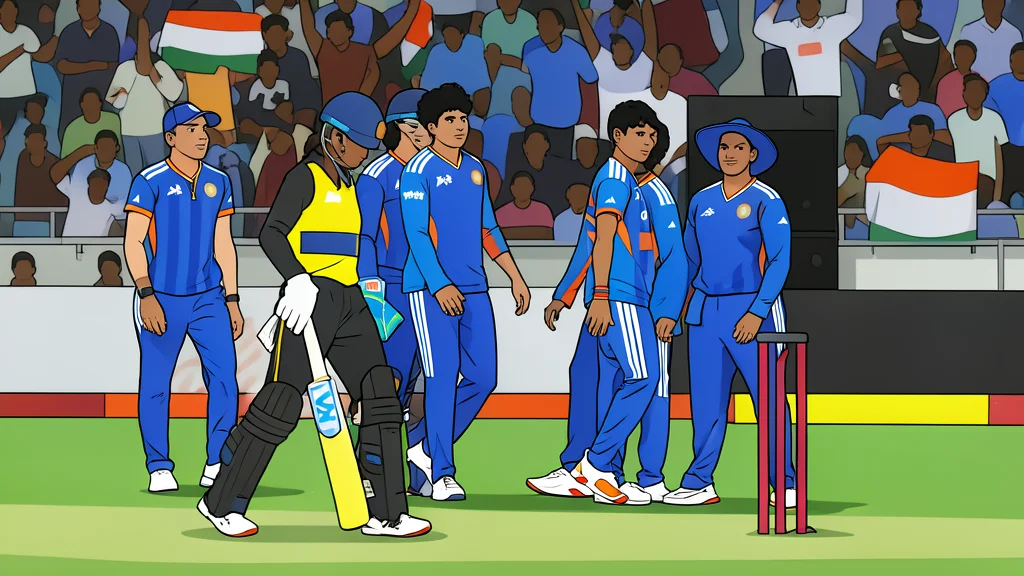
Then, the dismissal. Imesha Dulani was out. In the immediate aftermath, Gaud turned and gestured toward the pavilion. It was a brief movement, a flick of the hand, but it cut through the celebratory noise like a blade. The umpires watched. The moment stretched, the silence in the stadium growing heavier with every second. That simple gesture, captured in the heat of the game, would later define the narrative of her performance.
Sanction Imposed Without Hearing
According to reports from Yahoo Sports, Gaud has been fined ten per cent of her match fee. The charge stems from a Level 1 breach of the ICC Code of Conduct. Article 2.5 prohibits language or gestures that disparage a batter or provoke an aggressive reaction during an international match. The sanction was proposed by Supriya Rani Das of the Emirates ICC International Panel of Match Referees. Because Gaud admitted the offence and accepted the penalty, a formal hearing was deemed unnecessary. The process was swift, the outcome final.
One demerit point has been added to her disciplinary record. This is her first offence within a 24-month period. Level 1 breaches carry a range of penalties, from an official reprimand to a fifty per cent fine of the match fee. The demerit point serves as a marker on her career, a small but significant stain on an otherwise clean slate. The decision was levelled by on-field umpires Saleema Imtiaz and Shathira Jakir Jesy, with third umpire Rokeya Sultana and fourth umpire Humaira Farah also involved in the process.
Pakistan Penalized for Slow Pace
The disciplinary actions did not stop with India. Pakistan, too, faced consequences for their performance in the semifinal. The team was fined five per cent of their match fee for maintaining a slow over-rate against Sri Lanka on Friday. G.S. Lakshmi of the Emirates ICC International Panel of Match Referees imposed the sanction after determining that Pakistan was one over short of the target, even after time allowances were considered. The rule is strict: five per cent of the match fee for every over failed to bowl within the allotted time.
Pakistan captain Fatima Sana pleaded guilty to the offence and accepted the proposed sanction. Like Gaud, she avoided a formal hearing by admitting the breach. The charge was levelled by on-field umpires Vrinda Rathi and Shathira Jakir Jesy, with third umpire Rokeya Sultana and fourth umpire Rabab Ahsan also part of the officiating panel. The slow over-rate rule, found in Article 2.22 of the Code, is a clear reminder that pace is as important as precision in the modern game. Both teams, in their own ways, paid the price for lapses in conduct or tempo.
Consequences of On-Field Conduct
These sanctions highlight the strict adherence to the ICC Code of Conduct. The code is not just a set of rules but a framework for maintaining the integrity of the sport. Every gesture, every action, is scrutinized. The fine for Gaud, while not the maximum penalty, serves as a deterrent. It underscores that even in the heat of a final, players must maintain composure and respect for their opponents. The demerit point, though a single mark, could accumulate and lead to more severe consequences in the future.
For Pakistan, the fine for a slow over-rate is a financial hit, but it also signals a need for better time management. The rule is designed to keep the game flowing, to ensure that spectators are not left waiting in idle anticipation. Both incidents, though different in nature, reflect the same underlying principle: the sport demands discipline. The players have been held accountable, the sanctions imposed, and the record kept. The matches are over, but the repercussions linger, a quiet reminder of the standards that govern international cricket.