Evenepoel Secures Fourth Straight Time Trial World Title
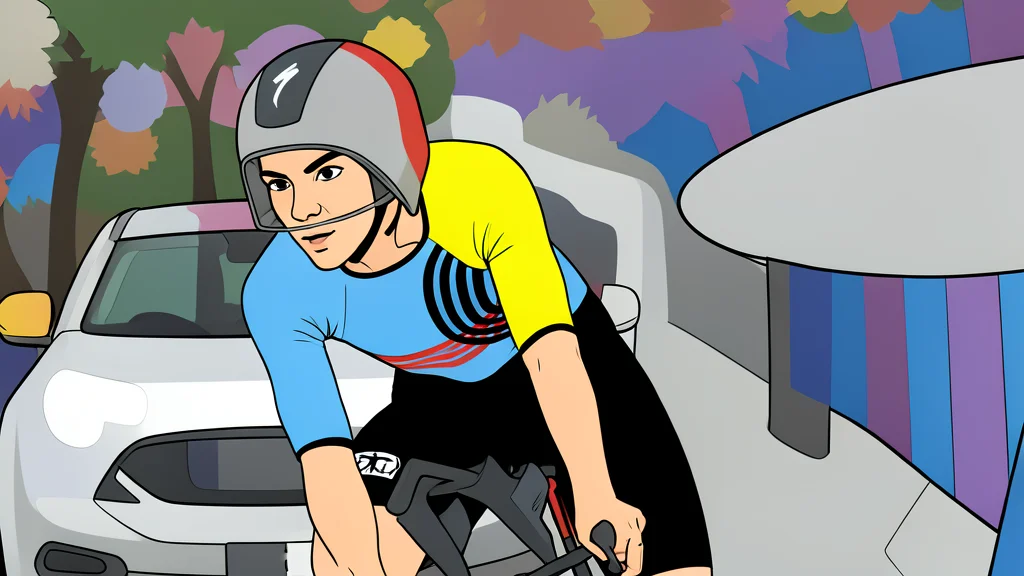
Remco Evenepoel joins Cancellara and Martin in a rare club, averaging 52.4kph over the grueling 39.2km Montréal course.
Key points
- Remco Evenepoel won his fourth consecutive UCI Road World Championships time trial title in Montréal.
- Evenepoel finished in 44:53.13, beating runner-up Filippo Ganna by 57.31 seconds over 39.2km.
- The Belgian rider joins Fabian Cancellara and Tony Martin as the only men with four straight titles.
The start hut releases a Belgian silhouette into the crisp Montréal air, the roar of the crowd swallowed by the sudden, terrifying silence of the road. Remco Evenepoel pedals out from the foot of Mount Royal, his rhythm steady, his gaze fixed on the horizon where the 39.2km course stretches like a gray ribbon. There is no room for hesitation here. Every watt is counted, every breath is a transaction. He is not just racing a clock; he is racing the ghosts of Fabian Cancellara and Tony Martin, the only two men who have ever stood where he now stands on the precipice of history.
For 26 years, the record has sat still. Now, the 26-year-old from Aalst shatters the stagnation. As he crosses the finish line, the time on the board reads 44 minutes and 53.13 seconds. It is a margin of victory that feels both microscopic and continental, a separation that defines dominance. He has done it again. A fourth consecutive title. The rainbow jersey is not a prize; it is a possession returned to its rightful owner.
A Rare Club of Elite Performers
The lineage of time trial greatness is short and exclusive. Since the race against the clock joined the championships in 1994, only Cancellara and Martin have matched this streak. Cancellara, the Swiss double Olympic champion, carved his legacy in the late 2000s and early 2010s. Martin, the German powerhouse, extended that era into the mid-2010s. Evenepoel now bridges the gap between eras, tying their names to his own in a way that rewrites the statistical landscape of the sport. The pressure of this expectation hung over the build-up, a heavy fog in the days before Sunday’s test of endurance and mental fortitude.
Mastering the Technical Course
The route through Montréal demanded precision. It was not a flat sprint; it was a technical gauntlet of 24.4 miles that punished any lapse in concentration. Evenepoel maintained an average speed of 52.4kph, a figure that speaks to a level of control that transcends raw power. From the first split, the outcome appeared inevitable. The Belgian rider seemed to glide over the pavement, his form aerodynamic and unbroken. It was a display of mechanical efficiency that left little for competitors to exploit.
He described the effort to championship organizers as one of his best time trials ever. The feeling of control from start to finish was palpable. There were no panic surges, no defensive maneuvers. Just a relentless, forward momentum that carried him through the technical demands of the course. The race was not won in a final burst of speed, but in the consistency of every pedal stroke before it.
Chasing the Belgian Standard
Behind Evenepoel, the field struggled to bridge the gap. Italy’s Filippo Ganna finished second, his time of 45:50.44 marking a deficit of 57.31 seconds. It was a strong performance, but it could not touch the Belgian’s pace. Behind Ganna, French teenager Paul Seixas delivered a brilliant effort, clocking 46:06.61 to secure his first individual world championships medal. The young talent showed flashes of future greatness, but the hierarchy of the time trial was reaffirmed. Evenepoel remains the benchmark, a standard that others can see but rarely reach.