Medinah's New Face and the Return of Past Captains
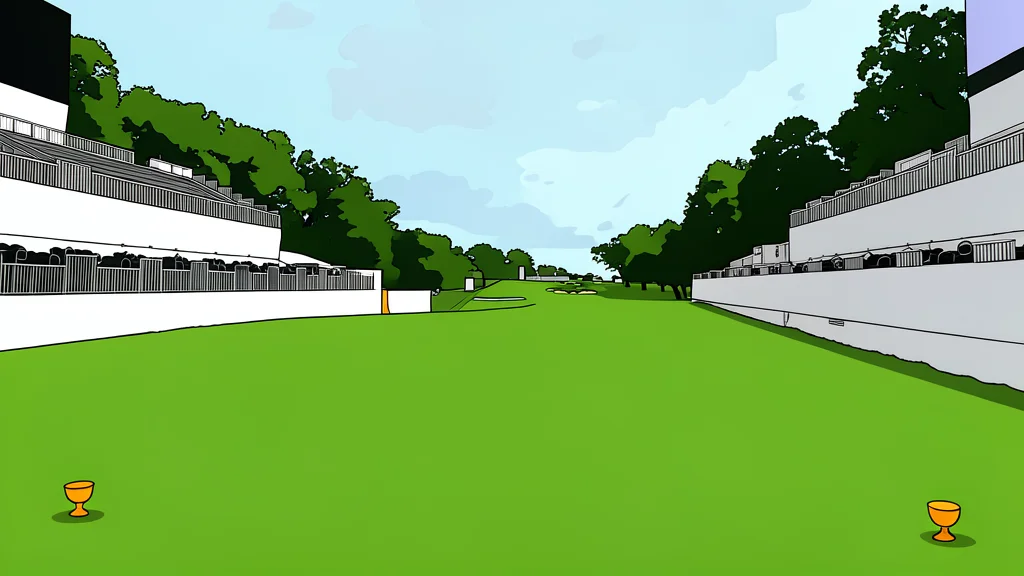
Medinah Country Club reopens after a major restoration, blending its 1932 heritage with modern strategy for the upcoming Presidents Cup.
Key points
- Medinah Country Club underwent a major restoration, removing trees to restore its 1932 Golden Age design and bold bunkering.
- Brandt Snedeker, Jim Furyk, Keegan Bradley, and Webb Simpson serve as captains and vice captains, having played in the 2012 Ryder Cup.
- The course features a new split rail fence, raised rough, and strategic layouts designed to challenge precision and reward creativity.
The air in Medinah, Illinois, still carries the electric hum of the 2012 Ryder Cup, a memory etched into the turf where Michael Phelps high-fived strangers in a surge of American hope. Fourteen years later, the same grass holds its breath, but the landscape has shifted. The course, restored to its Golden Age boldness, stands as a stark contrast to the muddy, breezy conditions that greeted early arrivals this week. It is a place where history and renovation collide, setting the stage for a contest that feels both ancient and brand new.
The return of former players as leadership figures anchors this week’s narrative. Brandt Snedeker, Jim Furyk, Keegan Bradley, and Webb Simpson form a core of vice captains and captains who remember the Miracle at Medinah. Their presence is not merely ceremonial; it is a bridge to the past, a reminder that the stakes here are measured in decades, not just points. The course itself has undergone a radical transformation, stripping away poorly placed trees to reveal Tom Bendelow’s original vision of bold bunkering and open space.
Restoring the Golden Age Design
The restoration project, led by OCM, has redefined the playing surface. By removing trees that had strayed from the original 1932 design, the course now feels strikingly spacious. The split rail fence along holes five through seven creates a strategic tension, marking the out-of-bounds line with a rustic clarity. This architectural choice forces precision, rewarding players who respect the edges and punishing those who drift into the rough. The result is a layout that is both visually arresting and tactically demanding.
The new holes, including a redesigned 16th, act as a blockbuster one-two punch. The course is laced with sand, and the introduction of a five-foot-wide collar of intermediate rough frames the fairways tightly. This design choice, suggested by Snedeker, ensures that wayward drives face heavy lies and unpredictable fliers. The physicality of the course is heightened by recent storms, leaving the ground muddy and the wind breezy. It is a test of character as much as skill.
Leadership from the 2012 Squad
The American team is led by a group that lived through the Miracle at Medinah. Snedeker’s influence is visible in the course setup, a subtle but significant nod to the conditions that favor match play. The presence of these former players creates a unique dynamic, where the weight of past victories hangs over every shot. It is a story of continuity, of a team that has learned from its triumphs and is now ready to defend its legacy.
The International team faces its own twists, with Geoff Ogilvy serving as captain and also having a hand in the course design. This dual role adds an interesting layer to the narrative, blurring the lines between strategy and preparation. The competition is set to be intense, with both teams aware of the course’s quirks and the history that binds them. The stakes are high, and the memories are fresh.
Strategic Twists in the Rough
The course setup is designed to challenge every aspect of a player’s game. The raised rough, the split rail fence, and the bold bunkering all contribute to a layout that demands precision and creativity. Players must contend with Lake Kadijah and the unpredictable wind, making every shot a gamble. The conditions are not ideal, but they are perfect for a test of nerve.
As the week unfolds, the focus will be on how the teams adapt to these new conditions. The past is a guide, but the present is a puzzle. The course has changed, the players have evolved, and the stakes remain high. It is a moment of reflection and anticipation, as the golf world looks to Medinah for the next chapter in its history.