Wrong Anthem Stuns Korea at Asian Games
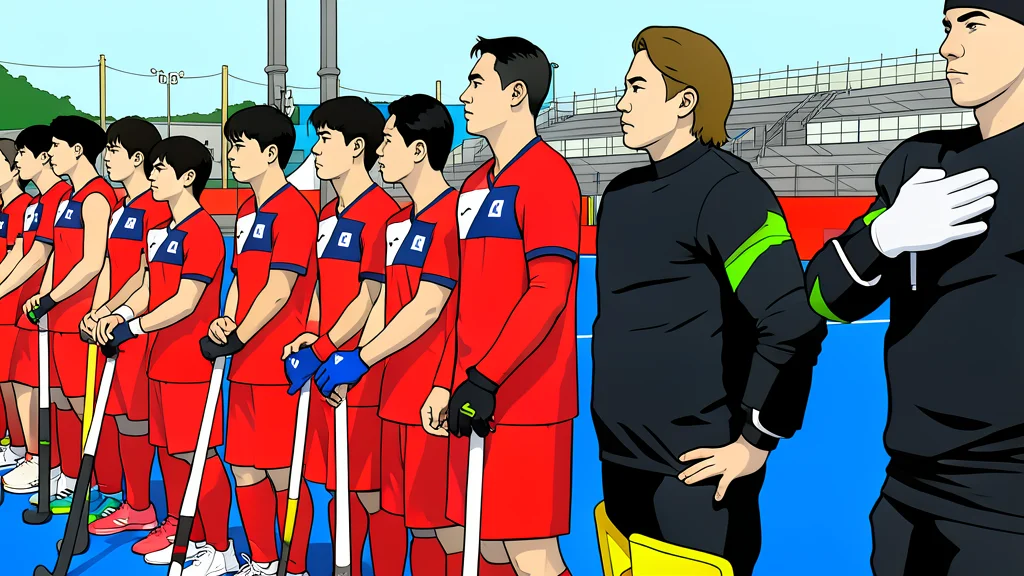
A wrong tune shatters the silence at Green Stadium as South Korea faces Bangladesh, leaving players stunned by a diplomatic minefield.
The air at Green Stadium in Gifu hangs thick with the smell of cut grass and anticipation. Fifty players stand rigid on the artificial turf, toes gripping the green surface. Then, a melody rises from the speakers. It is not the tune they expect. The South Korean men’s hockey team freezes, eyes darting across the pitch in sudden, sharp confusion. The anthem of their northern neighbor, a nation technically still at war with them, fills the stadium bowl.
For a long, suspended moment, the only sound is the hum of the crowd and the rustle of uniforms. The players exchange glances, the gravity of the error weighing heavy on their shoulders. Then the announcer’s voice cuts through, raw with apology. The mix-up, an accident by the organizers, breaks the tension. South Korea proceeds to dominate, dismantling Bangladesh with a decisive 5-0 victory, the scoreboard a stark contrast to the opening embarrassment.
Diplomatic tension on the pitch
This is not merely a technical glitch. The North Korean anthem is strictly banned in South Korea, a legal reflection of the unresolved conflict from the 1950-1953 Korean War. The armistice, never a peace treaty, leaves a shadow over every interaction between the two states. To hear the tune of their wartime foe in their own stadium is a profound insult, a sonic violation of the delicate diplomatic balance that the Asian Games in Japan are trying to maintain.
The incident highlights the fragility of the sporting stage. The organizers’ failure to verify the audio files before the match exposes a lack of care that clashes with the high-stakes environment of international competition. The South Korean delegation has already lodged complaints about other logistical failures, from cramped hotel rooms for basketball players to transport disruptions for the football team. This anthem blunder adds another layer to their frustration.
Broader organizational struggles
The Asian Games in Japan are facing a perfect storm of operational issues. The men’s football team, defending champions, have had their preparations derailed by transport chaos. Basketball players report rooms that are too small for their needs. These are not isolated incidents but a pattern of mismanagement that undermines the spirit of the event. The anthem mix-up is the most visible symptom of a system struggling to keep pace with the demands of elite athletes.
The organizing committee has not commented on the specific error, leaving the South Korean team to process the awkwardness on their own. The silence from the officials is deafening. As the players celebrate their 5-0 win, the memory of the wrong anthem lingers. It is a reminder that behind the scores and the statistics, the politics of the region remain deeply embedded in the fabric of the games.
A moment of human error
In the end, it was a human mistake. A file selected incorrectly, a button pressed in the wrong moment. But in the context of the Korean peninsula, such errors carry weight beyond the stadium walls. The South Korean players, despite the awkward start, found their rhythm and their goals. They played with focus, their sticks carving through the air with precision. The 5-0 scoreline is a testament to their skill, but the opening minutes remain a blemish on the tournament’s record.
The Asian Games are meant to be a celebration of unity and sportsmanship. This incident, however, highlights the persistent divisions that remain. The organizers must now address the broader concerns raised by various delegations. The players have moved on, their eyes fixed on the next match. But the echo of the wrong anthem still resonates, a reminder of the complex history that surrounds every competitive encounter in this region.