Defender Rally Trucks Enter Moroccan Desert
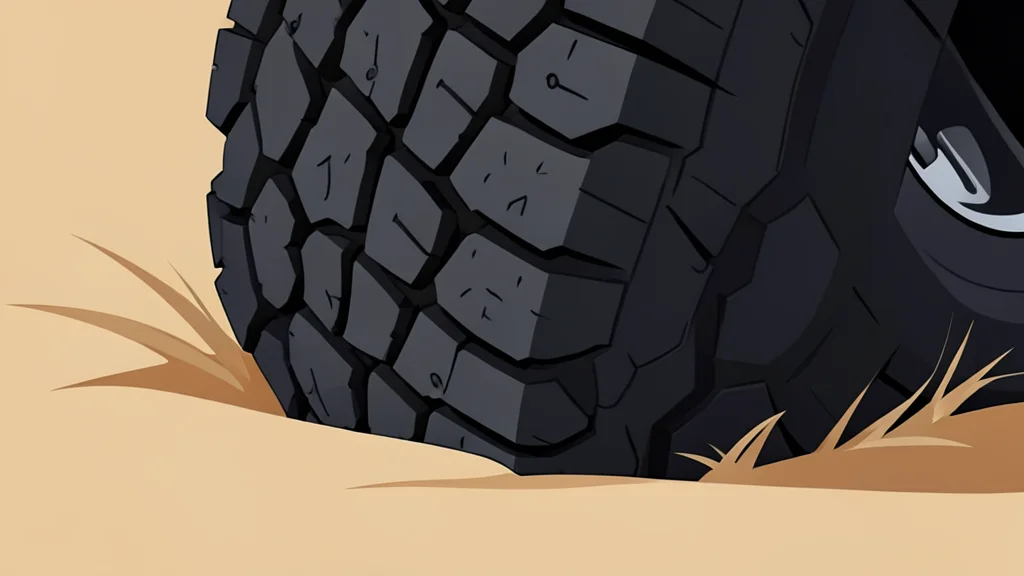
Three production-based race trucks hit the Saharan dunes, testing the limits of stock architecture against the raw power of the African desert.
The dust hangs thick in the air, a golden haze that swallows the horizon. Three Defender D7X-Rs sit ready, their bonded-and-riveted aluminium monocoques gleaming under the harsh Moroccan sun. This is not a prototype wearing a manufacturer’s badge; this is the same body shell that rolls off the production line in Nitra, Slovakia, destined for local dealer lots. Yet here, in the fourth round of the FIA World Rally-Raid Championship, they are about to be thrown into the crucible of the Rallye OLA Energy du Maroc.
The event runs from 26 September through 3 October, marking the first time this specific showroom-based race truck competes on the continent that invented rally-raid. It is a physical confrontation between industrial design and natural chaos. The trucks carry the 4.4-liter twin-turbo V8 from the Defender OCTA, burning sustainable fuel as mandated by FIA regulations. But the true test is not the engine; it is the architecture forced to survive. The team enters with a driver lineup that has quietly dismantled the Stock class all season, bringing a blend of experience and aggression to the red sands.
Stock Class Redefines Racing Limits
The term Stock often sounds dull, a label for something standard and unexciting. But in the context of cross-country racing, it represents a radical constraint. Since the FIA renamed Group T2 to Stock in 2024, the category has evolved from a place where privateer Land Cruisers trailed far behind prototypes to a battleground of serious engineering. The D7X-R retains the production transmission, driveline, and body structure. Engineers are only permitted to modify survival equipment: bespoke suspension, a wider track, and significantly enhanced cooling systems. This limitation is what makes the class compelling. An Ultimate car is a bespoke machine; a Stock car must drag a production gearbox architecture across a desert and still be running when the week ends.
Rokas Bačiuška and Oriol Vidal arrive at the Moroccan desert leading the standings on 199 points. They are followed by Stéphane Peterhansel and Mika Metge with 170 points, and Sara Price, who reunites with navigator Sean Berriman, on 164. Their presence underscores the shift in the category. While Toyota looks toward a hydrogen fuel cell Hilux for the 2027 Dakar, no other manufacturer is currently attempting to sell the road version of a machine that has just finished a rally-raid race. Defender’s approach is unique: a direct link between the showroom and the finish line.
Morocco Punishes Mechanical Weakness
The route covers 2,838 kilometers, with 1,656 kilometers against the clock. It begins in Agadir and winds through the Atlas foothills and the Drâa valley to Zagora. The terrain is a mix of rocky mountain tracks, fast sand pistes, and proper Saharan dunes. Roughly 58 percent of the total distance is timed, a savage ratio that leaves almost no liaison mileage to nurse a wounded car. This is the real difference from Dakar. Two weeks in Saudi Arabia allows for rest days and rebuilds. A week in Morocco offers neither. Damage taken on day two is damage carried to the finish.
Dune running is the specific enemy of anything derived from a road car. Soft sand forces sustained high engine loads at low road speeds, creating a worst-case scenario for cooling. Maximum heat generation meets minimum ram air, while fine dust steadily packs the radiator cores. Transmission and differential temperatures climb with nowhere to dump the heat. Lower tire pressures for flotation add rolling resistance and sidewall heat. This is precisely why Defender’s permitted modifications focus on cooling and suspension, and why Morocco serves as a more honest engineering test than a headline stage win. The organizers have made 2026 harder still, splitting car and bike routes for extra kilometers of Dakar preparation and introducing a WRC-style public shakedown.
Engineering Meets Raw Terrain
The challenge is not just about speed; it is about survival. The trucks must endure the relentless grind of the desert, where every component is tested to its breaking point. The drivers know this. They enter the race with strong results behind them and a clear understanding of what the machines need. As reported by Yahoo Sports, this is a pivotal moment for the D7X-R. It is a showcase of what can be achieved when a manufacturer takes the Stock class seriously, proving that a production-derived vehicle can hold its own against the most demanding terrain on Earth. The desert does not care about marketing names; it only cares about whether the engine keeps turning when the dust settles.