Jarrett Demands Keselowski and Hocevar Settle Feud Off-Track
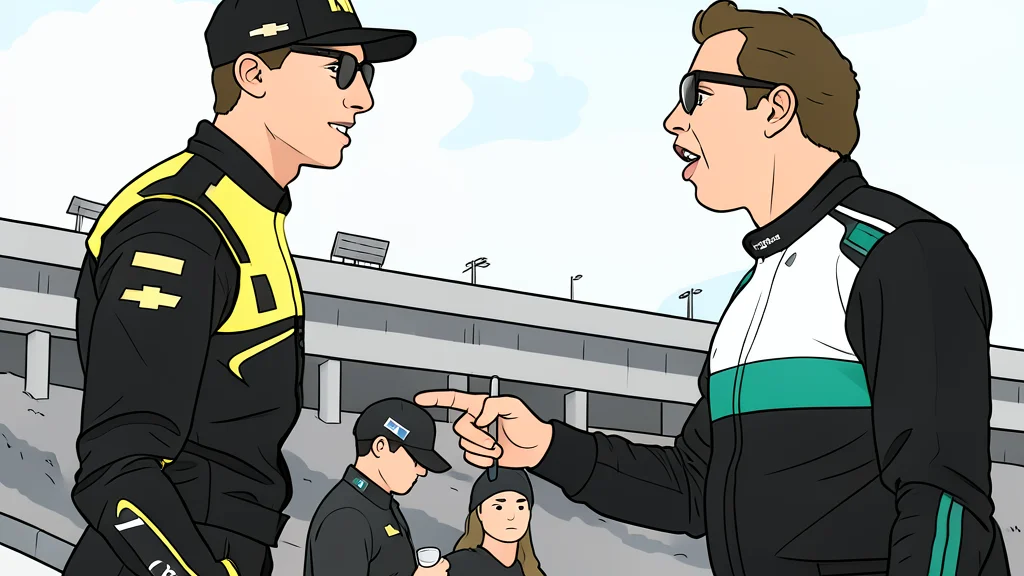
The air at WWT Raceway hums with static as two drivers prepare for Sunday's clash. One sees a tactical opportunity; the other expects inevitable wreckage. A legend stands between them, demanding silence.
The asphalt at WWT Raceway stretches out under a clear sky, the surface dark and slick with anticipation. Sunday’s NASCAR Cup race looms close, the grid packed with engines idling in a low, persistent growl that vibrates through the soles of shoes. In the press area, the atmosphere is thick with tension, a palpable weight that hangs heavy in the air before the green flag drops. This is not just another race; it is a confrontation brewing in the rearview mirrors.
Brad Keselowski and Carson Hocevar step into the spotlight, their words sharp and deliberate. Keselowski speaks of maximizing the day, his tone measured but edged with a cold calculation. He acknowledges the speed of the cars and the hard work of the crew, yet there is an undercurrent of defiance. He will not be run over. Hocevar, standing 12th in the Chase, offers a different perspective. He accepts the likelihood of a wreck with a stoic calm. His belts are tight, his mind set on survival and damage assessment. The two men are ready to collide, each holding a different script for the chaos to come.
Drivers brace for imminent collision
Keselowski’s stance is one of controlled aggression. He views the race as a battlefield where opportunities must be seized. His team has built a fast machine, and he intends to use every inch of its potential. The mention of sponsors and commitments serves as a reminder of the stakes, the commercial engine that drives the sport. Yet, beneath the professional veneer, a primal instinct remains. He is not a passive participant. He is a predator in a metal cage, ready to strike if the moment presents itself. His laughter when asked if Hocevar is a greater wildcard is dismissive, a deflection that says he knows exactly what he is capable of.
Hocevar’s approach is grounded in realism. He does not promise victory; he promises endurance. The expectation of a wreck is not a fear but a forecast. He plans for the impact, tightening his seatbelt not just as a safety measure but as a ritual of acceptance. The damage will be assessed, the car checked, and the race continued. This pragmatic view contrasts sharply with the emotional volatility often seen in the sport. He is racing for his team, for his goals, and for the best outcome he can achieve within the constraints of the track. The collision is inevitable; the question is how it is handled.
Jarrett demands a mature resolution
Dale Jarrett, the Hall of Famer and 1999 champion, watches this unfolding with weary eyes. His frustration is palpable, a weariness born from years of watching the sport’s darker sides. He is tired of the talking, the posturing, the strategic silence that serves only to generate clicks. To Jarrett, the words used by both drivers are nonsensical, a performance for the cameras rather than a genuine expression of intent. He sees the waste, the destruction of expensive machines for the sake of entertainment. His voice carries the weight of experience, a call for sanity in a chaotic environment.
The instruction is clear and direct: act like men. Jarrett urges them to settle their differences outside the race car, away from the high-speed collisions and the costly repairs. The motorhome lot, he suggests, is the appropriate place for such conversations. Talk it out, he insists. If more talking is needed, do that. The emphasis is on resolution, on human interaction rather than mechanical destruction. This is a plea for maturity, a reminder that the sport is built on the efforts of countless individuals who work hard to keep the cars running. The destruction serves no one, least of all the fans who come to see skill and strategy, not just wreckage.
Legacy calls for accountability
As the sun climbs higher over the oval, the tension remains. The drivers are locked in, the engines revving, the audience waiting. Jarrett’s words hang in the air, a challenge to the current state of the sport. It is a call to return to the core values of racing, where respect and skill define the outcome. The clash between Keselowski and Hocevar is more than a personal feud; it is a symbol of the sport’s ongoing struggle with its own image. The resolution, if it comes, will not be on the track. It will be in the quiet moments before the next race, in the conversations that happen away from the cameras and the crowds.
The story continues to unfold, reported with precision by Motorsport.com. The details are captured, the quotes preserved, the context provided. But the essence of the moment lies in the unspoken understanding between the drivers and the unyielding expectation of the fans. The race will happen, the cars will speed, the collisions will occur. But the true test will be how the men behind the wheels handle the aftermath. The legacy of the sport depends on it, on the choice between destruction and dialogue, between noise and silence.