Verstappen Promises to Fix Madrid Track Flaws
The asphalt hums in the Spanish heat, but the drivers see only a wall. Max Verstappen steps up to redesign the braking zones.
The air in Madrid shimmers with heat, distorting the view of the IFEMA complex. Down in the pit lane, the silence is heavy, broken only by the distant roar of F3 cars taking a crash. The Formula 1 drivers sit in their coolers, the air conditioning humming against the summer buzz. They have just completed a qualifying session that felt less like a race and more like a procession. The tarmac is new, glossy, and in some spots, unnervingly bumpy for a track that has barely seen a tire. Lando Norris, holding the pole position, admits the single lap is entertaining, a blur of red and white curbs. But he knows the truth: the thrill fades when you realize there is no way to pass. It is a closed loop, a beautiful trap.
Max Verstappen breaks the silence in the press conference room. He does not mince words. He looks at the track map, a flat blue line on a white background, and sees a failure of imagination. He tells the room that he still cannot find a single corner where he can pass another car. The Red Bull driver’s voice is calm, but the frustration underneath is palpable. He agrees with Norris. The pit lane is an absurd stretch, a long, lonely journey that drains the momentum of any strategic play. The drivers are not angry; they are disappointed. They are professionals looking at a puzzle that does not fit together. They want a race, not a parade.
Braking Zones Block Racing
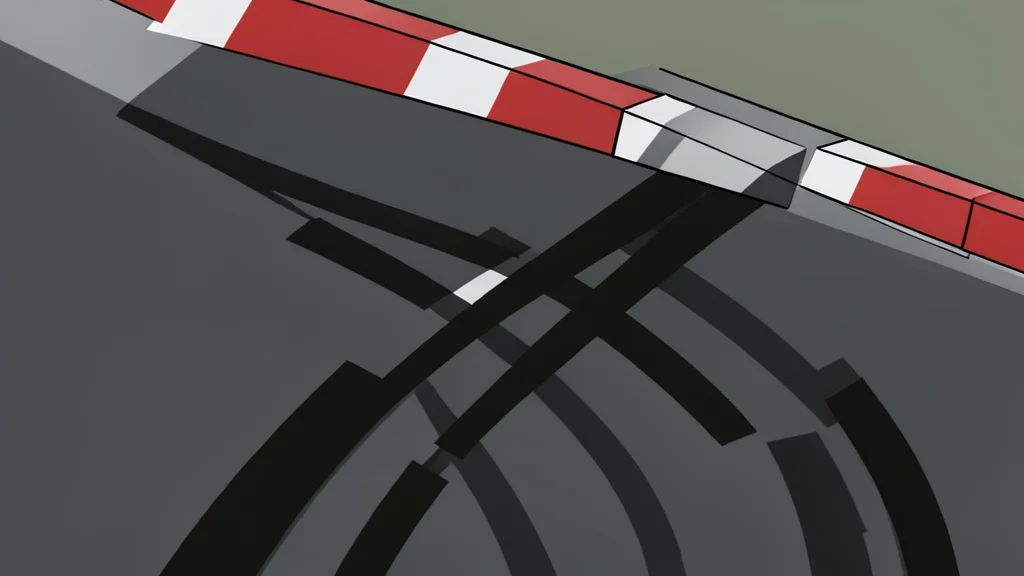
The problem is specific and technical. It lies in the braking zones. Verstappen explains that the design forces drivers to steer while they brake. This combination eliminates the possibility of running wide. In a proper race, a driver can brake later, cut the corner, and emerge side-by-side. Here, the geometry dictates a single line. If you brake, you turn. If you turn, you commit. There is no room for error, and no room for a move. The defending driver simply holds the line. The attacking driver watches the rear wing disappear into the corner. It is a design flaw that turns a potential battle into a solo drive.
Verstappen laughs when asked what needs to change. The answer is almost everything. He jokes that if someone hands him the track map, he will sort it out. The humor is a mask for a serious proposal. He is willing to work with the FIA and the track designers. He knows what a good corner feels like in the hands. He knows the difference between a turn that invites a challenge and one that shuts it down. He cites Austin as a model. There, the corners are wide, the exits are open, and the racing is honest. Madrid has the speed, but it lacks the soul. It needs to be rethought before the next season, not after the damage is done.
Drivers Request Early Input
The drivers were not consulted before the track was built. This is the norm, but it is a mistake. Verstappen points to Jeddah, where adjustments were made after the fact. He argues that changes must happen before the concrete is poured. The drivers are the end-users of these circuits. They feel the bumps, the grip, the flow. Their feedback is not a complaint; it is data. Ignoring it leads to tracks that look good on a map but feel wrong in the cockpit. The FIA needs to change its process. It needs to listen to the people who actually drive the cars. The cost of a bad track is high. It is lost excitement, lost revenue, and lost trust.
Madrid Awaits Improvement
The race in Madrid is on. The cars will fly around the IFEMA complex, a blur of color and speed. The drivers will do their best to make it work. They will find the limits, push the grip, and fight for every inch. But the underlying issue remains. The track is a challenge to the designers, not just the drivers. It is a test of whether the sport can evolve. Verstappen’s offer to help is a rare gift. It is a chance to fix the problem before it becomes a pattern. The fans will watch the race, but they will remember the comments. They will wonder if the next track will be better. The answer lies in the hands of those who build the road. The drivers are ready to guide them.