WRC Tests F1-Style Helmet Cam at Sardinia Finale
The World Rally Championship will trial Formula 1 technology on an M-Sport Ford in Sardinia to revamp its broadcast storytelling.
Key points
- WRC will test an FIA-approved Bell helmet camera on an M-Sport Ford during the Rally Sardinia finale.
- The system uses the same technology as Formula 1 to provide a first-person view for live broadcast.
- CEO Eric Boullier confirms a strategic shift toward emotional storytelling and a new arena concept.
Gravel kicks up in sharp, staccato bursts against the rear arches as the M-Sport Ford car carves through the Sardinian scrub. Inside the cockpit, a new eye opens. It is not the driver’s gaze, but a digital lens fixed to the helmet, capturing the violent shake and the blur of the landscape with the precision of a Formula 1 setup. This is not a simulation. It is a live trial, the first of its kind for the World Rally Championship, set to unfold over the next few days on the island’s dusty stages.
The integration of this F1-derived technology marks a decisive pivot in how the WRC delivers its product to global audiences. After years of relying on external tracking shots and static angles, the series is moving to capture the visceral, high-frequency reality of rally driving from the driver’s own perspective. The goal is clear: to replace the detached observation with an immersive, sensory experience that mirrors the intensity felt behind the wheel.
F1 technology arrives in rally
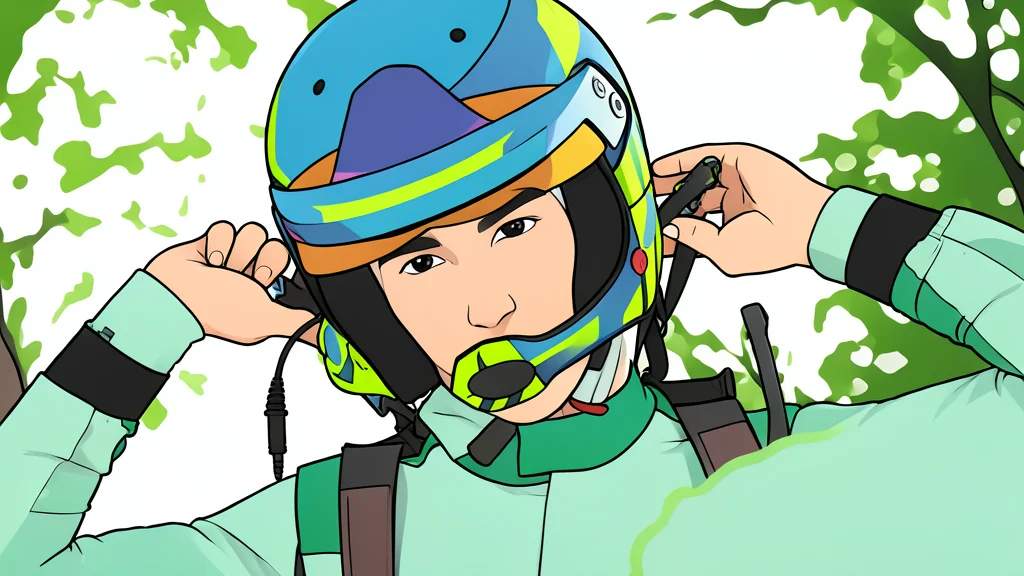
The hardware in question is a Bell Racing helmet camera, a device that has already proven its worth in the high-speed environments of Formula 1 and Formula E. It was approved by the FIA after rigorous testing, ensuring it can withstand the extreme g-forces and debris impacts unique to rally. While drivers have previously used such cameras in private pre-event testing, this marks the first time the WRC will deploy the system during a sanctioned competitive weekend.
M-Sport Ford will serve as the primary test bed for this innovation. The team’s car will carry the integrated unit on Thursday and Friday, allowing technical crews to monitor stability, data throughput, and visual clarity under race conditions. If the feed holds up to the punishing rhythm of the Sardinian terrain, the footage may be woven directly into the live broadcast, offering viewers a direct line to the driver’s point of view.
Rethinking the broadcast narrative
Eric Boullier, CEO of the WRC, outlined a broader strategy to reshape the visual language of the sport. Speaking to Motorsport.com, he explained that the traditional focus on cars launching off crests is being de-emphasized in favor of deeper emotional storytelling. The new approach seeks to humanize the competition, placing greater weight on the driver’s reactions and the immediate, chaotic reality of the event rather than just the mechanical spectacle.
This shift is part of a larger overhaul aimed at enhancing the fan experience. Boullier revealed plans to transform the service park into a dedicated arena, a hub for fan engagement and content creation. This physical restructuring aligns with the digital upgrade, as the WRC works to increase the bandwidth available from the cars. The objective is to transmit more data and camera angles, creating a richer, more interactive layer of content for fans across various platforms.
A new era of content
The helmet camera is the first visible step in a multi-year project to modernize the WRC’s media output. By leveraging the same technological infrastructure that powers the world’s premier circuit series, the rally championship aims to bridge the gap between the two disciplines in terms of broadcast quality. The result is a promise of greater intimacy, where the audience is no longer a distant observer but a virtual passenger in the cockpit.
As the season finale approaches, the focus shifts from pure speed to sensory immersion. The gravel roads of Sardinia will provide the perfect stage to test this new vision. If successful, the experiment will redefine how fans connect with the sport, offering a raw, unfiltered view of the drivers’ world that has never been seen in a WRC broadcast before.