China Claims 11 Golds and a World Record on Asian Games Opening Day

Chinese athletes dominated the first day in Aichi-Nagoya, securing eleven gold medals across swimming, pentathlon, and shooting.
Key points
- China won 11 gold medals on the opening day of the 2026 Aichi-Nagoya Asian Games.
- Chinese swimmers captured six of seven available golds, including a Games record by 13-year-old Yu Zidi.
- The women's shooting team set a world record in the 10-meter air rifle team event.
The air in the Aichi-Nagoya venues hums with the friction of rubber on track and the sharp crack of air rifles. On this opening Sunday, China does not merely compete; it asserts a physical presence that bends the competition to its will. Eleven gold medals hang from the necks of athletes who treated the debut day not as a warm-up, but as a declaration of intent, their movements precise and their dominance absolute.
In the pool, the water churns with the power of Olympic champions, while on the pentathlon course, hurdles are cleared with the fluidity of dance. This is a day defined by record-breaking scores and sweeping victories, a performance that sets the tone for the entire 2026 Asian Games.
Swimming pool dominance
The Tokyo aquatic center becomes a theater of Chinese supremacy, where six of seven available golds are captured. The water is no barrier but a medium for expression, as swimmers slice through the lanes with terrifying efficiency. The only slip in this perfect run goes to Japan, where Tomoyuki Matsushita edges out teammate Yumeki Kojima in the men's 200m individual medley, leaving China's veteran Wang Shun with a bronze that feels like a consolation in the face of such overwhelming team strength.
At the heart of this aquatic storm is 13-year-old Yu Zidi, who shatters expectations in the women's 200m butterfly. Her stroke is a blur of motion, clocking a Games record of 2:05.08 to claim the first swimming gold of the Games. This victory cements her status as a prodigy, having already become the youngest swimmer to win a world championship medal last year at age 12. Her arms pull the water backward with a force that seems to defy her small stature, a visual testament to raw, unpolished talent refined by discipline.
Momentum carries through the events as Pan Zhanle defends his 100m freestyle title in 47.61 seconds, his kick a metronome of relentless pace. Behind him, the silver and bronze finishers from South Korea trail in the wake of his speed. Xu Jiayu retains his 100m backstroke crown with a time of 51.98 seconds, while Li Bingjie surges through the deep water of the 1,500m freestyle to finish in 15:53.52. In the sprints, Tang Qianting lowers her own Games record in the 50m breaststroke, touching the wall in 29.45 seconds after setting 29.50 just hours before. The relay pool sees the Chinese women's 4x100m freestyle team combine their power for another gold, their synchronized turns creating a wave of efficiency that leaves no gap for challengers.
Pentathlon hurdles and records
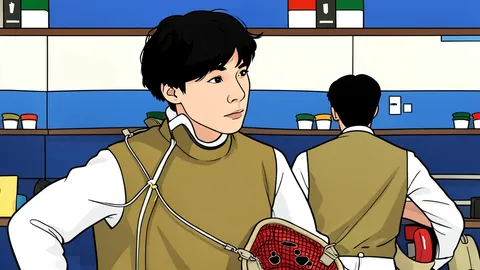
The modern pentathlon course offers a stark contrast to the pool, replacing the serenity of water with the grit of obstacle runs. This is the sport's Asian Games debut in a new format, with equestrian hurdles swapped for rugged terrain, a direct preview of the 2028 Los Angeles Olympic style. The Chinese women's team conquers this landscape with 4,318 points, their combined scores from Zhang Mingyu, Wu Xiyao, and Meng Xin forming an unbreakable unit. They do not just finish; they dominate the standings, taking the silver and bronze in the individual event as well, a sweep that speaks to the depth of their preparation.
Zhang Mingyu speaks of the physical toll of this transition, the extra effort required to master the obstacle discipline while managing the fatigue of being slightly older than her rivals. Her determination is visible in the way she navigates the course, each hurdle a small victory against her own limitations. Later in the day, Li Liuchang mirrors this success in the men's individual event, his gold medal adding another layer to China's pentathlon triumph. The course, with its mix of shooting precision and athletic endurance, becomes a stage where the old equestrian grace is reinterpreted as modern, rugged resilience.
Shooting and wushu precision
In the shooting range, the air is still, the tension palpable. The Chinese women's team in the 10-meter air rifle event does not just win; they rewrite the history books. Their combined score shatters the world record, a feat of calm under pressure that echoes the silence of the range. Each shot is a calculation, a release of breath and trigger pull that leaves no room for error. This gold medal is a testament to the mental fortitude required in a sport where millimeters decide glory.
On the wushu court, Tong Xin moves through the air with the grace of a dancer and the control of a martial artist. She retains her titles in both women's taijiquan and taijijian, her forms fluid and precise, a display of traditional Chinese martial arts that captivates the audience. The judges see no flaw in her execution, and the gold medals are inevitable. This victory complements the swimming and shooting triumphs, rounding out a day where China's athletes display a breadth of skill that is both visually stunning and statistically dominant. As reported by China.org.cn, this opening day is not just a start; it is a statement of intent, a showcase of depth and talent that will define the coming days of the Games.