India Opens Asian Games 2026 with Curved Teqball Debut
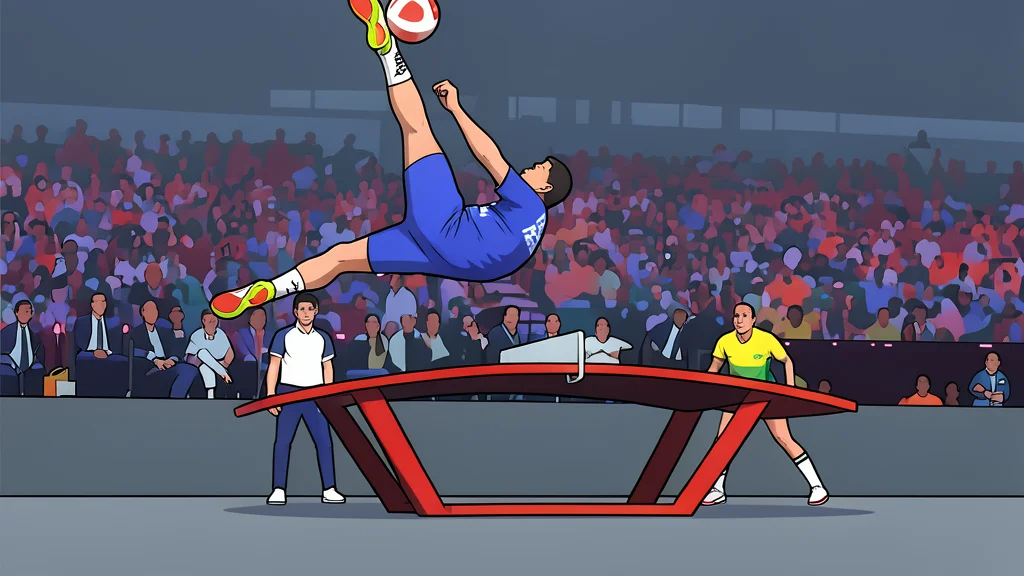
A curved surface hums underfoot in Aichi-Nagoya as India kicks off a historic era with teqball, blending football agility with table tennis precision on opening day.
The air in Aichi-Nagoya thickens with anticipation as the clock strikes noon on September 17. Declan Gonsalves and Mohamed Anas Beg step onto the glossy, curved surface that defines teqball, a sport merging the fluidity of football with the rapid exchanges of table tennis. This is not a rehearsal. It is the opening salvo of the Asian Games 2026 campaign, a moment where history bends around the players' feet.
Hands remain still. Arms hang loose. Only the lower body and head are weapons here. The ball strikes the convex curve, bouncing with unpredictable energy, demanding reflexes sharpened by months of solitary practice. Gonsalves and Beg face Vietnam in their first clash, the stakes heavy with the weight of a debut. A single touch, a precise volley, and the rhythm of the game takes hold.
Rules of the Curved Surface
Teqball operates on a tight, physical code. Players may use feet, head, chest, or thighs to strike the sphere, but hands and arms are strictly forbidden. The table’s curvature dictates the flow, forcing players to read the bounce rather than just the ball. Each side is limited to three touches before the ball must cross to the opponent, a constraint that accelerates the pace into a blur of motion.
Victory is measured in points, not just possession. Sets are won by the first to reach twelve, with a two-point advantage required if the score stalls at eleven-eleven. The geometry of the court creates a unique tactical landscape, where positioning is as critical as power. Gonsalves and Beg must navigate this intricate dance, their bodies acting as the primary interface with the game’s rhythm.
First Clash Against Vietnam
At 12:30 PM, the group stage ignites. Gonsalves and Beg face Vietnam in Group B, a test of endurance and precision. The ball arcs over the curved top, dipping sharply as it nears the net. A misstep sends it wide. A perfect chest pass sets up a decisive kick. The crowd noise swells, a low rumble that vibrates through the floorboards, echoing the intensity of the opening minutes.
Quimcy Dsouza prepares for her own battle in the women’s category, representing India in a sport that demands individual brilliance within a doubles framework. The schedule is tight. By 1:00 PM, Gonsalves and Beg return to the surface to face Korea, a second test in quick succession. The physical toll is immediate, sweat beading on foreheads, muscles tense from the constant shifting of weight.
Quest For Maiden Medal
The stakes extend beyond a single match. Teqball’s debut at the Asian Games marks a new chapter for Indian sports. The squad aims for a maiden medal, a tangible symbol of progress in a rapidly evolving discipline. Quarterfinals and repechages loom in the afternoon, contingent on qualification, each stage a filter that narrows the field to the most adept.
As the sun sets over Aichi-Nagoya, the day’s efforts crystallize into memory. The curved table remains, a silent witness to the debut. For India, this is more than a game. It is a declaration of presence in a new arena, where the bounce of the ball defines the future of their campaign.