Seo Seung-Jae Carries Nation's Hopes to Nagoya

The world number one steps off the plane with the weight of a nation on his shoulders, ready to trade the flag for the shuttlecock.
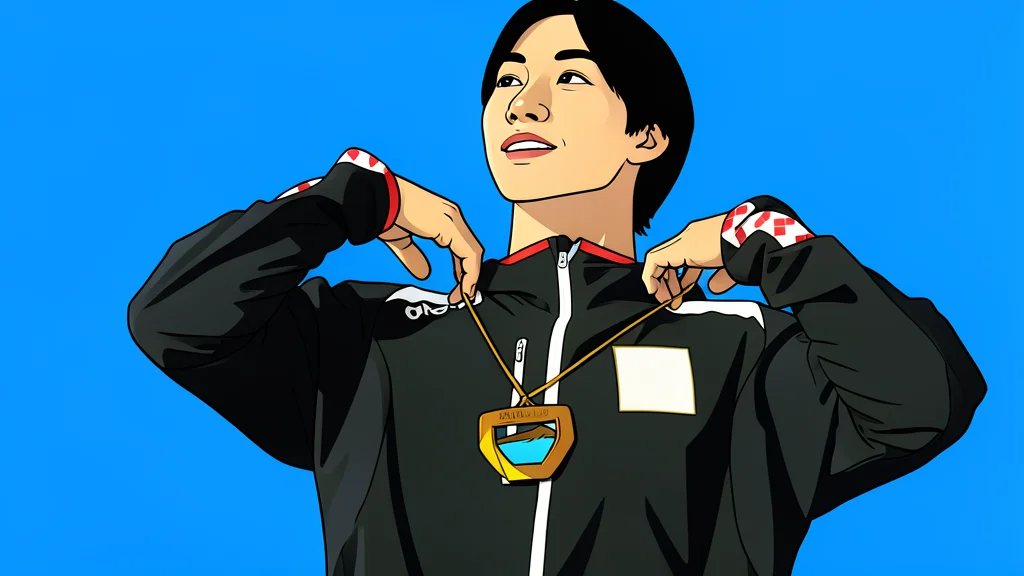
The air inside Incheon International Airport hangs thick with the low hum of jet engines and the shuffling of heavy luggage. Among the churn of 122 souls—officials, coaches, and athletes bound for Japan—Seo Seung-jae moves with a deliberate, measured calm. He is not merely a passenger; he is the vanguard. As the male flag bearer for the South Korean delegation at the 2026 Aichi-Nagoya Asian Games, he carries a symbolic burden that precedes his athletic prowess. The morning light filters through the terminal glass, casting long, sharp shadows across the polished floor, mirroring the stark clarity of his intent. There is no hedging in his posture. The flag is not a prop; it is a promise.
Beside him, the rhythm of the crowd settles into a murmur of anticipation. This is a departure, but it feels more like a launch. The delegation includes the badminton squad, cycling road teams, and other athletes, all converging on a single point in time and space. For Seo, the journey begins with the weight of the national emblem, a physical anchor to the abstract goal of gold. He speaks of responsibility, a word that tastes heavy in the mouth but feels light in the spirit. It is a confidence born not of arrogance, but of a deep, quiet trust in the process. The path to Nagoya is paved with expectation, yet he walks it with the steady gait of someone who has already seen the finish line.
World Number One Carries the Flag
Seo Seung-jae and his partner Kim Won-ho occupy the summit of men’s doubles, a rank that brings both glory and a specific kind of silence. The world looks at them with wide eyes, waiting for a stumble. They have felt the gaze. In recent weeks, the pressure manifested in a shocking defeat at the China Masters, a loss to a pair ranked 58th in the world. The scoreline was tight, the margin thin, but the impact was seismic. It was their first early exit in the round of 32 since pairing up, a crack in the armor that had seemed impenetrable. Since winning the Asian Championships in April, they have failed to reach the finals in six straight tournaments. The air around them has grown tense, charged with the static of unmet expectations.
Yet, Seo refuses to let the narrative be defined by that single, painful evening. He speaks of trusting the process, a mantra that serves as a shield against the noise. He does not see the world number one ranking as a cage, but as a foundation. His focus is inward, locked onto the rhythm of the net and the trust between him and Kim Won-ho. The gold medal is the destination, but the journey is measured in the quality of their preparation. He wants to give everything on the court, not because he has to, but because he chooses to. The flag he carries in the opening ceremony is a symbol of that choice, a declaration that he is ready to fight for his country, not just for his rank.
Golden Era Built on Hardship
South Korean badminton is currently basking in a glow often described as a golden era. Players like An Se-young are rewriting the rules on the international stage, their skills dazzling and their victories frequent. The praise is loud, the headlines bold. But Seo knows the truth that lies beneath the surface. He remembers the dark periods, the days when the results were scarce and the spirits low. The current success is not a sudden burst of luck; it is the fruit of enduring difficult times. It is built on the sweat of athletes who refused to quit when the world looked away.
He speaks of gratitude, a deep, respectful acknowledgment of the collective effort. The training atmosphere is positive, fueled by a shared belief in their ability to overcome. This is not a team of individuals chasing personal glory, but a cohesive unit moving in the same direction. The dark times have passed, but the memory of them remains, a reminder of the resilience required to stand where they are now. As they prepare for Nagoya, they carry this history with them. It is their ballast, keeping them steady when the winds of competition blow hard.
Nagoya Awaits the Challenger
The journey to Nagoya is more than a travel itinerary; it is a psychological transition. Seo heads to Japan with the dual responsibility of representing his nation and challenging for the top prize. The opening ceremony will be a moment of high visibility, a stage where his presence will be felt by millions. But the real test lies on the court, where the flag is set aside and the shuttlecock takes center stage. The air in Nagoya will be thick with the scent of competition, the sound of rackets striking feathers, the sharp intake of breath before a smash.
He will enter that arena with Kim Won-ho, a partner who knows his every move. They are the strongest contenders, the ones to beat, the ones to fear. The gold medal hangs in the balance, a shimmering prize that requires not just skill, but a unity of mind and body. Seo’s mission is clear: to trust the process, to believe in the partnership, and to leave no stone unturned. The flag has been carried; now the battle must be won. The world is watching, but for Seo, the only voice that matters is the one inside his own head, whispering that he is ready. The stage is set, the lights are on, and the game is about to begin.