Buccaneers Resume Week 2 Game After Two-Hour Lightning Delay
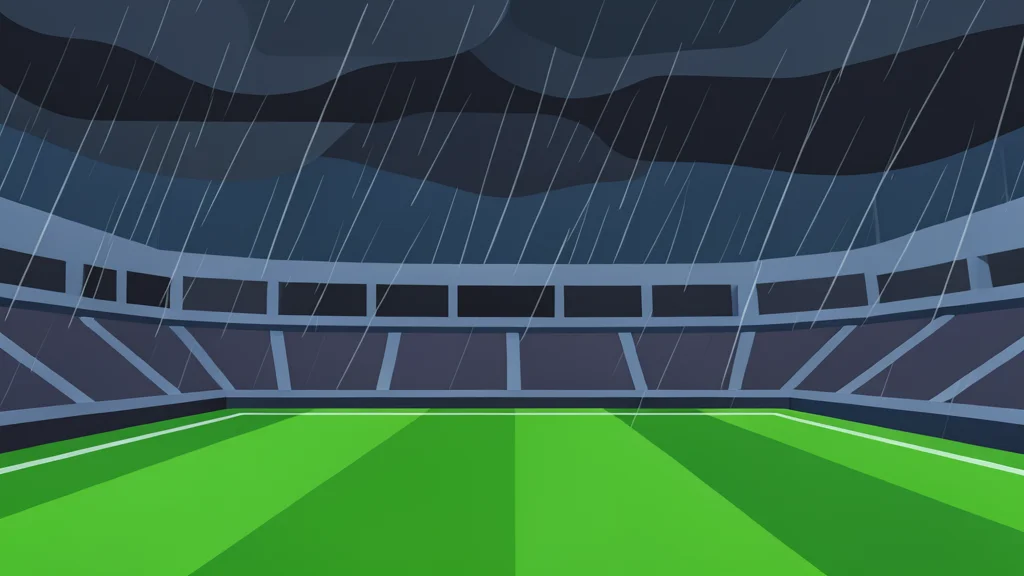
Storm clouds over Tampa Bay forced a two-hour halt, leaving the Browns up 23-19 with two minutes left in the fourth quarter.
Key points
- Lightning within eight miles forced a two-hour delay, halting play with two minutes left in the fourth quarter.
- The Cleveland Browns held a 23-19 lead when the weather stoppage began, with Tampa Bay on the 28-yard line.
- The first half ended 9-6 to Tampa Bay, with the Browns taking their first lead late in the third quarter.
Rain hammered the turf at Raymond James Stadium, turning the green into a slick, muddy expanse that swallowed the white yard lines. Thunder shook the air, a low, rumbling vibration that rattled the stadium’s steel bones. The stands, once a roaring sea of noise, emptied in a silent, orderly flow as fans retreated to the concourse for safety. Lightning split the dark sky, a jagged white vein illuminating the heavy, grey clouds that hung low over the city.
The clock stopped. The game froze. For over two hours, the field lay abandoned, a wet, gleaming plane under the watchful eye of a storm that refused to break. Inside the locker rooms, the two teams waited, the tension of a 23-19 deficit humming in the quiet air. The delay was not a pause; it was a hold, a breathless suspension of time dictated by the unpredictable fury of the weather.
Storm clouds halt the game
The NFL’s safety protocols are strict, drawing a hard line when lightning strikes within eight miles of the venue. This is not a suggestion but a mandate, a shield against the invisible danger that travels with the thunder. The two-hour wait is standard, a necessary buffer to ensure the air and ground are clear of the electrical threat. It is a pause that tests the nerves of players, coaches, and fans alike, stretching the moment of uncertainty into an hour of silence.
As the rain intensified, the field became a mirror, reflecting the flashing lights and the dark, churning sky. Puddles formed in the end zones, pooling in the goal lines, turning the playing surface into a treacherous, slippery landscape. The storm was not just an interruption; it was a presence, a physical force that demanded respect and obedience. The game could not proceed until the sky was calm and the air was clear.
Browns lead late in fourth
When the whistle blew to stop play, the Browns held a slim 23-19 lead. The clock read two minutes remaining, a tight, suffocating window for Tampa Bay to strike back. The Buccaneers were on the field, poised on second-and-four from the Cleveland 28-yard line, a position that offered a clear path to the end zone. The storm had frozen the game in a moment of high tension, a snapshot of a contest that hung in the balance.
The delay altered the momentum, a subtle shift in the energy of the crowd and the players. The Buccaneers, with all three timeouts remaining, held a strategic advantage, a reserve of time that could be used to disrupt the Browns’ rhythm. The storm had not just paused the game; it had reset the board, a new chapter in a story that was far from over. The rain had washed away the noise, leaving only the quiet, focused intensity of two teams ready to resume.
Kickers shape first-half score
Before the storm, the game was a battle of precision, a duel between the kickers who had kept the score close. The first half ended with Tampa Bay leading 9-6, a lead built on the accuracy of their special teams. The field goals were the currency of the early game, a steady, reliable flow of points that kept the contest competitive. The kickers had set the stage, a canvas of points that the quarterbacks would later paint over with their own strokes.
The second half saw a shift in momentum, as Tampa Bay broke the touchdown seal on their first possession. Cleveland responded with two scores of their own, a burst of offensive fire that took the lead with just under four minutes left. Deshaun Watson’s performance in that stretch was a testament to his ability to rally, a spark that ignited the Browns’ attack. The game was a chess match, each move calculated, each point a pawn in a larger strategy.