CBS Sideline Report Sparked Backlash over AI Sponsorship
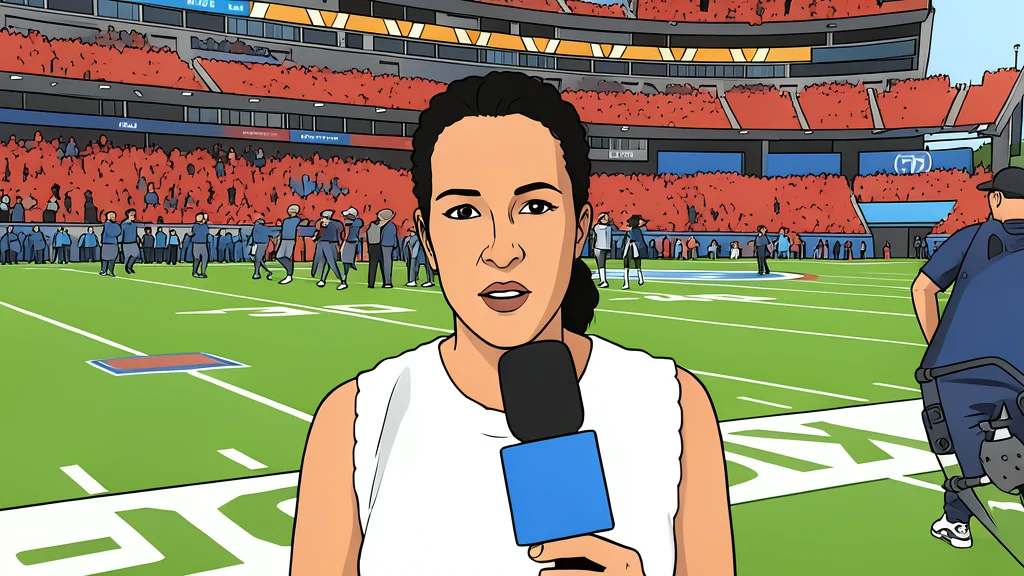
On the first full Sunday of the NFL season, a brief announcement during a Jets-T Titans broadcast ignited a fierce debate about the role of artificial intelligence in sports journalism.
The studio lights hummed with a low, electric buzz as Spero Dedes leaned into the microphone. The air smelled of ozone and polished wood, a familiar scent for broadcast professionals. Yet, as the camera panned to the sideline, the atmosphere shifted. Aditi Kinkhabwala stood ready, her presence a beacon of human connection in a digital age. But before she spoke, Dedes introduced the segment with a phrase that froze the room: “presented by ChatGPT.”
It was a small sentence, barely more than a breath. But it landed with the weight of a dropped pass. Fans watching the New York Jets-Tennessee Titans game on CBS felt the ground shift beneath their feet. The broadcast had introduced a new sponsor for a traditional human interaction, and the reaction was immediate. The digital ether filled with static, not from interference, but from outrage.
Digital Intrusion on Human Connection
The controversy mirrors a broader cultural friction. Just as Bill Simmons and The Ringer faced backlash for their partnership with an AI tool, CBS viewers expressed deep discomfort. The irony was sharp: an algorithm sponsoring a segment that relies entirely on human intuition, empathy, and real-time interaction. As one fan noted, the very nature of a sideline report is diminished when a machine claims ownership of the exchange.
The disconnect was palpable. Fans who cherished the raw, unscripted nature of sports journalism felt betrayed by the corporate integration of artificial intelligence. The sentiment echoed across social platforms, with users questioning why a technology that generates text would sponsor the act of asking questions. It was a bridge too far for many, a symbolic severing of the human thread that holds sports storytelling together.
Public Sentiment Shifts Against AI
Data from Pew Research has consistently shown that Americans harbor more concern than excitement about AI’s societal impact. This fear was not abstract; it was visceral. For viewers, the intrusion of AI into the intimate space of a sideline interview felt like a violation of trust. The technology, intended to assist, appeared instead to overshadow the journalists who do the work.
Educators in broadcast journalism added their voices to the chorus. One teacher, sharing the clip with students, urged them to avoid using AI for their own writing. The hypocrisy of a network promoting an AI tool in a context that demands human authenticity was not lost on anyone. The backlash was not just about a sponsorship deal; it was about the value placed on human experience in a rapidly automating world.
Ripples in Sports Media Landscape
Yahoo Sports and other outlets reported on the growing tension between traditional journalism and technological advancement. The incident highlighted a fragile balance. While AI offers efficiency, it risks eroding the very elements that make sports media compelling: the eye contact, the hesitation, the shared joy or grief. CBS’s decision to attach an AI brand to a human moment may have been a misstep in a landscape where authenticity is currency.
As the season unfolds, the debate is likely to continue. The image of a microphone stand and a camera lens, now tainted by the shadow of an algorithm, serves as a stark reminder. In sports, as in life, the human touch remains irreplaceable. The backlash was not just a reaction to a sponsor; it was a defense of the soul of the game.