Dolphins Drop Second Straight Game to 49ers in 35-13 Defeat
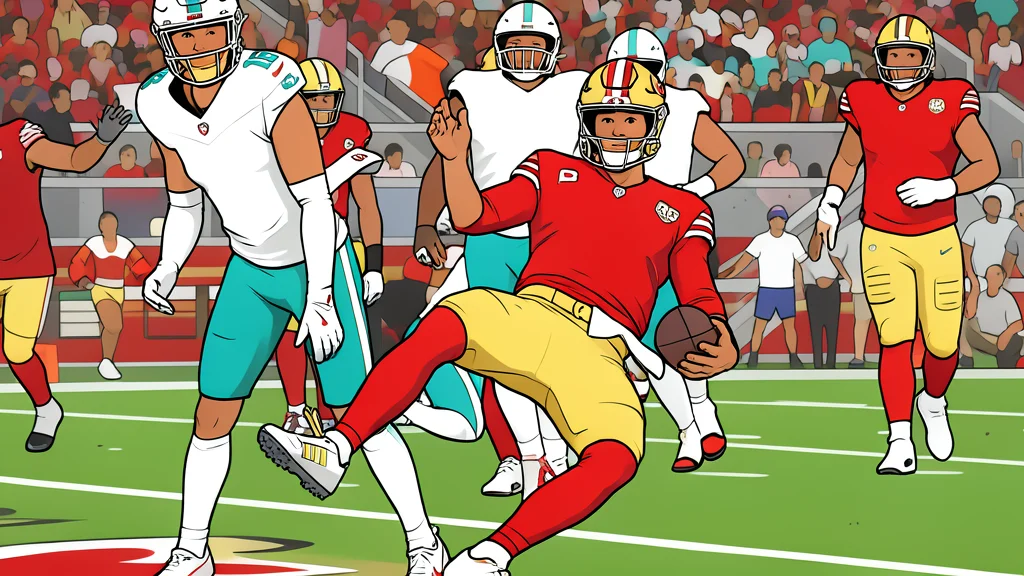
Miami's 2026 season opens with a 0-2 start after a 35-13 loss in San Francisco, highlighting a rebuilding phase under new leadership.
Key points
- The Miami Dolphins lost their second consecutive game of the 2026 season, falling 35-13 to the San Francisco 49ers.
- The game was defined by a second-half collapse, with the Dolphins' offense struggling to maintain its first-half rhythm.
- Head coach Jeff Hafley is focused on team development, viewing the 0-2 start as part of a longer-term rebuilding process.
The green turf of Levi’s Stadium swallowed the Miami Dolphins whole on Sunday. The scoreboard glowed 35-13, a stark white declaration that the second game of the 2026 season had ended in defeat. It was a physical, visceral loss, the kind that settles in the muscles and lingers in the mind long after the stadium lights dim. The Dolphins, a young squad still finding its footing, looked every bit like a team laying a foundation rather than chasing trophies. The air in Santa Clara felt heavy with the weight of expectation, a tangible pressure that the Miami offense simply could not lift.
This is the second straight loss for the Dolphins, a pattern that defines the current era of the franchise. The focus has shifted away from immediate wins and toward development, a strategic pivot that head coach Jeff Hafley is navigating with cautious precision. As reported by Yahoo Sports, the team is in a growth phase, a period where the scoreboard matters less than the structural integrity of the roster. The loss to the 49ers was not just a score; it was a data point, a raw piece of information in a larger narrative of rebuilding. The Dolphins are building something, brick by brick, even if the mortar is still wet and the structure is still vulnerable.
Halftime Split Reveals Offensive Struggles
The game was a tale of two halves, a narrative arc that unfolded with painful clarity. In the first twenty minutes, the Dolphins moved the ball with purpose, their offense clicking in a way that suggested progress. They were effective, their plays sharp and deliberate, a contrast to the chaos that followed. But as the second half began, the momentum shifted violently. The Miami offense stalled, their rhythm broken by the relentless pressure of the San Francisco defense. The ball movement that had flowed smoothly in the opening period became disjointed, a series of isolated attempts that failed to connect. The 49ers, sensing the shift, tightened their grip, turning a competitive first half into a rout.
Quarterback Malik Willis was at the center of this swing, his performance graded as inconsistent by observers from The Palm Beach Post. He showed flashes of brilliance, his arm strength and decision-making making him a viable option in the pocket. But the inconsistency remained, a recurring theme that has defined his early tenure in the starting role. The Dolphins’ offense, a work in progress, struggled to find a consistent rhythm against the 49ers’ defense. The second half collapse was a reminder that talent alone is not enough; consistency is the currency of the NFL, and Miami is still working to earn it. The loss was a hard lesson, one that will likely shape the team’s approach in the weeks ahead.
Defensive Gaps Exposed in Santa Clara
The defense, a critical pillar of any rebuilding team, was exposed to the full force of the 49ers’ offense. The pass rush, a key component of Hafley’s system, failed to generate the pressure needed to disrupt San Francisco’s rhythm. The Dolphins’ defensive line, a group still finding its identity, struggled to contain the 49ers’ running game, allowing them to establish a physical presence in the backfield. The lack of pass rush was a recurring issue, a gap that the 49ers exploited with surgical precision. The defense, while showing moments of promise, was ultimately overwhelmed by the experience and talent of the San Francisco unit.
The loss highlighted the need for improvement in several key areas, from the offensive line to the secondary. The Dolphins’ offensive line, a group that has been a point of concern, struggled to protect Willis, leaving him exposed to the 49ers’ pass rush. The secondary, another area of focus, failed to contain the 49ers’ passing game, allowing them to move the ball with ease. These are not small issues; they are fundamental flaws that must be addressed if the Dolphins are to compete at a high level. The loss to the 49ers was a wake-up call, a reminder that the rebuild is still in its early stages and that there is much work to be done.
Roster Moves Shape Week Two
The roster moves leading up to the game set the stage for the outcome. Edge rusher Chop Robinson was ruled out, a loss that weakened the Dolphins’ pass rush and limited their defensive options. The absence of a key player in such a critical role was a significant blow, one that the 49ers were quick to exploit. The Dolphins’ defense, already struggling, was left without a crucial piece of its puzzle, a gap that proved difficult to fill. The roster changes, while necessary, highlighted the depth issues that the team faces, a challenge that will likely persist throughout the season.
The inclusion of former fourth overall pick Ferrell, elevated from the practice squad, was a sign of the team’s willingness to experiment. The move was a calculated risk, an attempt to bring fresh energy to the defensive line. While Ferrell’s impact was limited in the loss, the move signaled the Dolphins’ commitment to development, a philosophy that has guided their approach since the start of the season. The roster changes, while not the sole cause of the loss, were a factor in the team’s overall performance. The Dolphins are a team in transition, and the moves they make on the roster will shape their trajectory in the coming weeks.