Lions’ Run Game Surges Past Expectations in Week One

Detroit’s offensive line defied early-season doubts, driving the ball with a ferocity that stunned analysts and fans alike.
The turf at Ford Field still held the damp chill of an early September evening as the Lions emerged from the tunnel, their pads clacking together in a rhythmic percussion. It was not just a game; it was the unveiling of a year’s worth of whispered strategies and boardroom debates. For months, the front office had moved pieces like chess masters, and now, under the blinding stadium lights, those abstract plans collided with the physical reality of fifty-three minutes of war. The air smelled of cut grass and anticipation, a sensory reminder that the long silence of the offseason had finally broken.
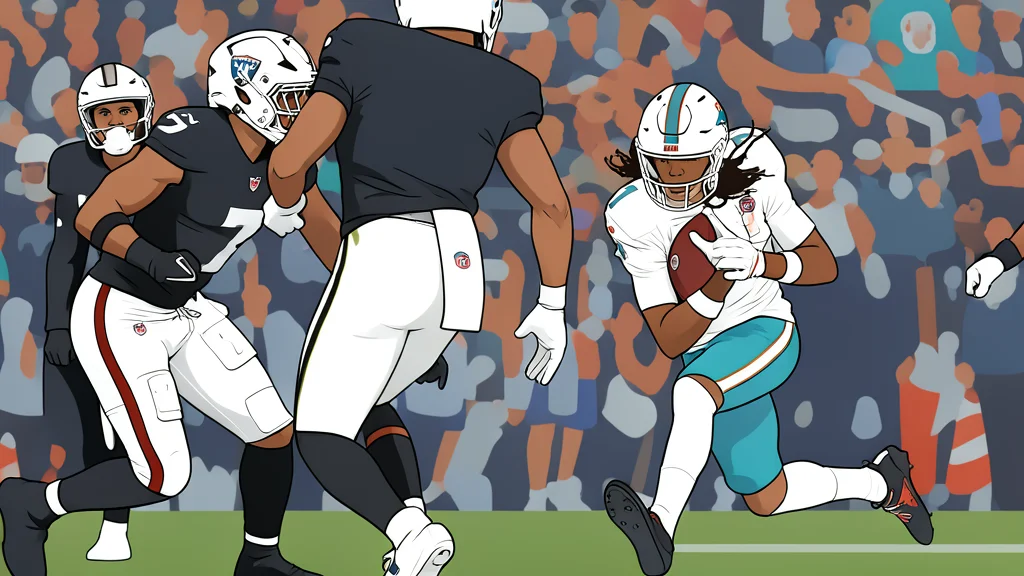
Detroit did not just play well; they dismantled the expectation of a shaky start. The final score of 31-30 over the New Orleans Saints was a narrow escape, but the narrative of the night belonged to the ground game. Where most observers predicted a sputtering engine, stuck in the mud of a new coaching regime and personnel shifts, the Lions roared forward. The surprise was not in the victory, but in the method: a rushing attack that moved with the precision of a machine and the power of a landslide.
Defying the Odds on the Line
The offensive line began the season with visible cracks. Cade Mays was gone to injury, the battle for the left guard position had never truly settled, and a rookie occupied the right tackle spot. When Christian Mahogany fell in the first quarter, the backup Ben Bartch, a man with barely a shred of first-team experience in camp, stepped into the chaos. The logical prediction was collapse. The actual result was a surge that defied the statistical models. The Lions recorded a rushing success rate of 51.5 percent, a figure that places them second in the league and surpasses their output during the peak years of Ben Johnson’s tenure in Detroit.
This was not a fluke of luck, but a testament to cohesion under pressure. The line moved as a single entity, driving through the Saints’ defensive front with a relentless, physical commitment. They did not just block; they displaced. The data from PFF backs this up, placing Detroit eighth in team run blocking grade and fifth in adjusted line yards. The players had to find their rhythm in real-time, correcting and adjusting with the speed of thought. It was a raw, unpolished unity that worked precisely because it was forged in adversity, a cohesive unit born from early adversity rather than a product of perfect preparation.
Strategic Brilliance in Motion
While the offense as a whole looked like a puzzle with missing pieces, the run game was a completed picture. New offensive coordinator Drew Petzing, whose scheme has drawn widespread praise for its ground-and-pound approach, placed his players in positions to exploit the Saints’ vulnerabilities. Detroit’s yards before contact ranked third in the league, a stark indicator that the defense was being pushed back before the ball carrier even reached the second level. This was not just about power; it was about technical precision and scheme execution that neutralized the Saints’ elite run defense, which had ranked eighth in DVOA the previous season.
The contrast between the expected struggles and the actual performance is the story’s core. Analysts at Yahoo Sports and across the sports desk noted that while the secondary struggled and explosive plays were conceded, the foundation of the offense was laid with surprising solidity. The running game’s effectiveness provided a buffer against the inconsistencies elsewhere. It was a sign that the front office’s vision, often criticized in the quiet of the offseason, had found its voice on the field. The line did not just hold; it advanced, creating a path for the offense to breathe and operate.
A Foundation for the Future
As the lights dimmed and the crowd dispersed, the lingering feeling was not of relief, but of validation. The Lions had answered the question that had haunted the offseason: Was the plan sound? The answer, at least for the ground game, was a resounding yes. The rough day for Jameson Williams and the defensive wobbles are manageable issues, fixable with practice and time. But the offensive line’s ability to gel instantly, to create a cohesive unit from disparate parts, is a different kind of asset. It is the bedrock upon which a championship team is built.
This Week 1 performance serves as a beacon of optimism for the weeks ahead. The Lions have shown that they can move the ball when the plan demands it, that they can adapt to injury and inexperience with grace and power. The green grass of Ford Field has witnessed a transformation, from a collection of individual talents to a collective force. As the team looks toward Week 2, the memory of this night’s rushing success will be a shield against doubt, a reminder that the foundation is strong, the line is solid, and the future is not just a guess, but a direction.