Mahomes Faces Tomlin's Mobility Doubt Before Denver Opener

Andy Reid’s conviction stands firm, but Mike Tomlin asks if the legs still carry the magic before the Chiefs meet the Broncos.
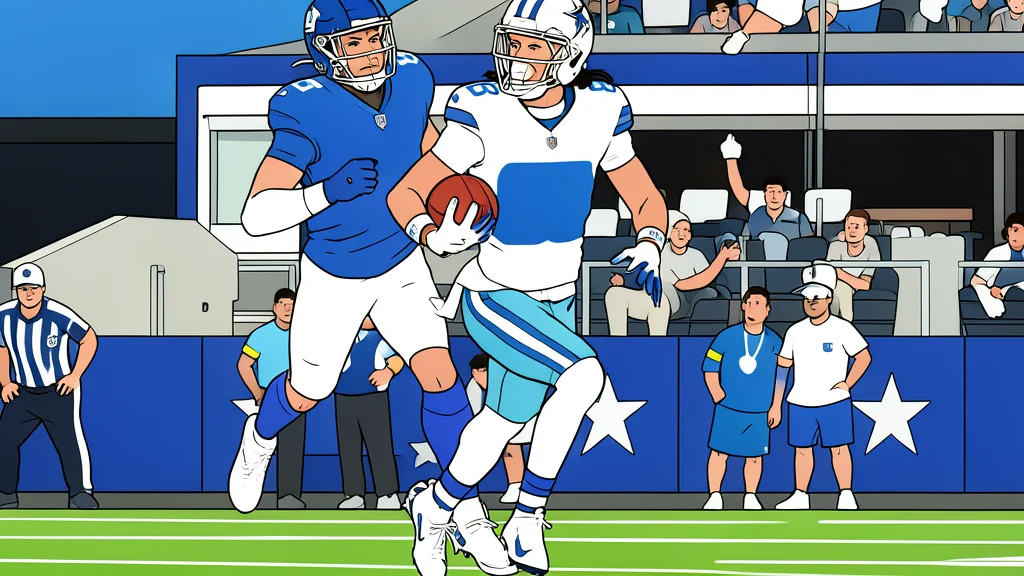
The turf in Kansas City hums with a quiet, electric tension. Andy Reid has spoken, and the decision is final: Patrick Mahomes takes the field for the season opener. There is no hesitation in the head coach’s voice, no lingering doubt about the quarterback’s readiness. The signal is clear, a beacon of stability in a season that ended in disarray. Yet, beyond the team’s internal certainty, a different narrative is taking shape in the broadcast booths. It is a question that hangs in the air, heavier than the summer heat. Can the man who redefined the position still move like he did before the tear?
Mike Tomlin, the former Steelers head coach now serving as an analyst, does not ask if Mahomes is healthy. He asks if he is still himself. This distinction is the crux of the debate reported by Yahoo Sports. Tomlin points to the physicality of the game, the raw, unfiltered need to escape pressure. It is not about standing in the pocket; it is about the explosive, chaotic creativity that has defined the Chiefs’ identity for years. As the NFL prepares for the first snap of the new campaign, the focus shifts from the mind to the body. The knee, once a source of endless worry, is now the center of a very specific, technical inquiry.
Tomlin questions the pocket escape
During Football Night in America, Tomlin dismantled the assumption that health equals performance. He noted that Mahomes tore the ACL and LCL in his left knee in December 2025, a trauma that sidelined him for the playoffs after a 6-11 regular season. The injury is not a distant memory; it is a fresh scar on a professional athlete’s body. Tomlin argued that the Chiefs’ success has always been tethered to Mahomes’ ability to extend plays. It is a signature move, a hallmark of their offensive philosophy. Without it, the engine stalls. The question is whether the reconstructed knee can handle the violent, sudden changes of direction required to buy time against elite pass rushers.
"He may be healthy enough to play, but is he Mahomes?" Tomlin asked, his voice cutting through the studio noise. He challenged the notion that the quarterback can still create positive outcomes from negative situations. This is not a simple physical checkmark. It is a test of instinct and mechanics. The ability to throw from the ground, to pivot under a collapsing pocket, to find a receiver in the chaos—these are the skills that separate a starter from a legend. Tomlin suggests that the leg brace Mahomes will wear against Denver is a symbol of this uncertainty. It is a reminder of the past, a visual cue that something has changed. The team must respond to the negativity of the previous season, but Mahomes must respond to the physics of his own body.
Stats define the elite mobility
The numbers Tomlin referenced are not just statistics; they are a map of dominance. Since 2018, Mahomes has led the NFL with 424 completions, 5,877 passing yards, and 61 touchdowns thrown outside the pocket. These are not routine plays. They are moments of high stress, high reward, where the quarterback is under duress. The ability to generate this volume from unstable positions is what makes Mahomes a unique force in the league. It is a skill that cannot be coached into a backup; it is innate, physical, and deeply personal. When the knee is compromised, the chain of causality breaks. If the escape is slower, the throw is weaker. If the pivot is labored, the window closes. The data suggests that this mobility is not a bonus; it is the core of his value.
No one knows yet if a reconstructed knee changes the geometry of those plays. The body is a complex machine, and the knee is a critical joint. It bears the weight of the player, absorbs the impact of collisions, and provides the leverage for sudden movement. When it is rebuilt, the mechanics shift. The timing might be off by milliseconds. The force might be distributed differently. These subtle changes can be the difference between a completion and a sack, between a touchdown and a turnover. The Chiefs’ offense has been built around this specific type of production. If the engine is different, the car drives differently. The rest of the league is waiting to see if the wheels still turn with the same ferocity.
Denver prepares for full strength
The matchup against Denver is a gauntlet. The Broncos led the NFL with 68 sacks last season and won the AFC West title. They are a team built on pressure, on disrupting the rhythm of the offense. For a quarterback returning from major knee surgery, this is the worst possible environment. The physical toll of dodging six defenders in a single play is immense. To make matters more difficult, the Chiefs lost their starting left tackle, Josh Simmons, to a back injury in preseason. Rookie Kahlil Benson will now protect Mahomes’ blind side. This leaves the quarterback more exposed, more reliant on his own legs to survive the chaos. It is a high-stakes test of both the player and the scheme.
Vance Joseph, Denver’s defensive coordinator, refuses to doubt the outcome. "I think Patrick's gonna be Patrick," he said, his confidence unwavering. He believes Mahomes would not play if he could not be himself. The quarterback’s own words echo this sentiment; he has claimed his knee feels great and that he has not missed a practice since being cleared in July. He sat out all three preseason games, preserving his body for the moment that matters. Monday night will be his first real test, the first time the public sees the results of his summer rehab. Tomlin’s question gets its first answer on the field, in the dirt, in the sweat. The narrative will be written in the outcome, not in the speculation.