Sherman Recalls Michaels' Crucial Studio Advice
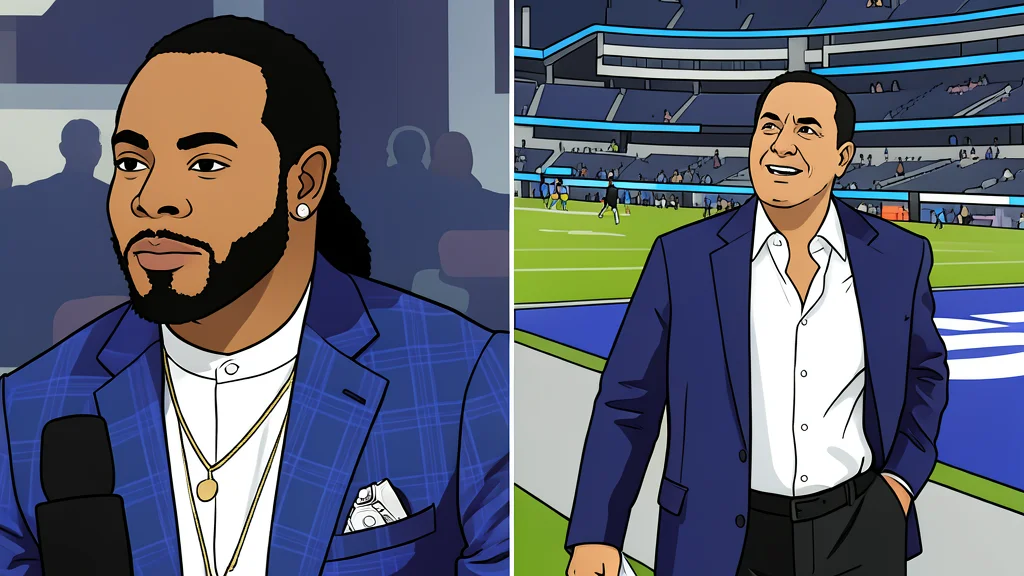
The studio lights hum low as Richard Sherman leans into the microphone, recalling the moment Al Michaels stripped away the ego.
The studio lights hum low, casting a warm glow over the curved desk where microphones stand like silent sentinels. Richard Sherman leans forward, the fabric of his suit catching the light as he recalls a specific conversation that reshaped the Thursday Night Football dynamic. It is not about the plays or the stats, but about the shift in identity required to leave the field behind. The air in the room feels charged with a quiet intensity, a shared understanding among the crew that their new role demands a different kind of brilliance.
For five seasons, Amazon’s broadcast team has found its rhythm, a collective pulse driven by Charissa Thompson, Tony Gonzalez, Ryan Fitzpatrick, and Andrew Whitworth. Al Michaels, the voice anchoring the play-by-play, and Kirk Herbstreit, the color analyst, complete the ensemble. Sherman, who spent eleven years as a defensive back, now navigates this media landscape with a perspective forged in the trenches. The environment is electric, a place where stories from the past bleed into the present, creating a tapestry of football that never feels stale.
The Star Becomes The Story
Early in their tenure, Michaels issued a directive that cut through the noise of celebrity. He reminded the former athletes that their status as superstars belonged to a previous chapter. The focus, he insisted, must shift entirely to the product on the field. It is a stark reminder that the audience tunes in for the game, not for the personalities in the booth. The advice was blunt, stripping away the comfort of fame to reveal the core responsibility of a broadcaster.
Sherman describes the atmosphere as incredible, a daily ritual where every teammate brings a unique texture to the broadcast. The legendary voice of Herbstreit adds depth, while the collective energy creates a sense of value for every viewer. It is a delicate balance, ensuring that the entertainment aspect serves the sport without overshadowing it. The crew works to add context, to make the abstract tangible for those watching from their living rooms.
Enhancing The On-Field Product
The instruction was clear: enhance, do not dominate. Michaels told the team that their job was to entertain without becoming the show. This distinction is subtle but vital, requiring a constant check of one’s own presence. It is about serving the narrative of the game, letting the action on the field breathe while providing the necessary commentary. The goal is to be a vessel for the sport, not a competitor to it.
Tony Gonzalez has echoed this sentiment in the past, emphasizing the team’s dedication to audience satisfaction. The collective focus on the viewer’s experience creates a cohesive unit, where individual egos are subsumed by the greater purpose. It is a professional discipline that transforms a group of former players into a unified broadcast entity. The result is a seamless presentation that honors the history of the game while keeping the spotlight where it belongs.
A Shared Understanding In The Booth
Kevin Clark, host of the podcast where Sherman shared these insights, noted the badass nature of Michaels’ advice. It is a call to humility, a recognition that the star power of the past is irrelevant in the present moment of the broadcast. Sherman called it sage advice, a reflection of the wisdom gained through experience. The studio becomes a place of mutual respect, where every voice contributes to a greater whole.
As reported by Yahoo Sports, this dynamic has allowed the team to thrive in the fifth season of Prime Video coverage. The advice from Michaels continues to resonate, guiding the crew through each Thursday night. It is a testament to the power of clear, direct communication in high-pressure environments. The result is a broadcast that feels both intimate and expansive, a window into the soul of the game.