Steelers' Rigid Rotation Stalls Jaylen Warren's Momentum
Pittsburgh's mechanical snap distribution disrupted the chemistry between Jaylen Warren and Rico Dowdle, leaving the offensive line's cohesion underdeveloped.
The green turf in Pittsburgh hums with the low static of a stadium settling in after the final whistle. It is a quiet, heavy silence that follows a 20–13 victory over the Atlanta Falcons, yet the locker room air feels thick with unspoken frustration. The scoreboard tells a story of success, but the film tells a different one. The ground game sputtered, stalling out of the gate and never finding the rhythmic pulse that a healthy rushing attack requires. While the offensive line pushed with determination, the backfield felt disjointed, two talented runners trapped in a mechanical rhythm that refused to let either man breathe.
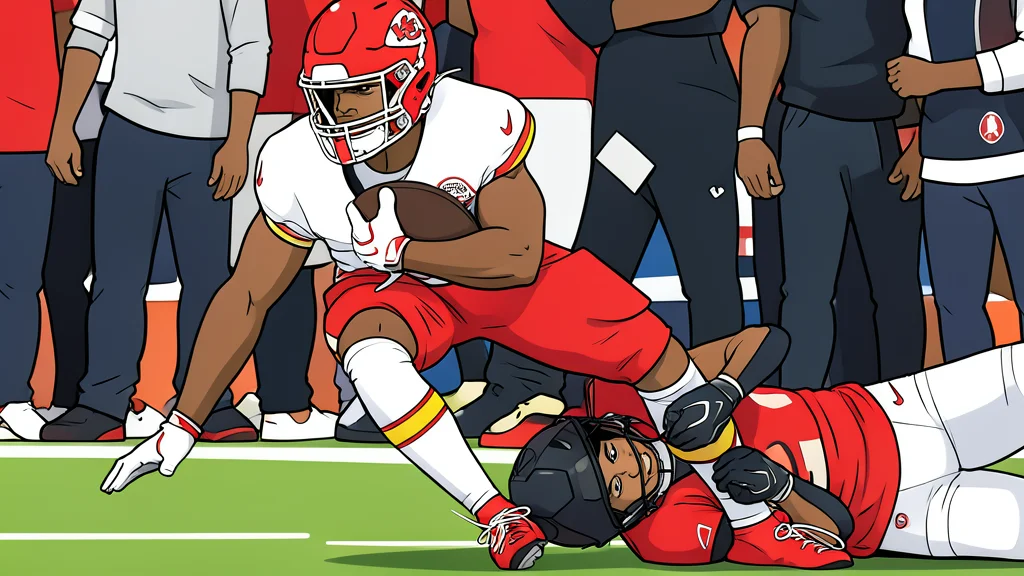
This is not a failure of talent, but of tactical rigidity. The Steelers' coaching staff, led by new head coach Mike McCarthy, has adhered to a strict series-by-series rotation. This approach prevents Jaylen Warren and Rico Dowdle from finding an operational groove. They are swapping places like cogs in a machine, never allowed to settle into the flow of the game. The result is a backfield that looks active on the surface but lacks the deep, intuitive connection needed to break through a defensive line. The players are running, but they are not racing.
Rigid rotation kills offensive rhythm
Beat writers Ray Fittipaldo and Christopher Carter of the Pittsburgh Post-Gazette dissected this dynamic on the "North Shore Drive" podcast. Fittipaldo pointed to the box score as evidence of the problem. Jaylen Warren finished with 73 yards from scrimmage, a modest number for a player of his caliber. More telling, however, was the timing of those yards. A significant portion of his production came in the fourth quarter, suggesting he was only allowed to perform when the game was already decided. The early fumble obscured the fact that Warren was displaying clear big-play potential. He was ready to run, but the play clock and the rotation schedule were not.
Carter echoed this sentiment, noting that Warren had only ten carries on the day. Three of those touches arrived in the final minutes of the contest. This sporadic usage makes it nearly impossible for a player to feel the game. He cannot read the defense, cannot find the rhythm of the pocket, and cannot build the trust with his linemen that comes from repeated, consecutive snaps. The rotation treats the backs as interchangeable units rather than artists in a symphony. It is a financial decision dressed up as a tactical one, but on the field, it feels like a restraint on creativity.
Financial logic conflicts with field chemistry
The logic behind the rotation is easy to understand. Both Warren and Dowdle command comparable salaries. Distributing workloads evenly protects the team's financial interests and ensures that neither player is overworked or underutilized in a way that might affect their long-term value. It is a safe, calculated move. However, football is not a spreadsheet. It is a game of timing, instinct, and physicality. When an offensive line is still establishing cohesion, the backs need the freedom to find their own lanes. They need to feel the push, the pull, and the break in the line. A predetermined rotation strips away that intuition.
The Steelers' offense requires a dynamic rushing attack to succeed. This means riding the hot hand, not just splitting the snaps down the middle. If Warren is making nice catches and breaking runs, he should be given the ball. If Dowdle is finding a lane, he should be trusted. The current system ignores the reality of the game. It assumes that equal touches will lead to equal production, but in football, momentum is currency. By denying their backs the chance to build that momentum, the coaching staff is limiting their own ceiling. The players are capable of more, but the system is holding them back.
Coaching staff must abandon predetermined splits
As the season progresses, the Steelers must make a choice. They can continue to rely on the safe, mechanical rotation, or they can trust their players to find their own rhythm. The evidence from the opening week suggests that the current approach is failing. The offensive line is pushing, but the backs are not connecting. The result is a ground game that is functional but not exciting. It is a game of inches, but the players are not allowed to feel those inches. They are told where to go, when to go, and who to hand the ball to. There is no room for improvisation, no space for creativity.
The Steelers have the talent to be a top rushing offense. They have the linemen to open holes and the backs to exploit them. What they lack is the freedom to let it happen. The coaching staff must abandon the predetermined rotations and start riding the hot hand. They must trust their players to read the defense and make the right decisions. It is a risk, but it is a risk that is necessary. The alternative is a team that is safe, but never great. The Steelers are in a rebuilding phase, and they need to take the steps that will allow them to compete at the highest level. That means trusting their backs, not just their spreadsheets. The time for mechanical precision is over. The time for fluid, dynamic football is now.