Steelers Rotation Shifts: Watt Rests, Wilson Takes Charge
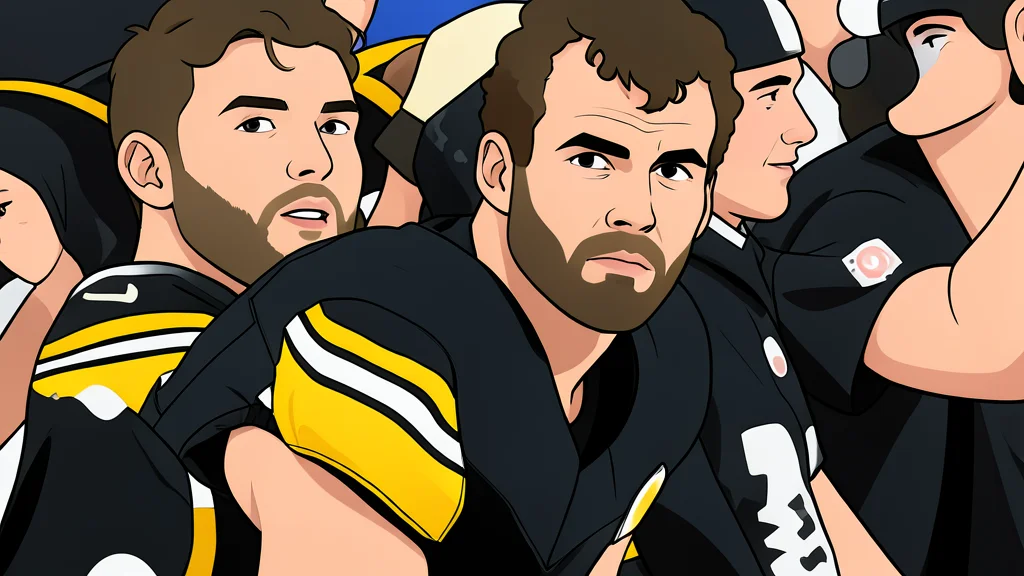
Pittsburgh’s defensive hierarchy shifted in Week 1, with veterans finding rest and rookies seizing opportunities.
The green turf of Acrisure Stadium still smelled of cut grass and damp earth as the final whistle faded. For a moment, the air hung heavy with the scent of leather and sweat. Then the rotation began. It was a subtle shift, barely noticeable to the casual eye, but critical to the machine. T.J. Watt stepped back. Payton Wilson stepped forward. The hierarchy had moved, silent and swift, under the stadium lights.
Snap counts often reveal what press conferences hide. They are the raw data of trust, the physical evidence of who the coaches believe can carry the load. In Pittsburgh’s opening victory over the Falcons, the numbers painted a clear picture. The workhorse veterans caught their breath, while the emerging talent seized the stage. This was not just a win; it was a statement about the future of the depth chart.
Veterans Find Breath in Rotation
Defensive coordinator Patrick Graham’s scheme offered a reprieve for the aching knees of the past. T.J. Watt, the engine of the defense, played just 38 defensive snaps. It was a stark drop from the relentless grind of previous seasons. Beside him, Nick Herbig logged 39, and Alex Highsmith 41. Jack Sawyer added 23 more. The rotation was seamless, a fluid exchange of bodies that kept the engine running hot without burning it out.
Cam Heyward’s reduction was even more striking. At 37, the veteran defensive lineman played only 32 snaps, a mere 53% of the defensive effort. Yet, his impact remained seismic. Three batted passes, a presence in the backfield, and a quiet authority that demanded respect. He did not need to be on the field for every second to bend the game to his will. The rest made him sharper, his hands quicker, his eyes colder.
Wilson and Ramsey Dominate
In the shadow of the veterans, two players emerged with a ferocity that demanded attention. Jalen Ramsey, earning his $17.2 million cap hit, played all 61 defensive snaps. He shifted like a shadow, moving from slot to safety, a chameleon in the secondary. His versatility was not a novelty; it was a weapon. Rayshawn Jenkins, the free-agent addition, managed only 32 snaps, a clear demotion in the immediate hierarchy.
Payton Wilson’s resurgence was the other headline. Playing 58 of 61 defensive snaps, the inside linebacker reclaimed his throne. He was everywhere, a blur of motion and intent. Thirteen total tackles, a team-best, etched in the stat sheet. The trust from Graham was not blind; it was earned in the heat of the moment. Wilson did not just play; he controlled the rhythm of the defense.
Rookie Struggles and Tight End Shifts
Not every star rose in Week 1. Rookie second-round wide receiver Germie Bernard stood on the sideline, watching the game unfold from a distance. He logged just three of the team’s 67 offensive snaps. Roman Wilson, meanwhile, owned the WR3 role with 37 snaps, a clear signal of where the team’s immediate trust lies. The draft capital was spent, but the patience is not. Bernard’s path is long, and the starting job is currently Wilson’s to lose.
The offense itself had shifted gears. Under head coach Mike McCarthy, the Steelers moved away from the tight-end-heavy scheme of 2025. The personnel groupings leaned toward 11 personnel, a more traditional alignment. Yet, the two highest-paid tight ends in the NFL remained central figures. The balance is delicate, a tightrope walk between tradition and innovation. As reported by Yahoo Sports, the snap counts tell the story: a team in transition, finding its new center of gravity.