The Quiet Forces Shaping the Eagles-Titans Clash

Beyond the star power, four subtle mechanics will likely decide whether Philadelphia's offense surges or stalls in Nashville.
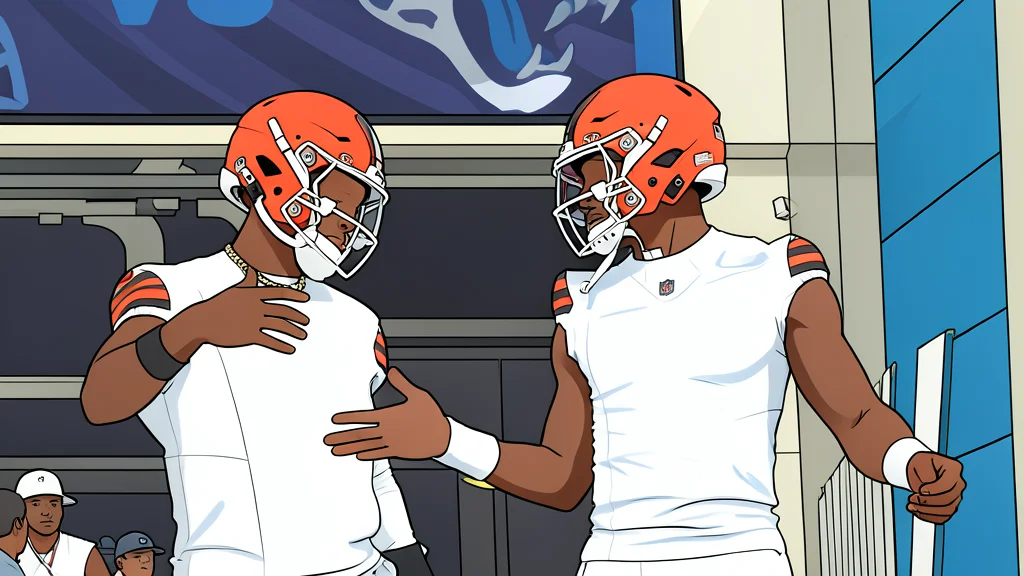
The air in Nashville hums with a low, electric tension, a static charge that hangs heavy over the turf. It is not the roar of the crowd that defines the pre-game atmosphere, but the silent, mechanical precision of the players warming up in the shadows. Every movement is a calculated step, a twitch of muscle that hints at the violence to come. The stadium lights cut through the evening haze, illuminating the green expanse where history is written and erased in a matter of minutes. Here, the obvious talent is merely the canvas; the true story is painted in the finer, often overlooked strokes of strategy.
Philadelphia arrives with a reputation built on flash, but the Titans know that games are won in the margins. A stray bounce, a misjudged jump, or a momentary lapse in concentration can unravel the most meticulously planned drive. As the Eagles prepare to take on Tennessee, the narrative shifts away from the quarterbacks and toward the unsung architects of the game. These are the factors that do not make the highlight reel but often decide the final score, the quiet forces that dictate who controls the tempo and who is left chasing shadows.
Punting Precision Dictates Field Control
On the sideline, the rhythm of the kickers sets a different tone. Joey Slye of the Titans appears composed, his routine a smooth, repetitive arc that has not faltered at Nissan Stadium. In contrast, the Eagles' Jake Elliott carries the weight of expectation, his every kick met with a collective holding of breath by the home faithful. Yet, the true battlefield of field position is not the goal line but the return yard. Braden Mann, the Eagles' punter, has turned his leg into a weapon of strategic dominance. In his recent outing, he averaged over fifty yards per kick, pinning the opposition deep in their own territory with surgical accuracy.
Tommy Townsend, the Titans' counterpart, struggled to find that same consistency. His kicks lacked the same punishing distance, resulting in touchbacks that gifted Philadelphia precious yards. This disparity creates a hidden advantage for Philadelphia. Even if the Titans manage to score, the starting position of their offense is often compromised. The Eagles, by contrast, start with the wind at their back, a subtle but significant edge that accumulates over the course of a four-quarter grind. It is a quiet victory, one that unfolds in the distance of a punt rather than the drama of a catch.
Neutralizing the Rookie Linebacker
While the spotlight often falls on the established stars, the rookie Anthony Hill Jr. has emerged as a disruptive force. His debut was nothing short of historic, recording the most stops by a linebacker in a first game in league history. He moves with a predatory instinct, reading the play before it unfolds, a ghost in the backfield that threatens the rhythm of any passing attack. For the Eagles, containing this rookie is not just about stopping a play; it is about breaking the momentum of the Titans' defense. If Hill is allowed to roam free, the Eagles' offensive line will find itself in constant peril, their timing disrupted by sudden, violent impacts.
Jeffery Simmons, the veteran anchor of the Tennessee front, is a known quantity, a formidable wall that requires respect. But Hill is the variable, the unknown that can turn a solid drive into a turnover. The Eagles must identify his triggers, his angles of attack, and neutralize him before he can dictate the pace of the game. This is a mental battle as much as a physical one, a test of preparation and adaptability. The team that understands this dynamic will likely control the middle of the field, dictating the terms of engagement for the rest of the roster.
Pressure and Possession Define Victory
The pass rush is the heartbeat of a defense, and in this matchup, it is a critical differentiator. The Titans' ability to pressure the quarterback was minimal in their opener, with few genuine threats registered against the opposing signal caller. If this trend continues, Jalen Hurts will have the time to read defenses and make plays that stretch the field. The Eagles' passing attack is efficient when given space, a trait that becomes dangerous when the defensive line is passive. Conversely, if Tennessee can generate consistent pressure, they can disrupt the timing of the Eagles' offense, forcing hurried throws and missed connections.
Time of possession is another silent arbiter. The Eagles have shown resilience in the past, winning games despite losing the clock battle. However, in this context, controlling the clock is a way to limit the Titans' opportunities. A strong running game can keep the offense on the field, draining the momentum of the opponent. The Eagles' ground attack may find more success against Tennessee than it did against Washington, a simpler task that allows them to build a lead and manage the game. As the quarters progress, the team that controls the clock controls the destiny, a truth that is often overlooked until the final whistle blows. As reported by Yahoo Sports, these subtle elements will likely be the deciding factors in this Week 2 clash.