Arsenal Penalty Controversy Deepens Arteta's Frustration

A single tug on a shirt in the second half sparked a storm that official explanations have failed to dissipate.
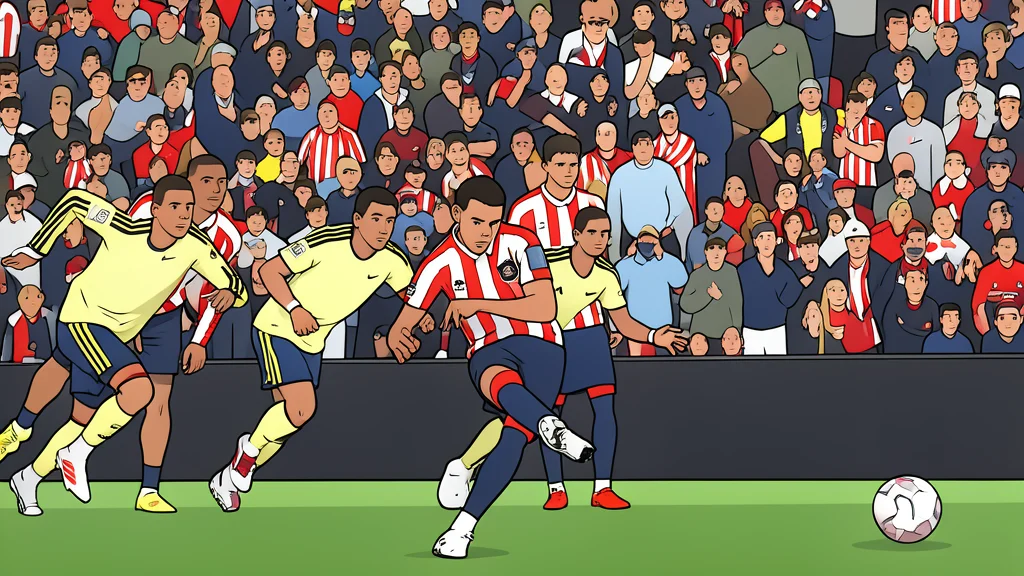
The grass at the Stadium of Light still held the damp of the evening, a heavy green that clung to the boots of players who had just survived a tense, goalless stretch. In that quiet moment before the break, a cross whipped through the air, a taut line of intent cutting through the humid air. Ezri Konsa stood at the near post, his eyes locked on the incoming ball, a natural instinct for any defender tracking a threat. Then came the tug. A sudden, violent jerk from Dan Ballard’s hand on Konsa’s left arm, swinging the Arsenal center-back around like a puppet on a string. The referee’s whistle sliced through the noise, sharp and final. Penalty. The decision hung in the air, heavy and irreversible, as the stadium erupted in a chaotic mix of relief and outrage.
Mikel Arteta’s face, visible on the touchline, did not celebrate. It tightened. His jaw worked, a silent grind against a reality that felt fundamentally wrong. This was not the clean, decisive call his team had hoped for. It was a moment that would echo far beyond the final whistle, a splinter in the side of a team trying to maintain its rhythm. The Premier League’s subsequent release of the video assistant referee dialogue only deepened the fissure, turning a disputed call into a public dispute over the very soul of the game.
Transparency Exposes Ugly Underbelly
The Premier League chose a path of radical transparency, releasing the verbatim transcript of the conversation between referee John Brooks and video assistant Stuart Attwell. It was a bold move, intended to show the reasoning behind the call. Brooks, the man on the pitch, had described Konsa as being “all over” Ballard, facing the wrong way at the near post. Attwell, watching from the booth, confirmed it was a holding offense. “I’m happy that it’s a holding offense,” the VAR stated, his voice calm and detached. “The foul is confirmed. Confirming the on-field decision of penalty.” The brevity of the exchange felt almost clinical, a stark contrast to the emotional turmoil it unleashed among fans and managers alike.
For Arteta, the words felt like a betrayal of the footage. He pointed to the “judo roll,” a term he used to describe Ballard’s action of pulling Konsa down. In his view, Konsa had not initiated the contact; he had been pulled. The league’s official literature defines holding offenses as actions with “clear material impact” or “non-footballing holding actions.” But the nuance of who started the pull, who reacted, and who was looking at the ball remained blurred. The league’s mandate to penalize clear holding actions felt, to many, like a blanket rule that ignored the specific, chaotic reality of that moment. The explanation did not calm the rage; it fueled it.
Arteta’s Warning on Game Integrity
Arteta’s post-match comments carried the weight of a man who saw the foundations of the sport shaking. He was not just upset about a lost point or a missed chance; he was worried about the message being sent to the entire division. “I’m very worried and sad because this can never be a penalty,” he said, his voice laced with a frustration that went beyond the immediate match. He argued that the game had been “unprotected” on that night. If such a call was acceptable, the integrity of the competition was at risk. He spoke of taking responsibility to protect the game, a burden he felt was falling too heavily on managers and players to bear.
The broader implications loomed large. If the league’s interpretation of “holding” became the standard, the margin for error in physical challenges would shrink to a degree that could stifle the natural flow of play. Arteta’s concern was not just about Arsenal’s momentum, which had been dented by the controversy, but about the future of refereeing in the Premier League. The independent body that reviews these decisions would now have to grapple with a case that had become a symbol of the tension between rule enforcement and the spirit of the game. For now, the debate raged on, a fire that the official explanation had only stoked.
A Season of Scrutiny Awaits
As the dust settled on the pitch, the reality of the situation remained. Arsenal had won the match, 2-0, but the victory was tarnished by the shadow of the penalty decision. The Premier League’s strong mandate for officials to recognize and penalize holding actions would remain in place, a rulebook that seemed to offer more clarity in theory than in practice. For Arteta, the season ahead would be a test of patience and principle. He had voiced his concerns, but the power to change the narrative lay with the officials and the league. The game, he believed, needed to be protected, and he was willing to fight for it, even if it meant standing alone against the tide of official interpretation. The controversy was not over; it was merely the first wave of a much larger storm.