Balogun's Absence Leaves a Void in the USMNT
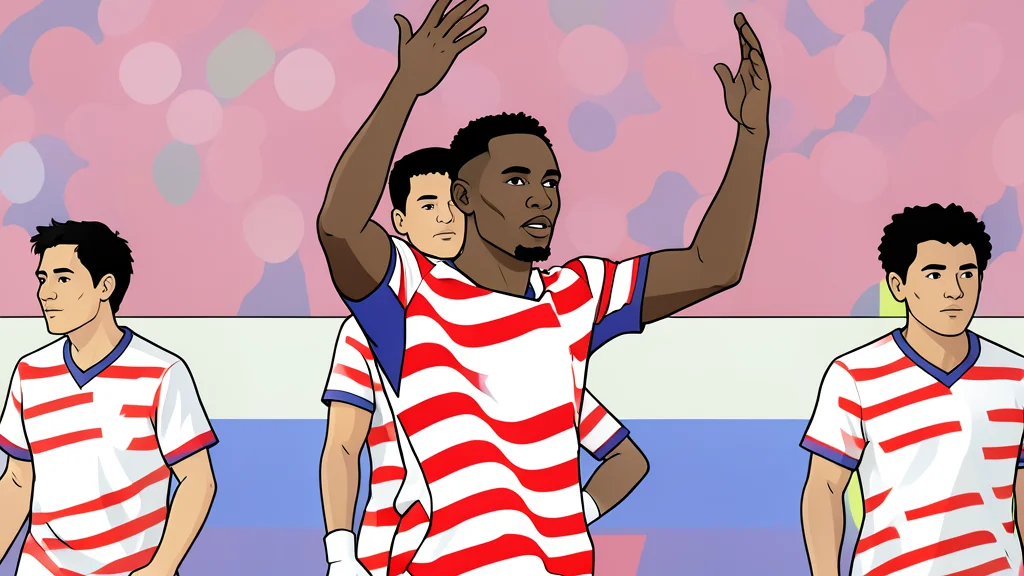
The striker who electrified the World Cup is now a spectator, sidelined by injury and uncertainty.
The stadium lights hum a low, electric note over the empty seats, a sound that feels hollow without the roar of a crowd chasing a striker. Folarin Balogun is not there. He is absent from the squad list for the first four matches following the 2026 World Cup, a silence that speaks louder than any announcement. The grass is cut short, sharp and green, waiting for feet that will not come. It is a physical absence, a gap in the formation that manager Mauricio Pochettino hints at through a minor leg issue and the striker’s unsettled club status. The air is still, but the tension is palpable, a static charge held in the breath of a team that just lived through a global spectacle.
Just weeks ago, the same pitch was a stage for explosion. Balogun, twenty-five and burning with intensity, scored twice in the rousing opening win over Paraguay. The ball hit the net with a thud that shook the stadium, a sound of pure triumph. Then came the round of 32, a clash against Bosnia and Herzegovina where he struck again, his movement a blur of white and blue. But the match did not end in celebration. It ended in a red card, a flash of authority from referee Raphael Claus that froze the moment. The controversy that followed was as loud as the goals, a global debate that spilled out of the stadium and into the corridors of power.
A Controversy That Split the World
The decision to reverse the automatic one-game suspension was a seismic shock to the soccer world. FIFA, under pressure from U.S. President Donald Trump, overturned the ban, a move that drew condemnation from UEFA and nations across the globe. The integrity of the game felt thin, stretched tight over a political frame. Balogun, once the center of joy, became the center of a storm. The red card was not just a moment of bad luck or bad judgment; it was a lightning bolt that split the team’s narrative in two. One side saw a star, the other saw a symbol of unfair advantage.
With the ban lifted, Balogun started the round of 16 match against Belgium. The stakes were high, the air thick with expectation. But the game ended in defeat, a loss that cut the team’s World Cup run short. The final whistle was a hard stop, a period at the end of a sentence that felt too abrupt. The echoes of that match still linger, a ghost in the machine of the national team. The controversy did not disappear with the final whistle; it settled, like dust, on the shoulders of the players and the staff.
The Transfer Window That Closed
The summer transfer deadline passed with a sense of finality. Balogun appeared to be heading to Everton in the English Premier League, a move that would have anchored him in a new league, a new rhythm. But the deal from Monaco fell through at the last minute, a door slamming shut just as he was about to walk through it. The uncertainty of his club situation added another layer to his absence. He is a player in limbo, caught between the national team’s needs and his own professional trajectory. The grass under his feet feels different now, less solid, more uncertain.
As per Yahoo Sports, the situation is not just about a leg injury. It is about a man who has become a focal point for debates that extend far beyond the pitch. The team is moving forward, but without its star, the rhythm is different. The long runs of play, the sharp stops of defense, all of it feels slightly off. The absence of Balogun is a blank space in the story, a page that has been torn out. It is a reminder that in soccer, as in life, the most significant moments are often the ones that are left unsaid.
The Silence After the Noise
The stadium is quiet now, the echoes of the World Cup fading into the background. The grass is green, the net is white, the ball is still. But the energy is gone, replaced by a quiet contemplation of what could have been. Balogun’s absence is a mirror, reflecting the complexities of modern soccer, where politics, injury, and ambition intertwine. It is a moment of pause, a chance to breathe before the next chapter begins. The story is not over, but the tone has shifted, becoming more subdued, more reflective.
The team will play, they will fight, they will strive. But without Balogun, the narrative is incomplete. It is a story with a missing piece, a puzzle that cannot be fully assembled. The silence is not empty; it is full of potential, of questions, of what-ifs. It is a space that invites interpretation, a canvas for the imagination. In the end, it is the silence that speaks the loudest, a reminder that in the world of soccer, the most powerful moments are often the ones that are never played.