Chelsea's Second-Half Collapse Against Brentford
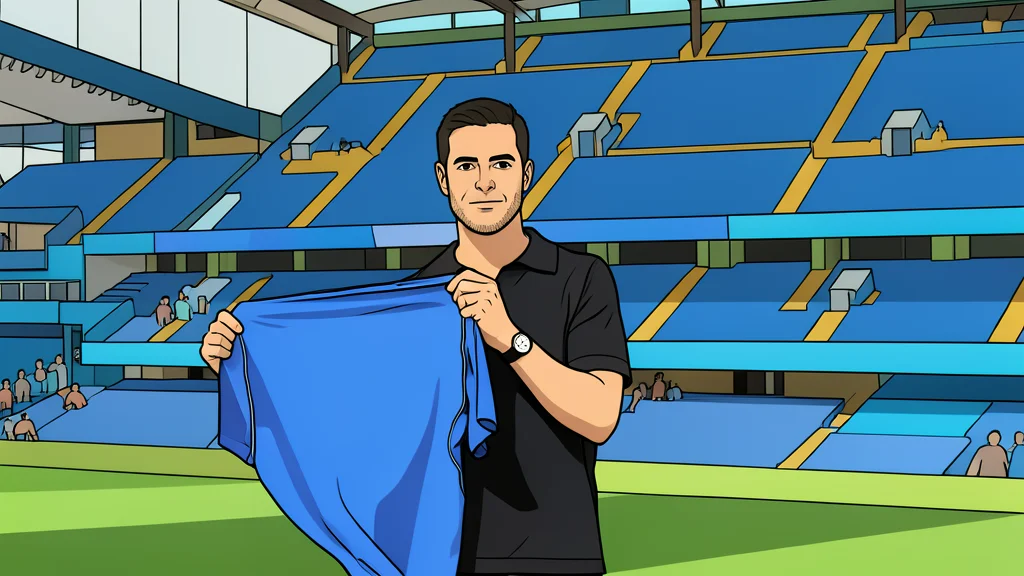
The first half held promise, but the second half dissolved into a chain of defensive failures that left Chelsea defenseless.
The green expanse of the pitch felt heavy under the stadium lights, a visual calm that masked the underlying tension. For the first forty-five minutes, Chelsea’s shape held together, a disciplined line of defenders breathing in unison. Then, the break. The rhythm snapped. What followed was not a gradual fade but a sudden, violent unraveling. By the final whistle, the scoreboard told a story of total capitulation, a 3-0 defeat that felt less like a loss and more like an execution.
Xabi Alonso stood at the podium, his expression unreadable but his words precise. He did not dwell on the pain of the result. Instead, he dissected the anatomy of the collapse. The narrative suggested a simple failure at set pieces, a common ailment for any football team. Alonso rejected that narrow diagnosis. He pointed to a broader, more systemic fracture in the team's identity, a breakdown that transcended a single phase of play and infected the entire structure of their defense.
A Chain Reaction of Defensive Errors
Levi Colwill had described the team as being bullied at set pieces, a specific and tangible complaint. Alonso broadened the lens. He identified a sequence of failures that compounded one another. The initial error was the set piece, a momentary lapse in concentration. But the true danger lay in the aftermath. Chelsea lost their shape, a structural integrity that had held firm in the first half. They became disorganized, scattered across the turf like leaves in a gale.
The goals reflected this disarray. Mikkel Damsgaard’s corner found two unmarked players, a vacuum in the box that Chelsea failed to fill. Jaidon Anthony finished from close range, the ball skidding across the grass. Minutes later, Chelsea pushed forward, desperate for an equalizer. They lost possession. The transition was swift, brutal. Kevin Schade drove through the center, his shot saved by Emiliano Martínez, but the rebound fell to Igor Thiago. The net rippled. The third goal came in stoppage time, a final nail in the coffin. Three different failure modes, three distinct moments of individual error, all stemming from a collective loss of focus.
The Pattern of Inconsistent Performance
This defeat did not exist in a vacuum. It was the latest entry in a growing ledger of inconsistency. Chelsea have struggled to maintain their intensity for the full ninety minutes. The pattern is familiar. A strong start, a burst of energy, a moment of brilliance. Then, the fade. The legs tire. The minds drift. The shape crumbles. Alonso has acknowledged this before, admitting that his team cannot sustain a high level of performance for more than fifteen or twenty minutes at a time.
The specifics change. Set pieces against Brentford. Game management against Hull. But the underlying theme remains constant. Chelsea are capable of playing well in bursts, of flashing moments of quality. But they have not yet learned how to string those bursts together into a cohesive, sustained performance. The process of building a consistent team is slow, painful, and often frustrating. Alonso’s phrase, “it’s a process,” has become a refrain, a mantra that offers little comfort to the fans watching their team collapse under pressure.
Injuries Disrupt Tactical Stability
The lineup itself was a factor in the collapse. Reece James, a central figure in Chelsea’s tactical setup, was forced to withdraw due to a hamstring injury. Alonso detailed the timeline, the hope, the disappointment. James tried to make it. He couldn’t. His absence forced a reshuffle, a disruption to the defensive structure that had been working in the first half. The team lost a key link in their chain, a player who provided both creativity and defensive solidity.
João Pedro’s absence through injury compounded the problem in attack. Danny Welbeck was included, a veteran presence with experience in the league. Alonso explained the reasoning, the need for depth, the importance of having a good enough squad to deal with injury. But the changes were forced, not planned. They disrupted the rhythm, the flow, the chemistry. The team was playing with a different rhythm, a different cadence. And in the heat of the match, that difference was decisive.