De Paul's Vote for Messi at 39
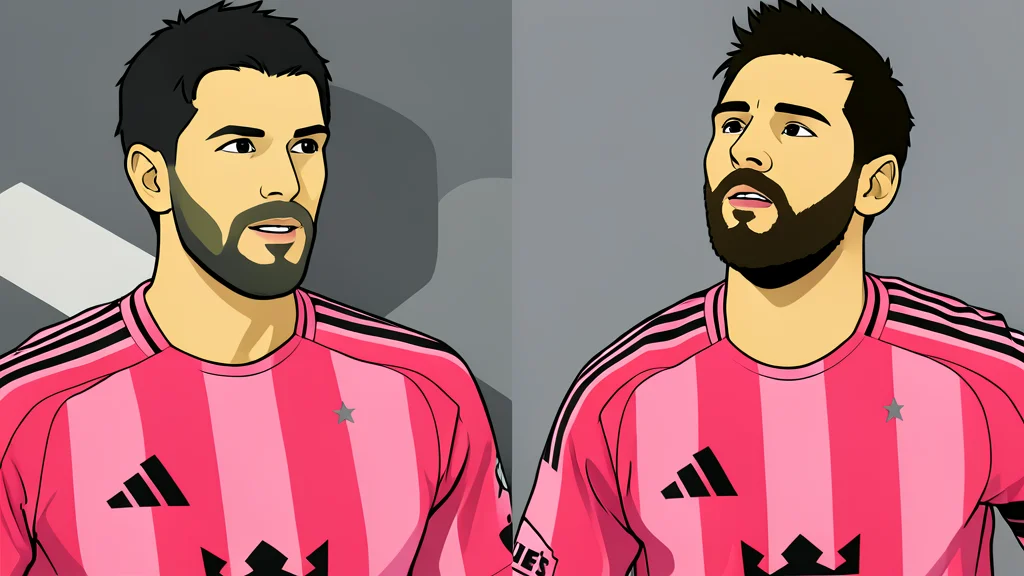
Under the floodlights of the Campeones Cup, Rodrigo De Paul silenced the debate. He pointed to Lionel Messi's 2026 World Cup campaign as the definitive argument for the Ballon d’Or, a choice grounded in raw, aging brilliance.
The humid air of the stadium still clung to the pitch as Rodrigo De Paul stepped into the light of the TUDN broadcast. The Campeones Cup was secured, the confetti settling on the green, and the conversation turned to the year’s most contested individual honor. De Paul did not hesitate. He did not weigh the options or list the contenders. He simply cut through the noise with a single, decisive statement that placed his teammate, Lionel Messi, at the absolute center of the 2026 Ballon d’Or race.
The landscape of football’s highest award is fractured this year. Paris Saint-Germain lifted the UEFA Champions League, and Spain claimed the 2026 World Cup title, yet neither victory produced a singular, undisputed frontrunner. The debate has circled around Harry Kane, Kylian Mbappe, and Lamine Yamal, creating a tight cluster of elite talent. Into this crowded arena, Messi enters not as a late addition, but as a force that defies the typical metrics of age and expectation.
A Definitive Endorsement
When asked directly how he would vote, De Paul’s response was immediate and absolute. He noted that the team has not extensively discussed the award, implying that the decision is self-evident. For De Paul, there is no debate whatsoever. The argument rests on a singular, unrepeatable feat: in a World Cup year, no one will ever do what Messi did at 39 years old. It is a performance that transcends the usual statistical comparisons, anchoring the case in the sheer improbability of the achievement.
This endorsement comes from a teammate who witnessed the impact firsthand. While Rodri, the Spanish midfielder, collected the Golden Ball for leading his nation to the title, the surrounding discourse has consistently elevated Messi’s defining influence. De Paul’s vote is not merely a fan’s preference; it is a professional acknowledgment of a teammate who shattered tournament records in his late thirties, proving that individual brilliance can still dictate the narrative of the world’s biggest stage.
Statistical Dominance at Thirty-Nine
The numbers on the board tell a story of sustained, high-level production. Messi served as the primary engine for Argentina, combining a lethal goalscoring touch with critical playmaking. In the semifinal victory against England, he registered two assists, weaving through the defense with a precision that belied his years. He finished second in total goal involvements with 12, trailing only Mbappe’s 14, while his career World Cup tally climbed to 21 goals, securing his place as the second all-time scorer in the competition’s history.
Beyond the international stage, Messi’s cumulative numbers across the 2025-26 window place him atop the global production charts. Navigating the complex offset schedules between European seasons and North American leagues, he amassed 53 goals and 32 assists. This total of 85 goal contributions edges out Harry Kane’s 81 and Kylian Mbappe’s 71, a statistical lead that reinforces De Paul’s argument. The data does not suggest a player in decline; it suggests a peak that has been artificially extended by extraordinary consistency.
The Emotional Weight of Farewell
Following the World Cup, Messi announced his retirement from the Argentina national team in an open letter, a decision that has rippled through the football world. However, the federation has confirmed one final home appearance during the October international window. De Paul, when asked about this approaching goodbye, paused. He admitted he has not stopped to think about it, nor does he want to dwell on the day. He described it as a moment that will be intensely emotional, a farewell to a player who left his mark forever.
De Paul spoke of the hope Messi instilled in the nation, a sentiment that has sustained Argentina for two decades. It is difficult for human beings to live with such sustained hope, yet Messi provided it. On October 6, against Benin at the Estadio Monumental, the stadium will hold its breath. De Paul and Giovani Lo Celso are also scheduled to participate, signaling that their own international farewells may coincide with this final act. The legacy is not just in the Ballon d’Or vote; it is in the shared memory of a team that dreamed because one man made it possible.